
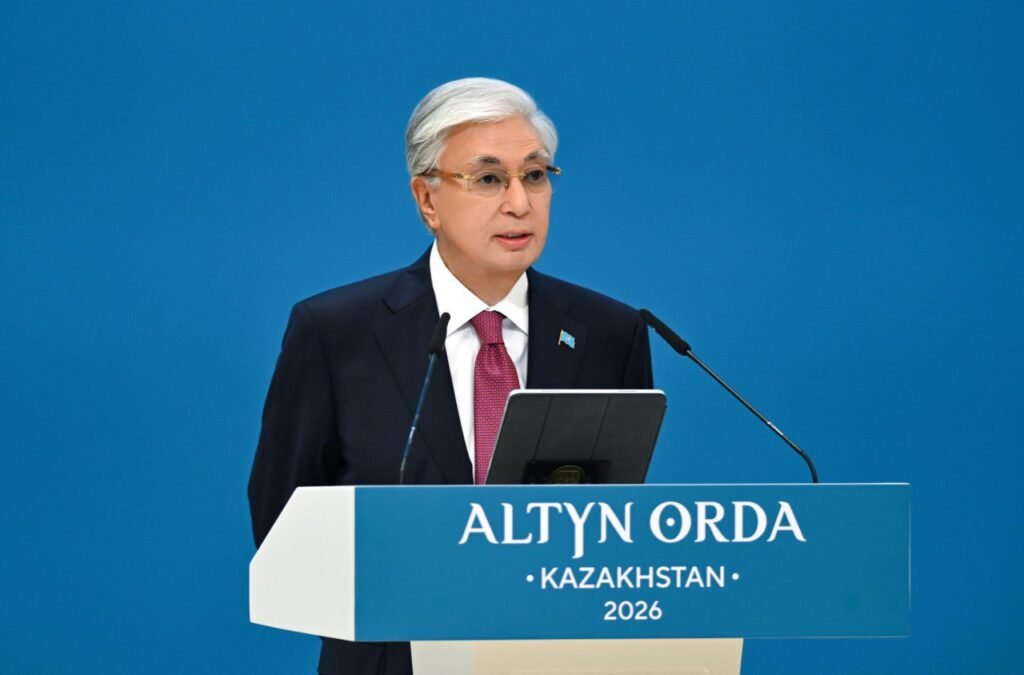
ASTANA: Kazakhstan has opened an international symposium on the history of the Golden Horde, bringing together scholars, diplomats and researchers from more than 20 countries to discuss the historical, cultural and political legacy of the steppe empire.
Kazakh President Kassym-Jomart Tokayev addressed the opening ceremony of the symposium, titled “The Golden Horde as a Model of Steppe Civilization: History, Archaeology, Culture and Identity,” describing the Golden Horde as one of the most influential political structures in Eurasian history.
The event in Astana includes historians, archaeologists, orientalists, Turkologists, political scientists, cultural experts and representatives of international organisations from countries including Pakistan, China, Russia, Mongolia, India, Japan and several European states.
Tokayev said the Golden Horde connected East and West and played a significant role in the development of civilizations and states across Eurasia.
“The history of the Golden Horde has become the subject of numerous profound studies,” the Kazakh president said during his address.
UNESCO-backed event focuses on shared history
The Kazakh president thanked UNESCO for supporting the symposium and said the event reflected the global historical importance of the Golden Horde’s heritage.
Tokayev also acknowledged the role of UNESCO in preserving Kazakhstan’s cultural and historical heritage, including the recognition of important landmarks and historical manuscripts.
He said the symposium aimed to strengthen cooperation with the international academic community for a comprehensive and multidimensional study of the Golden Horde and the Great Steppe.
The president noted that the history of the Golden Horde should not be simplified into a narrow military narrative and stressed the importance of objective and politically neutral historical research.
Call for balanced interpretation of history
Tokayev said historical studies should avoid distortions and attempts to monopolize interpretations of shared heritage.
He warned that reducing the history of steppe civilizations to outdated stereotypes or political narratives could damage scholarly understanding and international relations.
The president also emphasized the importance of academic diplomacy and dialogue in today’s geopolitical environment, saying historians and researchers could help build understanding between nations.
According to the Kazakh president, the Golden Horde era remains an important part of Kazakhstan’s national history and civilizational development.
The symposium is expected to continue over the next several days with discussions on archaeology, culture, identity and the global historical impact of the Golden Horde.