
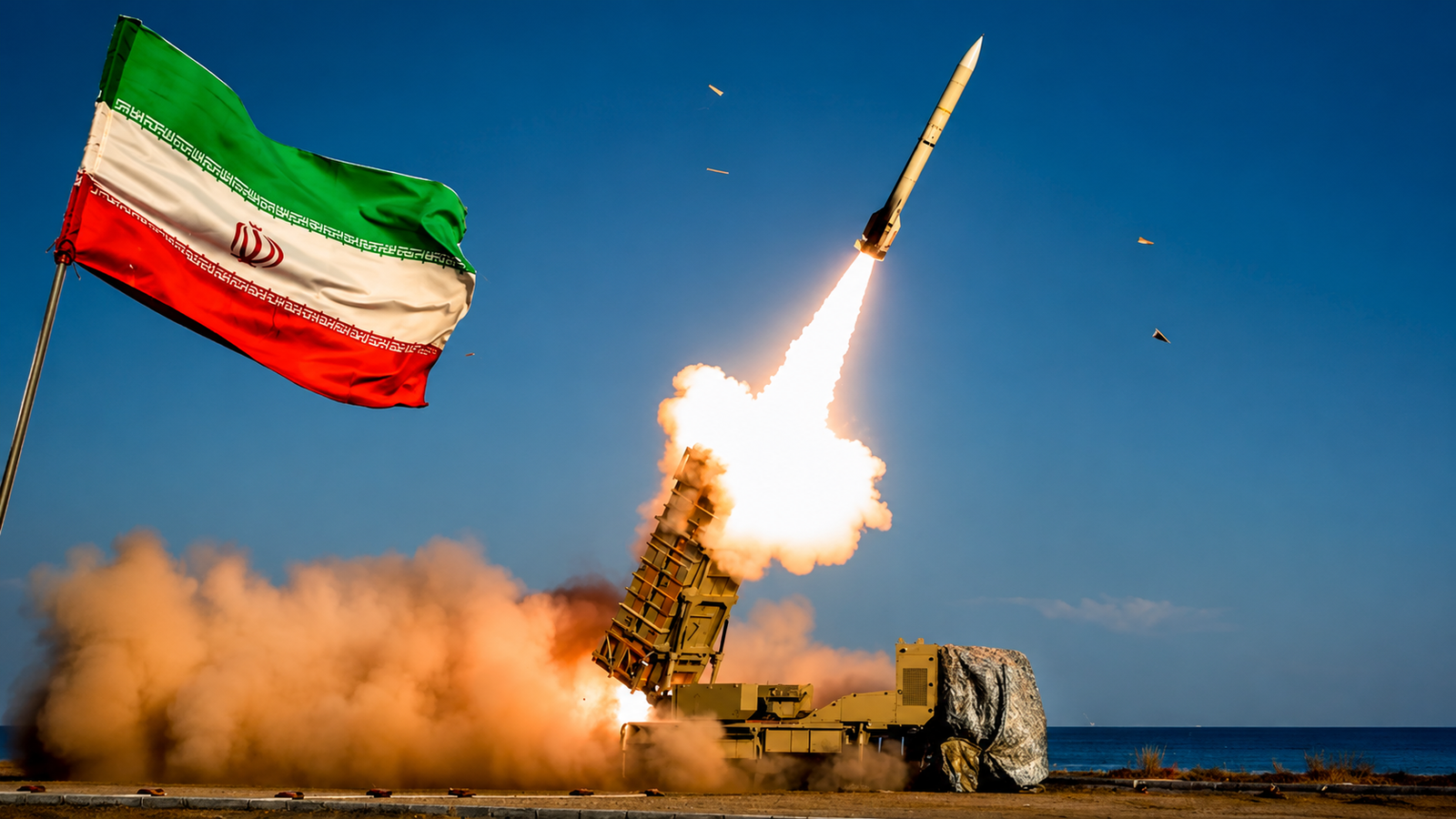
Tehran: Iran has claimed it launched missile and drone attacks on 85 targets, including US military facilities in Bahrain and Kuwait, in a sharp escalation that threatens to push the Gulf crisis into a more dangerous phase.
The Islamic Revolutionary Guard Corps said Iran’s naval and aerospace forces carried out coordinated strikes on American military installations across the Gulf. Iranian state media said the targets included the US Navy’s Fifth Fleet headquarters in Bahrain and Ali Al Salem Air Base in Kuwait.
Tehran described the operation as retaliation for what it called US violations of the ceasefire and the Islamabad Accord, a diplomatic understanding Iran says was linked to efforts to reduce tensions between Washington and Tehran.
Trump Says Iran Ceasefire Is Over as US Strikes Raise Global Oil, Pakistan Concerns
Iran also accused the United States of earlier carrying out strikes on coastal and non-military areas in Hormozgan province and Mahshahr. The IRGC called its latest action an “initial response” and warned that Iran reserves the right to take further measures in defence of its sovereignty and national security.
There was no immediate official response from the United States, Bahrain or Kuwait. The reported attacks, the scale of damage and any possible casualties have not been independently verified.
Iran Claims US Drone Downed In Bushehr
In a separate claim, Iran said its air defence system shot down a US MQ-9 drone in the southern province of Bushehr.
IRGC spokesperson Hossein Mohebi said the drone was intercepted near Khormuj during what he described as American aerial aggression. Washington has not commented on the claim, and the incident remains unverified.
The MQ-9 is one of the US military’s most advanced surveillance and strike drones, used for intelligence gathering, monitoring and precision operations.
Pakistan’s Mediation Role Comes Under Pressure
The latest escalation carries added significance for Pakistan because of Iran’s reference to the Islamabad Accord.
Pakistan had played a visible diplomatic role in efforts to prevent the Iran-US confrontation from widening. Islamabad’s position was delicate from the start: it shares a border with Iran, maintains ties with Washington, has deep economic links with Gulf states and works closely with China on regional connectivity.
That balancing act has now become more difficult.
If Iran continues to frame the latest confrontation as a response to violations of the Islamabad Accord, Pakistan may face renewed diplomatic pressure to help revive communication between the two sides. At the same time, Islamabad will have to avoid being drawn into blame games or rival security narratives.
For Pakistan, the immediate concern is not only whether the ceasefire can be restored, but whether its mediation credibility can survive another round of military escalation.
Qatar And China Urge Restraint
As tensions mounted, Qatar and China called on all sides to avoid further escalation and return to diplomacy.
Qatar condemned the reported attacks on Bahrain and Kuwait, saying such actions threaten regional peace and stability. Its Foreign Ministry said the Gulf must be protected from the consequences of unjustified military action and stressed that dialogue remains the only sustainable path forward.
China also expressed concern over the worsening situation. Foreign Ministry spokesperson Mao Ning said reigniting conflict in the Middle East serves no country’s interests and urged all parties to show restraint, avoid further military action and resolve differences through talks.
Why It Matters
The crisis is no longer limited to a single military exchange between Iran and the United States. It now touches several sensitive layers at once: US bases in Gulf states, mediation efforts linked to Pakistan, regional diplomacy led by Qatar, and China’s broader push for stability in the Middle East.
If Iran’s claims are confirmed, the attacks would mark a serious expansion of the conflict’s geography, moving pressure from Iranian territory to US-linked military sites in neighbouring Gulf countries.
That would make de-escalation harder. Bahrain and Kuwait are not just hosts to American military facilities; they are also part of a wider Gulf security order that depends heavily on US protection. Any attack on that network risks pulling more actors into the confrontation, even if they do not want a wider war.
For Pakistan, the stakes are diplomatic as much as economic. Islamabad’s challenge is to keep open channels with Tehran, Washington and Gulf capitals while protecting its own security interests and avoiding any perception that its mediation has collapsed.
For now, the situation remains fluid. The key questions are whether Washington confirms or denies the Iranian claims, whether Gulf states respond publicly, and whether mediators can still bring the crisis back from the edge before another round of retaliation begins.