
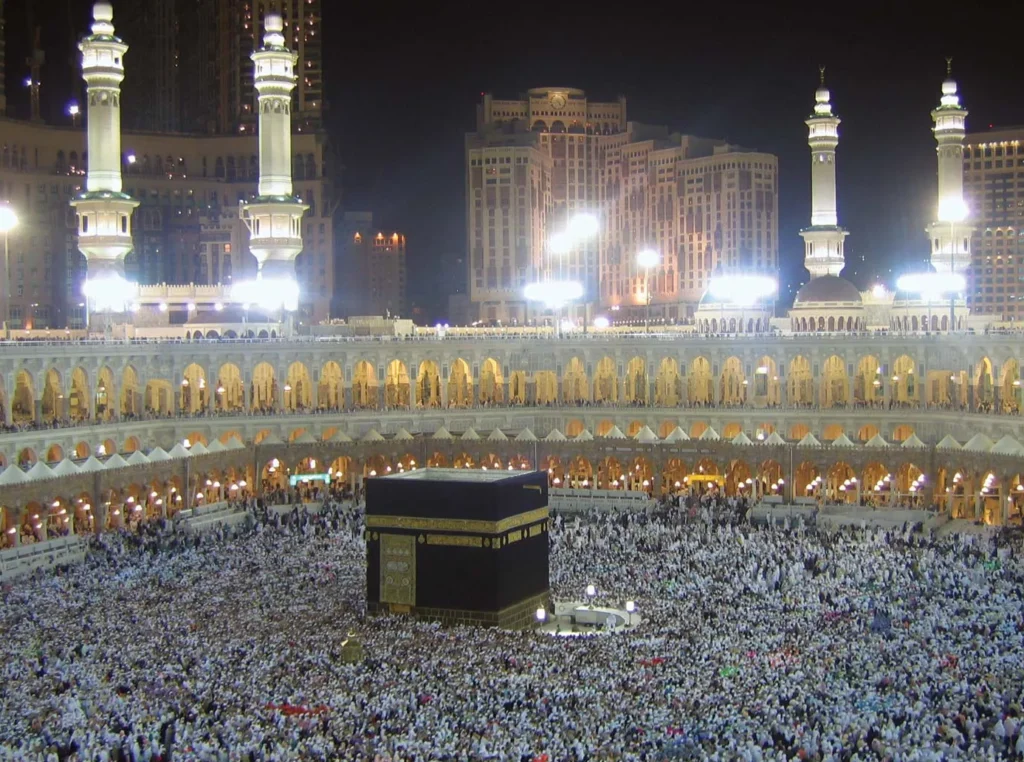
ISLAMABAD, April 2026: As Hajj 2026 approaches, thousands of pilgrims are preparing for the annual journey to Makkah, making it essential to understand the first and most fundamental step of the pilgrimage — Ihram. Entering Ihram marks the beginning of Hajj or Umrah and sets the spiritual and practical framework for all rituals that follow.
Ihram is not simply a dress code but a sacred state that must be adopted before crossing designated boundaries known as Miqat. It involves intention (niyyah), recitation of Talbiyah and adherence to specific restrictions, making it a core requirement for a valid pilgrimage.
What is Ihram?
Ihram refers to the sacred state a pilgrim enters before performing Hajj or Umrah. A person in this state is called a Muhrim.
For men, the clothing consists of two unstitched white sheets, while women wear simple and modest dress. However, Ihram itself is not the clothing — it is the state of devotion and restriction that begins with intention.
Miqat: Where Ihram begins
Miqat (plural: Mawaqeet) are fixed locations on routes leading to Makkah. Pilgrims intending Hajj or Umrah must enter Ihram before crossing these points.
Entering Ihram at Miqat is obligatory. If a pilgrim crosses without Ihram and does not return, a penalty (dam) becomes necessary. However, returning to Miqat to enter Ihram removes the penalty.
Niyyah: The intention for Hajj or Umrah
Niyyah is an essential part of entering Ihram. Without intention, Ihram is not valid.
Common words of intention include:
Labbayk Allahumma ‘Umratan (for Tamattu’)
Labbayk Allahumma Hajjan (for Ifrad)
Labbayk Allahumma Hajjan wa ‘Umratan (for Qiran)
Pilgrims may also recite supplications asking for ease and acceptance of their journey.
Nafl prayer before entering Ihram
Before making the intention, pilgrims are recommended to perform two rak‘ah of Nafl prayer.
It is customary to recite Surah Al-Kafirun in the first rak‘ah and Surah Al-Ikhlas in the second after Surah Al-Fatihah.
Talbiyah: The call of Hajj
Talbiyah is recited after entering Ihram and should be repeated frequently until reaching Masjid al-Haram and beginning Tawaf.
The words are:
Labbayk Allahumma Labbayk, Labbayk La Sharika Laka Labbayk. Innal Hamda wan-Ni‘mata Laka wal-Mulk, La Sharika Lak.
Pilgrims who do not memorise it may read or listen and repeat.
Rules and restrictions in Ihram
After entering Ihram, certain actions are prohibited, including applying perfume, cutting hair or nails and other restricted acts. Observing these rules is necessary to maintain the sanctity of the state.
Important guidance for pilgrims
Pilgrims must not cross Miqat without entering Ihram when intending Hajj or Umrah. They are also advised not to omit intention or Talbiyah based on incorrect guidance.
While there may be minor differences among schools of thought, fulfilling all obligatory, necessary and recommended acts helps ensure that the pilgrimage is valid and accepted.
Hajj is performed in three types — Tamattu’, Ifrad and Qiran — each requiring entry into Ihram.
Hajj Guide 2026: Types of Hajj explained — Tamattu, Ifrad and Qiran