
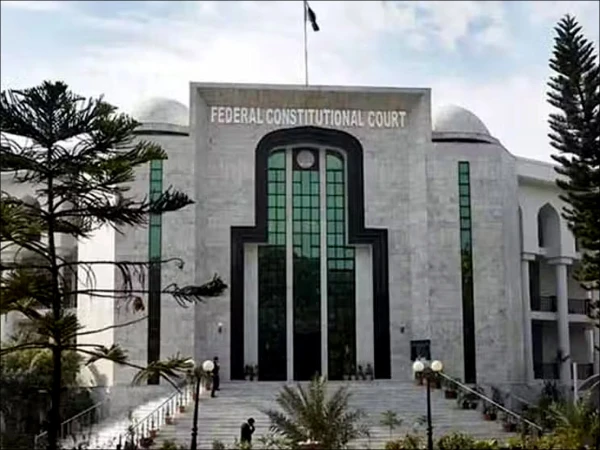
The Federal Constitutional Court has ruled that an element of a sexual nature is essential for proceedings under Pakistan’s workplace harassment law, clarifying that every inappropriate or unwelcome act does not automatically constitute sexual harassment.
In its detailed judgment, the court held that complaints lacking a sexual element do not fall within the jurisdiction of the Federal Ombudsman under the harassment law. However, an organisation may take disciplinary action against inappropriate conduct under its own service rules.
The court observed that the purpose of the harassment law is to protect both women and men from sexual harassment in the workplace and that the legislation cannot be applied to every complaint of a general or non-sexual nature.
Court Clarifies Appellate Jurisdiction
The judgment also addressed the respective roles of the President, the Federal Ombudsman and the High Court in harassment cases.
According to the ruling, the President is empowered to hear representations against decisions of the Federal Ombudsman, while a High Court may interfere with an Ombudsman’s decision only on limited constitutional grounds.
The case involved two bank officers who had initially been dismissed from service by the Federal Ombudsman. The President subsequently modified the punishment, replacing dismissal with a censure.
The Islamabad High Court had later set aside the President’s order and restored the Ombudsman’s decision.
The Federal Constitutional Court has now set aside the Islamabad High Court’s December 31, 2024 judgment and restored the President’s order.
Three-Member Bench Hears Appeals
The appeals were heard by a three-member bench headed by Federal Constitutional Court Chief Justice Justice Amin-ud-Din Khan.
The 18-page detailed judgment was authored by Justice Ali Baqar Najafi.