
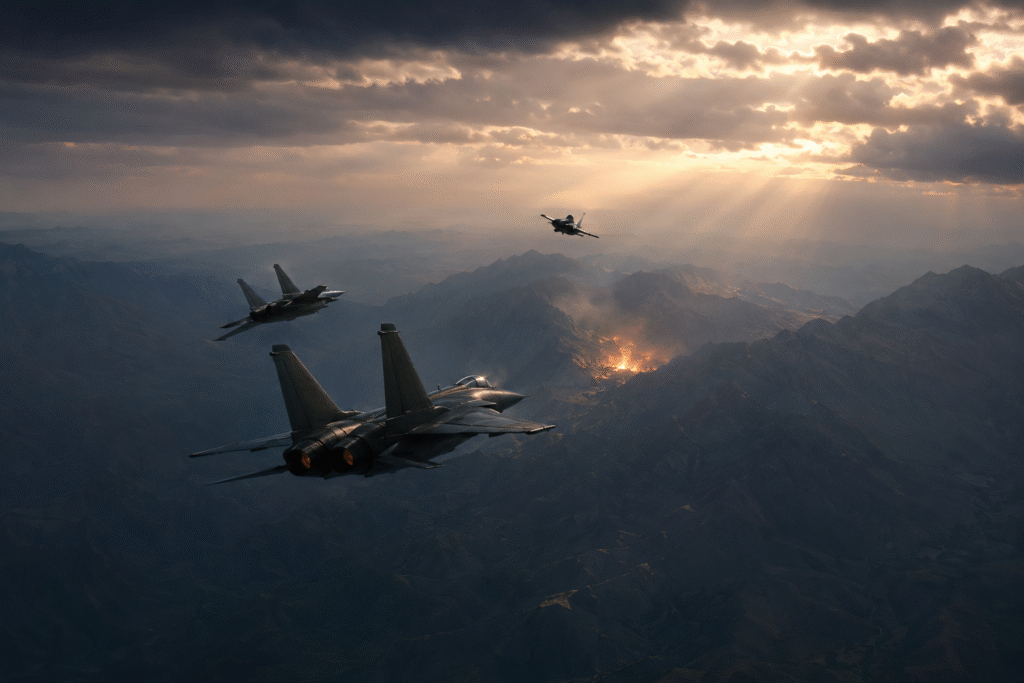
RIYADH/DUBAI: Saudi Arabia carried out previously undisclosed air strikes on Iranian territory in late March in response to attacks targeting the kingdom during the wider Middle East conflict, according to two Western officials and two Iranian officials cited by Reuters.
The reported Saudi Arabia-Iran covert strikes mark the first known instance of Riyadh directly conducting military action inside Iran. The development highlights growing regional tensions and signals a more assertive Saudi security posture as the kingdom seeks to protect itself from cross-border missile and drone attacks during the 10-week conflict.
According to the officials, the strikes were carried out by the Saudi Air Force as retaliatory action after Saudi territory was hit earlier in the conflict. Reuters said it could not independently verify the specific targets inside Iran.
Saudi Arabia’s foreign ministry did not directly confirm or deny the reported attacks. Iran’s foreign ministry also did not respond to Reuters’ requests for comment.
Diplomatic efforts followed reported strikes
Officials cited by Reuters said Saudi Arabia informed Iran about the strikes, which was followed by intensive diplomatic engagement between the two countries. The talks reportedly led to an informal understanding aimed at reducing hostilities and preventing further escalation.
One Iranian official told Reuters that Tehran and Riyadh agreed to de-escalate tensions in order to “cease hostilities, safeguard mutual interests, and prevent the escalation of tensions.”
Ali Vaez, director of the Iran Project at the International Crisis Group, said the reported sequence of retaliation followed by diplomacy reflected a “shared interest in imposing limits on confrontation before it spiraled into a wider regional conflict.”
The reported de-escalation arrangement took effect shortly before Washington and Tehran agreed to a broader ceasefire on April 7, according to Reuters.
Saudi Arabia balanced military pressure with diplomacy
While Saudi Arabia and the United Arab Emirates both faced security threats during the conflict, Reuters reported that Riyadh adopted a more cautious public approach toward Iran compared to the UAE, which pursued a tougher stance.
Saudi Arabia maintained communication channels with Tehran during the crisis, including contact through Iran’s ambassador in Riyadh, Reuters reported.
A senior Saudi foreign ministry official reiterated the kingdom’s support for regional stability, saying Saudi Arabia advocates “de-escalation, self-restraint and the reduction of tensions” to protect regional security and prosperity.
Regional tensions and reduced attacks
Saudi Arabia and Iran, the region’s leading Sunni and Shi’ite powers respectively, have long backed opposing sides in conflicts across the Middle East. Relations improved after a China-brokered agreement in 2023 restored diplomatic ties between the two countries.
Reuters reported that more than 105 drone and missile attacks targeted Saudi Arabia during the week of March 25-31. That number reportedly dropped significantly in early April after diplomatic contacts intensified.
Western officials cited by Reuters assessed that projectiles launched at Saudi Arabia shortly before the broader ceasefire originated mainly from Iraq rather than directly from Iran, suggesting Tehran had reduced direct military pressure while allied groups remained active.
Saudi Arabia later summoned Iraq’s ambassador to protest attacks launched from Iraqi territory.
Pakistan’s role during regional tensions
Reuters reported that Saudi Arabia considered possible retaliation against Iran and Iraq after renewed drone and missile attacks on April 7-8. During that period, Pakistan reportedly deployed fighter jets to reassure the kingdom and encouraged restraint as diplomatic efforts continued.
In an opinion article published in Saudi-owned Arab News, former Saudi intelligence chief Prince Turki al-Faisal wrote that the kingdom chose to avoid being drawn into what he described as a “furnace of destruction” in order to protect its citizens and infrastructure.