
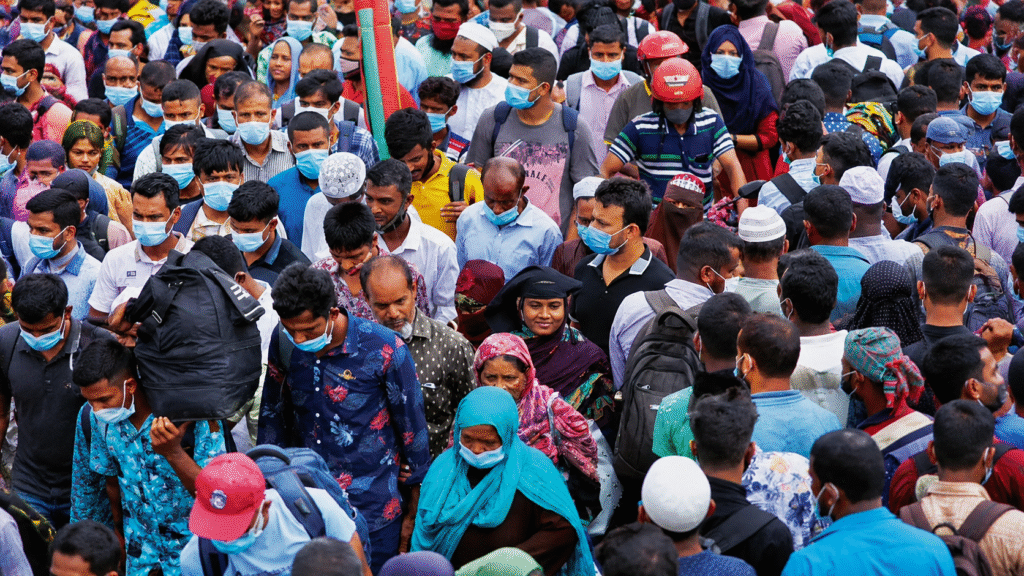
ISLAMABAD: Pakistan’s population is projected to rise to between 372 million and 390 million by 2050 under new official estimates prepared on the basis of the 2023 national census, according to a population projection report released with government support.
The projections were prepared by the National Institute of Population Studies, Training and Research in collaboration with the Ministry of National Health Services and the Ministry of Planning, with support from the United Nations Population Fund.
According to the report, Pakistan’s population stood at 241.86 million in the 2023 census. The latest projections present two possible population growth scenarios extending to 2050.
Under the first scenario, if fertility rates continue declining at the current pace, Pakistan’s population could increase to around 389.78 million by 2050, with an average annual growth rate of 1.3 percent.
The second scenario assumes more effective population management and development policies leading to a faster decline in birth rates. In that case, the population could remain around 371.79 million by 2050, while annual population growth may slow to 0.94 percent.
Urban growth and migration expected to reshape population trends
The report states that Punjab is expected to remain Pakistan’s most populous province, while Sindh, Khyber Pakhtunkhwa, and Balochistan are also projected to record significant population growth.
Balochistan is expected to witness the highest population growth rate, while Islamabad’s population could nearly triple due to rapid urbanization and internal migration trends.
According to the projections, Karachi and other urban areas of Sindh are likely to see continued population increases driven by migration from other parts of the country. Migration from Khyber Pakhtunkhwa toward major economic and urban centers is also expected to continue in the coming decades.
Federal Health Minister Mustafa Kamal and Planning Minister Ahsan Iqbal appreciated the efforts of the technical experts and researchers involved in preparing the report.
The report stressed the need for timely investment in healthcare, education, housing, employment, and social protection sectors to manage the long-term impact of population growth and urban expansion in Pakistan.