
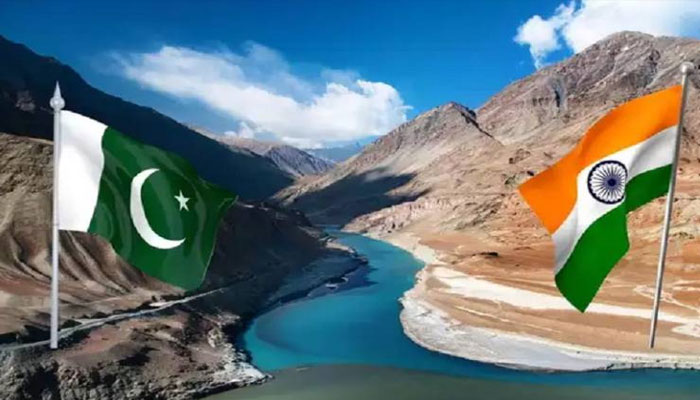
The Indus Waters Treaty of 1960 is being described by Pakistan as a critical legal framework that goes beyond water distribution, serving as a key pillar for regional peace, food security, and stability between Pakistan and India.
Officials in Islamabad have raised concerns over what they describe as recent attempts by the neighbouring country to suspend parts of the treaty and restrict technical data sharing. They warn that any disruption to the long-standing water-sharing mechanism could undermine decades of stability in the Indus basin.
Treaty viewed as a safeguard against conflict
Pakistan maintains that the treaty has ensured structured and predictable river water distribution for more than six decades, helping prevent water-related tensions from escalating into broader conflict.
Prime Minister Shehbaz Sharif, addressing the United Nations General Assembly and later the Pakistan Military Academy passing-out parade in Kakul, reaffirmed Pakistan’s position, stating:
“Any attempt to stop, reduce or divert the flow of water belonging to Pakistan under the Indus Waters Treaty will be responded to with full force.”
He emphasized that uninterrupted water flow is essential for Pakistan’s survival and long-term stability.
Water framed as a security and justice issue
Federal Minister Musadik Malik described the issue as one of control and weaponization rather than scarcity, saying:
“The real issue is not water shortage or surplus, but its control and use as a weapon. This is not an environmental issue but an issue of justice. Turning water into a weapon is more dangerous than war.”
Former Foreign Minister Hina Rabbani Khar warned about the implications for international law and treaty systems:
“A country that claims to be a guardian of international law has now become a violator of international law. If India is allowed to violate the Indus Waters Treaty today, it will set a dangerous precedent for the global system.”
PPP Chairman Bilawal Bhutto Zardari highlighted the human dimension of water security, stating:
“Water is not just geography; it is food, the future, and life itself. Using water resources or sea routes as a weapon is dangerous for global peace.”
Former federal minister Khurram Dastgir Khan cited reported impacts and alleged treaty violations, saying:
“India has been continuously violating the Indus Waters Treaty since 2025, affecting 7.3 million Pakistanis. Blocking water and pushing people toward a food crisis is a global crime.”
Islamabad urges international attention
At an international seminar in Islamabad, speakers urged the global community to take notice of what they described as growing pressure on the treaty framework. They stressed that protecting shared water resources is essential for regional stability and compliance with international law.
Pakistan reiterated that it remains committed to defending its water rights and calls for full implementation of the treaty in both letter and spirit.
Also Read: Pakistan warns UN of water security risks after India’s Indus Waters Treaty actions