
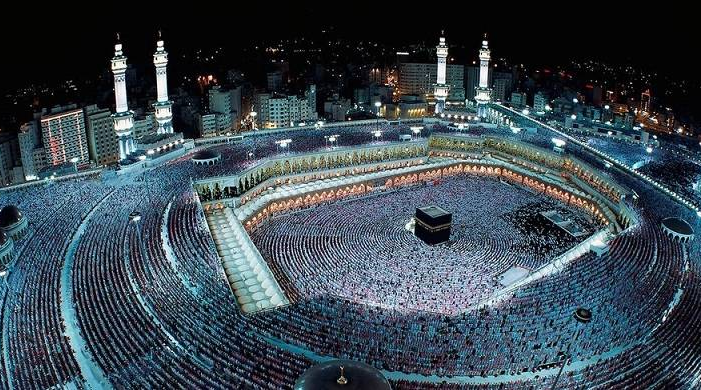
ISLAMABAD, April 2026: As Hajj 2026 approaches, pilgrims preparing for their journey to Makkah must understand Sa‘i — a core ritual of both Hajj and Umrah performed between the hills of Safa and Marwah. The act commemorates the struggle of Hazrat Hajar (peace be upon her), who ran between the two hills in search of water for her son Hazrat Isma‘il (peace be upon him), symbolising faith, patience and reliance on Allah.
Sa‘i is performed after Tawaf and consists of walking seven rounds between Safa and Marwah within the designated passage known as the Mas‘a. It is an essential requirement of both Hajj and Umrah and must be completed correctly for the pilgrimage to be valid.
What is Sa‘i?
Sa‘i is the act of walking back and forth between Safa and Marwah seven times as an act of worship. It begins at Safa and ends at Marwah.
Each movement between the two points counts as one round:
- Safa to Marwah counts as the first round
- Marwah to Safa counts as the second round
This sequence continues until seven rounds are completed, with four movements from Safa to Marwah and three from Marwah to Safa.
How to perform Sa‘i step by step
Sa‘i begins at Safa, where pilgrims are recommended to face the Qiblah and recite:
“Abda’u bima bada’Allahu bihi”
“I begin with that with which Allah began.”
Pilgrims then raise their hands, say “Allahu Akbar” three times, and make supplications. Upon reaching both Safa and Marwah, it is Sunnah to face the Qiblah, raise the hands, and recite:
“Allahu Akbar, Allahu Akbar, Allahu Akbar, la ilaha illa Allahu wahdahu la sharika lahu, lahu al-mulku wa lahu al-hamdu wa huwa ‘ala kulli shay’in qadeer. La ilaha illa Allahu wahdahu, anjaza wa‘dahu, wa nasara ‘abdahu, wa hazama al-ahzaba wahdah.”
This supplication is recited three times, with personal prayers made in between.
Key rules during Sa‘i
Within the Mas‘a, green lights mark the area of the former valley (Batin al-Wadi). Men are required to walk briskly between these markers, while women maintain a normal pace throughout.
Purity (taharah) is not a strict requirement for Sa‘i, and wudu is not obligatory, though both are recommended.
Pilgrims should remain calm, avoid rushing, and continue remembrance (dhikr) and supplication throughout the ritual.
Why Sa‘i is important in Hajj and Umrah
The significance of Sa‘i is highlighted in the Qur’an:
“Indeed, Safa and Marwah are among the symbols of Allah. So whoever performs Hajj of the House or ‘Umrah—there is no blame upon him for walking between them. And whoever volunteers good—then indeed, Allah is Appreciative and All-Knowing.” (Surah Al-Baqarah 2:158)
This establishes Sa‘i as a permanent act of worship and a symbol of devotion in Islam.
Scholarly perspectives on Sa‘i
Islamic schools differ slightly in classification:
- Maliki, Shafi‘i and Hanbali schools consider Sa‘i a pillar (rukn) of Hajj and Umrah
- Hanafi school considers it wajib (necessary), with a compensatory sacrifice required if omitted
Important guidance for pilgrims
Pilgrims must begin Sa‘i at Safa and complete seven rounds ending at Marwah. While supplications may vary, the focus should remain on correct performance and sincerity.
Maintaining patience, awareness, and spiritual focus is essential, especially during crowded conditions in the Mas‘a.
Also read: Hajj Guide 2026: What is Tawaf? Rules, steps and types explained
You may also read: Hajj Guide 2026: What is Ihram? Rules, Miqat, Niyyah and Talbiyah explained