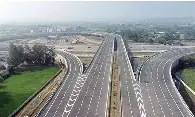
ISLAMABAD, May 22 (ABC): Pakistan’s government has accelerated progress on the Hyderabad-Sukkur Motorway (M-6), a major infrastructure project designed to complete the country’s north-south motorway corridor. Official documents show that three northern sections of the motorway are expected to be completed between March and May 2029, while financing and procurement activities for the remaining sections are advancing.The M-6 motorway is considered one of the most significant missing links in Pakistan’s motorway network, connecting Hyderabad in Sindh to Sukkur further north. Once completed, the route is expected to improve cargo transport, reduce travel time, and strengthen road connectivity between Karachi and other parts of the country.
What is the Hyderabad-Sukkur Motorway?
The Hyderabad-Sukkur Motorway, also known as the M-6, is a planned controlled-access motorway linking Hyderabad to Sukkur in Sindh province. The project is part of Pakistan’s broader motorway system that connects Karachi with northern cities through high-speed road infrastructure.The motorway has been divided into five sections to allow phased financing and construction.Sections IV and V cover the route from Naushero Feroz to Sukkur. Section III connects Nawabshah with Naushero Feroz, while Sections I and II stretch from Hyderabad to Nawabshah through Tando Adam.
What progress has been made?
According to official documents, Sections IV and V are being financed by the Islamic Development Bank (IsDB). The prequalification notice for contractors was published on December 13, 2025, and the evaluation report was submitted to the lender on March 18, 2026.Authorities expect civil works contracts for these sections to be awarded between September and October 2026.The IsDB approved $475 million in financing for the two sections on September 29, 2025. Pakistan signed the financing agreement with the lender on January 19, 2026.For Section III, which is financed by the OPEC Fund, bidding documents were submitted to the lender in January 2026. Officials said comments have been exchanged between both sides and final approval is still awaited.The government expects bidding for Section III to begin during the current month, with contract awards targeted for October 2026. The OPEC Fund approved $230 million for this section in March 2026.
How will the southern sections be developed?
Sections I and II, covering Hyderabad to Nawabshah, will be developed under a Public-Private Partnership (PPP) model approved by the Executive Committee of the National Economic Council (ECNEC).Under this structure, private investors and government institutions share financing and operational responsibilities for the project.The Public Private Partnership Authority approved the hiring of an international financial institution as transaction adviser in September 2025. Later, the National Highway Authority approved a proposal from the Asian Development Bank (ADB), leading to the signing of a Transaction Advisory Service Agreement in April 2026.The ADB is expected to complete its advisory study within four months. Officials anticipate the concession award process for these sections to conclude by February 2027.
Why does the motorway matter?
The Hyderabad-Sukkur Motorway is viewed as a critical transport corridor for trade and logistics in Pakistan. The route connects Sindh’s industrial and port areas with the national motorway network.Transport experts have long identified the existing highway infrastructure on this corridor as heavily congested and prone to accidents. The motorway is expected to improve freight movement, reduce travel delays, and enhance road safety for commercial and passenger traffic.The project is also part of broader efforts to modernize Pakistan’s road infrastructure through a mix of multilateral financing and public-private partnerships.