
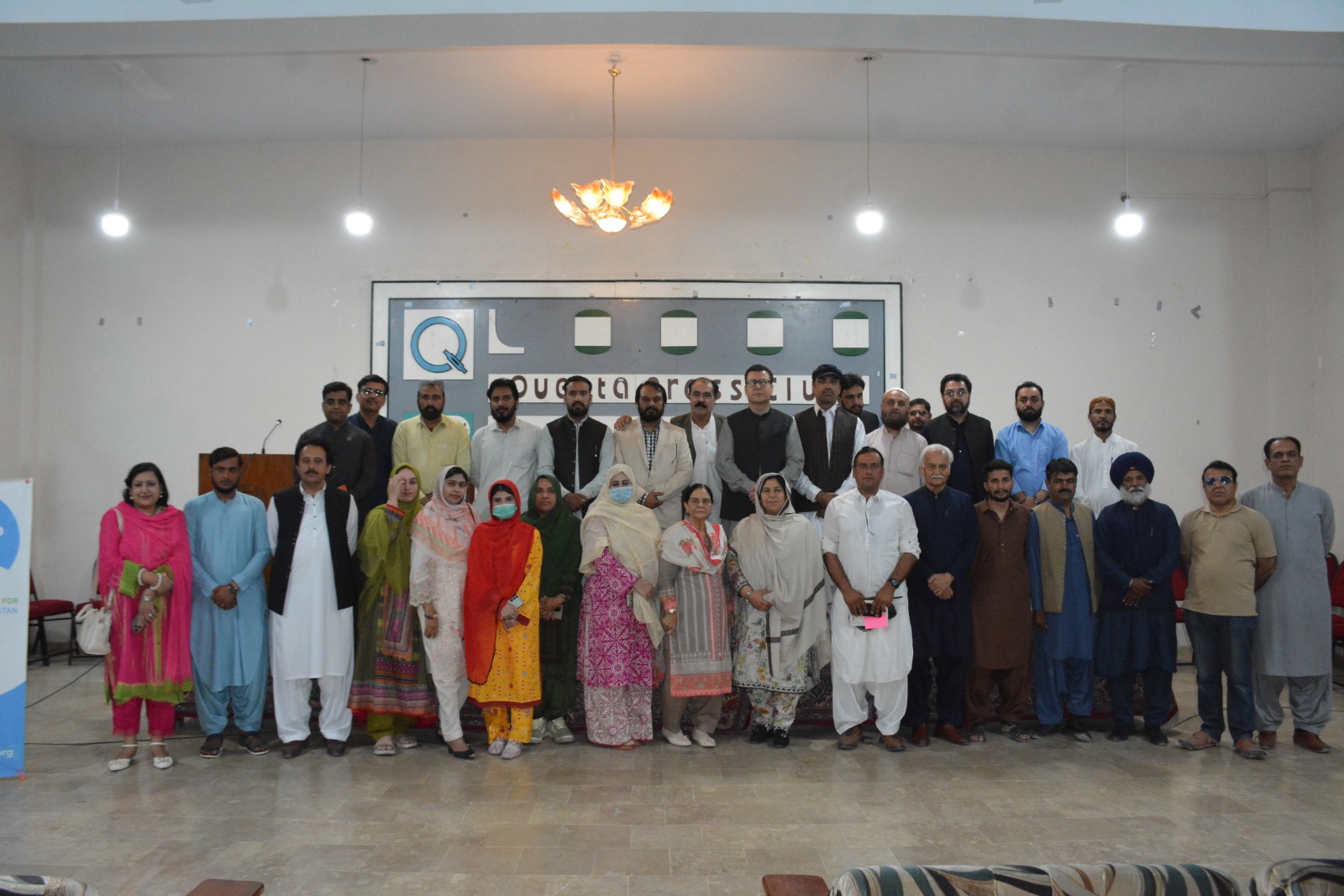
QUETTA: Code for Pakistan convened “Quetta Guftugu 2026,” a multi-stakeholder dialogue aimed at advancing EdTech integration in Balochistan’s education sector, bringing together policymakers, educators, civil society representatives, technologists, academics and media professionals.
Held at the Quetta Press Club on May 5, the event focused on addressing long-standing education challenges in the province, including limited digital access, weak infrastructure, low school retention rates and a large population of out-of-school children.
Participants discussed barriers affecting the adoption of education technology in Balochistan and explored locally relevant solutions for improving learning access and coordination across sectors.
According to the organisers, discussions highlighted several structural issues restricting effective EdTech implementation, including inconsistent policy continuity, curriculum gaps, low internet access and limited teacher training capacity.
Stakeholders noted that technology-based education initiatives would remain limited without improvements in basic school infrastructure, internet connectivity and institutional coordination.
Stakeholders discuss practical education technology solutions
During the session, participants reviewed ongoing education initiatives in the province, identified overlaps in implementation efforts and examined opportunities for collaboration among public and private sector stakeholders.
The discussions focused on blended learning models, mobile-first education tools, community-based learning centres and public-private partnerships designed to improve access to education in underserved areas.
Participants also stressed the importance of continuity in education reforms, noting that frequent policy changes and the absence of institutional consistency have slowed progress in the province’s education sector.
Code for Pakistan announces next steps
Following the event, Code for Pakistan announced plans to map active education initiatives across Balochistan, identify adaptable models from other provinces and organise a follow-up dialogue to support implementation efforts.
The organisation said its “Guftugu” model is designed to encourage consultation and local participation before introducing policy or technology interventions.
Speaking during the event, Khunsa Khawar, Community Manager at Code for Pakistan, said the initiative reflected a collective effort to move toward coordinated action in the education sector.
Shazia Ahmed, representing the women’s wing of the National Party, highlighted the importance of digital skills development for children in Balochistan during the discussion.
With increasing mobile phone access and a growing youth population, participants said there is potential for wider digital learning adoption in the province if infrastructure and coordination challenges are addressed.