
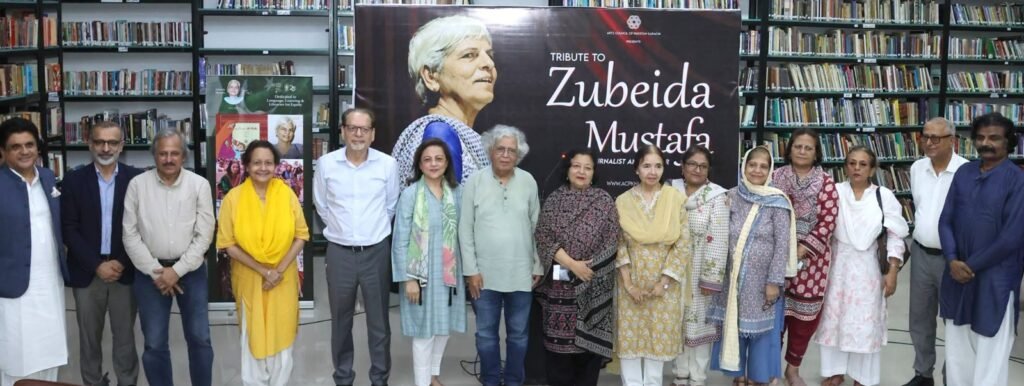
KARACHI: The Arts Council of Pakistan Karachi hosted a tribute ceremony in honor of veteran journalist, author, and educationist Zubeida Mustafa, recognizing her lifelong contributions to journalism, education, and social development.
Held at the Josh Malihabadi Library, the event brought together prominent figures from Pakistan’s literary, media, education, and social sectors to celebrate Mustafa’s legacy of research-based journalism, advocacy for education, and commitment to humanitarian values.
Literary and Media Leaders Pay Tribute
The ceremony was attended by Arts Council of Pakistan Karachi President Mohammad Ahmed Shah, senior journalist Ghazi Salahuddin, Dr. Kamaleshwer Lohana, Seema Liaquat, Dr. Pushpa Vallabh, Sadiqa Salahuddin, Shama Askari, Hawa, and other distinguished guests. The event was moderated by Bella Jamil, who opened the proceedings by presenting an essay dedicated to Zubeida Mustafa.
Speakers described Mustafa as a symbol of integrity, scholarship, and intellectual leadership whose work has influenced generations of journalists, educators, and readers.
Recognized for Journalism and Education
Mohammad Ahmed Shah said Zubeida Mustafa had long been associated with the Arts Council’s literary and intellectual initiatives and praised her efforts to advance women’s education, children’s education, and public awareness.
Ghazi Salahuddin highlighted her commitment to research, ethical journalism, and lifelong learning, describing her as one of Pakistan’s most respected media professionals.
Dr. Kamaleshwer Lohana noted that Mustafa became the first woman to serve on the editorial board of Dawn, helping open new opportunities for women in Pakistani journalism while promoting research-driven reporting.
Legacy of Child-Centered Education
Several speakers focused on Zubeida Mustafa’s work in education, particularly her efforts to improve learning opportunities for children.
Hawa highlighted Mustafa’s non-formal education initiatives for out-of-school children, while Shama Askari discussed her “Listen, Think, Tell” reading program, which encouraged reading, critical thinking, and self-expression among young learners.
Seema Liaquat shared personal reflections on preserving Mustafa’s legacy through her photographs and website, while Dr. Pushpa Vallabh praised her advocacy for mother-tongue education and equal access to learning.
Sadiqa Salahuddin said Mustafa consistently emphasized education as a tool for empowerment, encouraging teaching methods that develop critical thinking, creativity, and meaningful learning experiences for children.
Also Read :Arts Council Karachi Hosts Sri Lankan Cultural Dance Show ‘Kanya’