
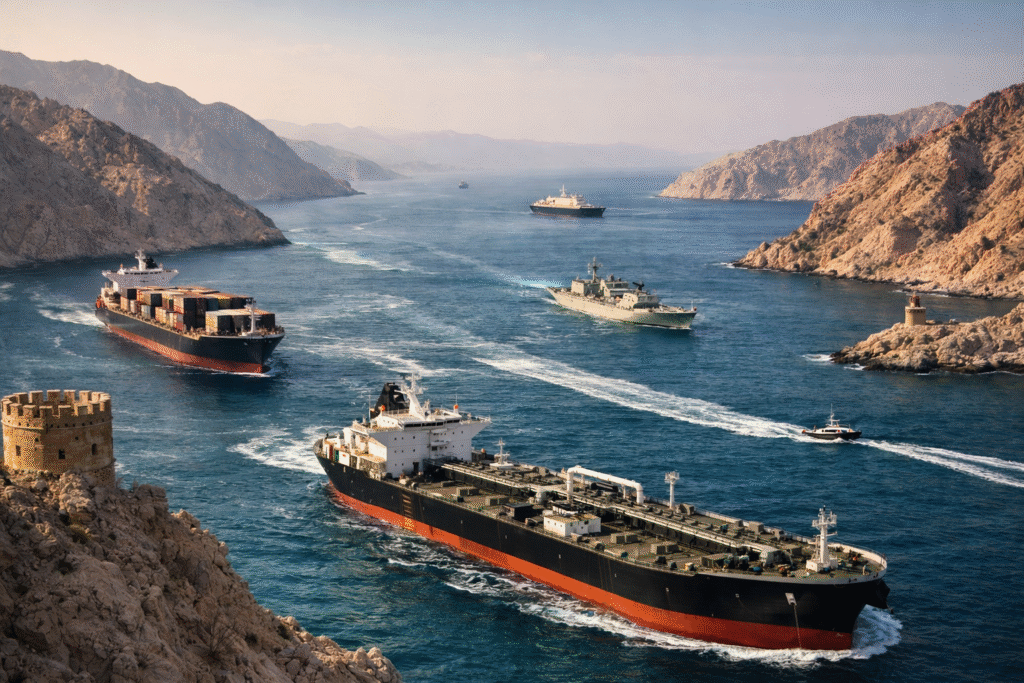
DUBAI: Iran has established a new authority to regulate vessel transit and collect tolls from ships passing through the Strait of Hormuz, according to shipping industry reports, in a move that could have significant implications for global oil trade and maritime traffic in the Gulf.
Lloyd’s List, a leading maritime shipping journal, reported that the newly created Persian Gulf Strait Authority has introduced a framework requiring commercial vessels to obtain transit authorisation and pay fees before entering the strategic waterway.
According to the report, ships are now required to submit detailed information including ownership records, insurance documentation, crew details and intended transit routes before approval is granted.
Iranian state-affiliated broadcaster Press TV earlier reported that Tehran had developed a new system to exercise sovereignty over the Strait of Hormuz, with shipping regulations being issued directly to vessels through official communication channels.
The Strait of Hormuz remains one of the world’s most important energy corridors, with roughly one-fifth of global oil shipments traditionally passing through the route connecting the Gulf to international markets.
The new measures come amid continuing regional tensions involving Iran, the United States and Israel, as well as growing security concerns around commercial shipping in Gulf waters.
Reports said the United States recently paused a military operation aimed at securing merchant vessel movement through the strait following expectations of possible diplomatic progress with Iran.
Tensions escalated further after overnight clashes involving US and Iranian forces near the waterway. Reports said US vessels targeted an Iranian civilian tanker approaching the Strait of Hormuz, after which Iranian forces launched missiles, drones and small boats toward US naval vessels in the Gulf.
US Central Command later stated that none of its warships were hit during the incident.
Shipping analysts say the latest developments could increase uncertainty in global energy markets and international maritime trade routes already affected by regional instability.
Also read: Iran to allow 20 more Pakistani ships through Strait of Hormuz, says Ishaq Dar