
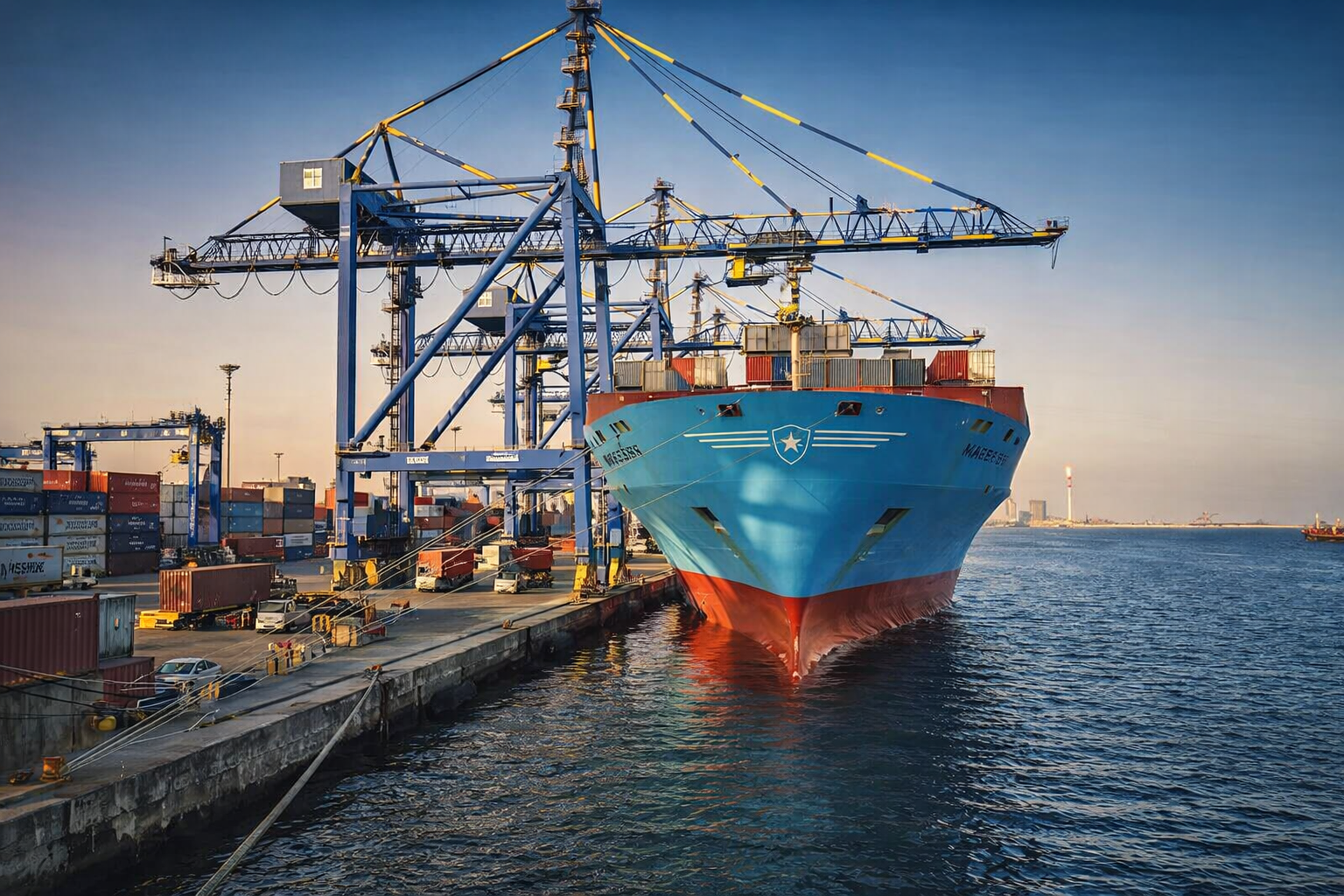
ISLAMABAD: Federal Minister for Maritime Affairs Muhammad Junaid Anwar Chaudhry on Monday presented a long-term plan to develop a climate-resilient Port Industrial Complex under a comprehensive master plan for Port Qasim, with a strong focus on environmental safeguards and sustainable development.
Chairing a meeting on the proposed industrial complex, the minister said the project’s integrated planning and phased execution are intended to transform Port Qasim into a globally competitive industrial and logistics hub. He said the initiative aligns with Pakistan’s broader goals of trade growth, industrialisation and expansion of the blue economy.
The minister said the climate-resilient industrial hub could generate tens of billions of dollars in economic value over the next two decades. He noted that the project is expected to strengthen the country’s industrial base, increase exports, create hundreds of thousands of jobs and enhance Pakistan’s standing as a regional trade and industrial centre.
He added that the emphasis on sustainability and climate resilience would help reduce long-term environmental and economic risks, thereby improving investor confidence.
Highlighting the strategic role of Port Qasim, the minister described it as a key pillar of Pakistan’s long-term economic growth and referred to it as a “gateway to national prosperity” under the master plan.
He said the master plan covers more than 14,590 acres and has been structured to ensure balanced industrial growth, efficient port operations and sustainable land use over a 50-year period. He said the framework reflects the government’s commitment to continuity, economic resilience and investor assurance.
The minister said the Port Qasim Industrial Complex has been divided into three zones: the North Western Zone, the Eastern Zone and the South Western Zone. He explained that the North Western Zone, spanning 3,061 acres, has been designated for diversified industrial activity, including value-added manufacturing and support services linked to port operations.
He said the Eastern Zone, covering 7,273 acres, is the largest segment of the project and is being developed as the main industrial backbone, with space allocated for heavy industries, export-oriented units and logistics facilities.
The minister added that the South Western Zone, spread across 2,258 acres, has been set aside for specialised industrial and commercial activities. He said an additional 1,997 acres of low-lying land will be developed in phases, with environmental safeguards in place to ensure sustainable use.
Referring to current operations, the minister said Port Qasim hosts 833 operational units, reflecting strong industrial activity and sustained investor interest. He added that 40 more units are currently under construction, indicating continued expansion and confidence in the port’s future.
He said these figures show that Port Qasim has evolved beyond a conventional maritime facility into a growing industrial ecosystem. He added that the government is working to improve ease of doing business, streamline approval processes and strengthen infrastructure to support further industrial growth.
The minister said the port’s development is closely tied to national supply chains, energy security and export performance. He noted that Port Qasim plays a critical role in handling bulk cargo, liquid chemicals, energy imports and industrial raw materials, supporting key sectors of the economy.
Reaffirming the government’s commitment, the minister said steps are being taken to modernise port infrastructure, improve road and rail connectivity and integrate digital systems to enhance efficiency and transparency. He said the objective is to position Port Qasim as a regional hub that meets international standards and contributes to Pakistan’s economic transformation.
Concluding the meeting, the minister said the Port Qasim Industrial Complex reflects Pakistan’s long-term development vision by offering opportunities for investment, employment and sustainable growth. He added that with consistent policy support and disciplined planning, the port will continue to serve as a gateway to national prosperity for decades.




 Today's E-Paper