
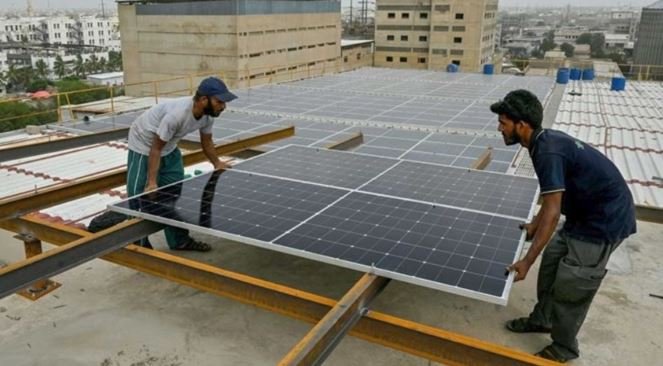
ISLAMABAD, Aug 4: China’s diversified energy strategy could offer Pakistan practical lessons for developing a more reliable, affordable and industry-focused power sector, energy researchers have said.
Experts believe Pakistan could adapt parts of the Chinese model by balancing conventional and renewable energy sources, expanding local manufacturing, improving access to concessional financing and linking electricity policy more closely with industrial development.
The China energy model for Pakistan would not require Islamabad to replicate Beijing’s system entirely. Instead, researchers say Pakistan could adopt selected policies suited to its economic conditions, energy demand and industrial needs.
China’s diversified energy mix
Ammara Aslam, assistant research manager at the Policy Research Institute for Equitable Development, said China’s energy strategy was built on several complementary sources rather than dependence on a single form of power generation.
“China did not abandon conventional energy overnight. Instead, it gradually diversified its power generation by combining coal, hydropower, nuclear energy, wind and solar,” she told Wealth Pakistan.
Citing current estimates, Aslam said solar accounts for about 30.8% of China’s electricity mix, wind 16.4% and coal 32.4%. Renewable sources, including hydropower, represented around 60% of the country’s overall energy mix in 2025, she added.
She said China gradually expanded green and alternative energy while retaining conventional sources to protect energy security during the transition.
According to Aslam, another important feature of the Chinese system is the role of provincial and local governments in energy planning, generation, pricing, distribution and financing.
She said decentralised decision-making had helped China implement projects more quickly and align power-sector investments with local economic requirements.
Industrial electricity demand sets China apart
Aslam said China’s electricity consumption is largely driven by industry, while domestic users account for a significant share of Pakistan’s power demand.
“Contrary to Pakistan, where nearly half of electricity demand comes from domestic consumers, China follows an industry-centric consumption model,” she said.
China has supported industrial expansion through large investments in utility-scale renewable energy projects, she added.
Aslam said China has around 1,380 gigawatts of utility-scale solar capacity, compared with approximately 780 megawatts in Pakistan. She also noted that Pakistan lacks sufficient battery storage to support the integration of renewable energy on a much larger scale.
China’s reliance on domestic financing and public-private partnerships has also reduced its dependence on external borrowing and helped provide greater price stability, she said.
Local solar manufacturing could reduce costs
Amina Shahab, a research associate for energy transition at PRIED, said Pakistan could realistically adopt several elements of China’s approach without attempting to copy the entire model.
She identified the development of local solar manufacturing as an immediate priority.
Pakistan imports most of its solar equipment, increasing project costs through import expenses, duties and taxes. Expanding local assembly and component manufacturing could reduce costs while creating jobs and new industrial activity, Shahab said.
She also recommended replacing high-interest commercial borrowing with concessional financing and targeted government support for utility-scale renewable projects.
According to Shahab, renewable energy should be treated not only as an environmental priority but also as a tool for industrial growth.
She proposed dedicated renewable electricity tariffs for industrial users, allowing manufacturers to access more stable and affordable power. Utility-scale solar parks located near industrial estates could also reduce transmission losses and improve supply reliability.
Experts call for targeted energy incentives
Shahab said government incentives should gradually shift away from broad electricity consumption subsidies and towards solar manufacturing, renewable-energy financing and productive industrial investment.
Energy researchers said Pakistan’s transition should involve more than simply adding solar and wind generation to the national grid.
China’s experience, they said, demonstrates how a diversified energy mix, domestic manufacturing, accessible financing, decentralised governance and industry-focused electricity policies can work together to improve economic competitiveness and long-term energy security.
Also Read: China’s 15th Five-Year Plan Opens New Path for People-Focused CPEC Cooperation