
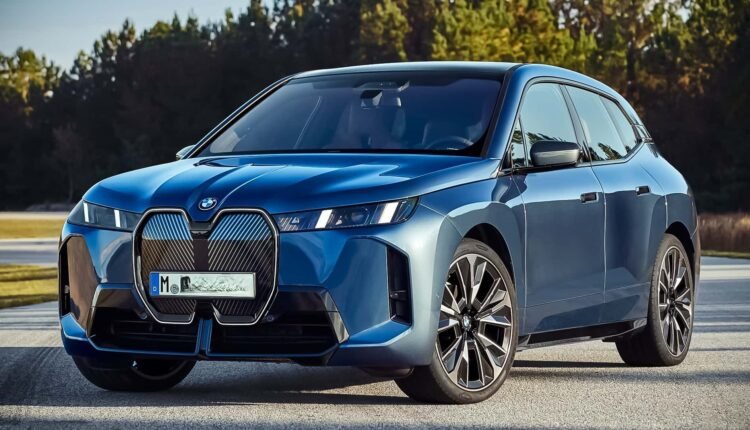
For many Pakistani buyers considering an electric vehicle, driving range is more than just another specification. It can determine whether an EV feels practical beyond the daily commute.
Public charging infrastructure remains limited on several intercity routes, so buyers often worry about whether they can reach the next charger, return home with sufficient battery remaining, or avoid seeing the estimated range drop rapidly on motorway journeys. That concern is at the heart of range anxiety.
Comparing EV range in Pakistan, however, is not straightforward because manufacturers quote figures using different testing standards, including NEDC, WLTP and CLTC. As a result, the largest advertised number does not necessarily belong to the vehicle with the strongest comparable range.
For this ranking, PakWheels uses WLTP as the common benchmark because it is more demanding than the older NEDC cycle and offers a more useful reference for buyers. It is also available across a larger number of Pakistan-market EVs than EPA ratings.
Prices and Pakistan-market specifications were checked on October 7, 2026.
How PakWheels Compared EV Range
Vehicles with an official WLTP rating retain that figure without adjustment.
For cars offered only with an NEDC figure, PakWheels calculated a WLTP-equivalent estimate using Pakistan-market EVs for which manufacturers publish both NEDC and WLTP ratings.
The comparison included:
- Kia EV5: 620 km NEDC, 500 km WLTP
- GAC Hyptec HT: 620 km NEDC, 520 km WLTP
- GAC AION V: 520 km NEDC, 435 km WLTP
The median WLTP-to-NEDC ratio is approximately 0.84.
For NEDC-only vehicles, the conversion used is:
NEDC × 0.84
CLTC-rated vehicles use a separate estimated conversion:
CLTC × 0.82
All converted figures are rounded to the nearest 5 km.
These figures are PakWheels estimates used only to create a comparable ranking. They are not manufacturer-certified WLTP ratings and should not be treated as exact real-world driving ranges.
Battery capacity is also not described as usable unless the manufacturer specifically identifies it as net or usable energy. A brochure listing 82.56 kWh or 99.8 kWh does not necessarily mean the entire capacity is available to the driver.
10. Kia EV5 Earth Long Range AWD
620 km NEDC
500 km WLTP
88.1 kWh battery
Rs21.85 million at the September promotional price, down from Rs23.50 million
The Kia EV5 is one of the clearest examples of why this comparison relies on WLTP rather than NEDC.
Kia Pakistan publishes both ratings for the same vehicle: 620 km under NEDC and 500 km under WLTP. The Earth Long Range AWD uses an 88.1 kWh battery.
Because an official WLTP figure is already available, no conversion is required.
The 120 km difference between the two standards is significant. Ranking the EV5 only by its 620 km NEDC figure would make it appear much closer to the top long-range models than its more demanding 500 km WLTP rating suggests.
9. Kia EV9 GT-Line
505 km WLTP
99.8 kWh battery
Rs38.65 million at the September promotional price
The EV9 is a large three-row all-wheel-drive SUV, so its range needs to be considered alongside its size and weight.
Kia Pakistan officially quotes up to 505 km WLTP for the Pakistan-spec GT-Line, which uses a 99.8 kWh battery.
Since the range figure is already based on WLTP, it enters the ranking unchanged.
Kia reduced the price from Rs43.2 million to Rs38.65 million in September 2026 under a limited-time offer.
8. Hyundai IONIQ 6 AWD
519 km WLTP
77.4 kWh battery
Rs23 million
The Hyundai IONIQ 6 reaches the upper half of the ranking despite using a smaller battery than several models around it.
Hyundai Pakistan specifies a 77.4 kWh battery, all-wheel drive and a range of up to 519 km for the 20-inch-wheel configuration. Hyundai’s corresponding technical specifications identify the 519 km figure as WLTP, so no conversion is necessary.
PakWheels Lahore-Islamabad Result
PakWheels covered 376 km from Lahore to Islamabad with approximately 100 km of indicated range still remaining.
Highway energy consumption was around 18 to 20 kWh per 100 km.
PakWheels Take
The IONIQ 6 demonstrates why battery size alone does not determine EV range. Its aerodynamic shape and efficient powertrain allow its 77.4 kWh battery to compete with vehicles carrying considerably larger packs.
7. GAC Hyptec HT
620 km NEDC
520 km WLTP
83 kWh LFP battery
From Rs11.999 million
The Hyptec HT is particularly useful for comparison because its Pakistan documentation publishes both NEDC and WLTP ratings.
GAC quotes 620 km NEDC and 520 km WLTP for both the Elite and Ultra Gullwing variants, each using an 83 kWh LFP battery.
The official 520 km WLTP figure is therefore used without conversion.
PakWheels Motorway Test
PakWheels tested the rear-wheel-drive Hyptec HT between Lahore and Islamabad.
At around 120 km/h, average energy consumption reached 18.5 kWh per 100 km, with the vehicle arriving on 3% battery.
On the return journey at approximately 110 km/h, consumption improved to 16.5 kWh per 100 km, and the vehicle arrived with 16% battery remaining.
PakWheels Take
The Hyptec HT illustrates the difference between testing standards clearly. The same vehicle is rated at 620 km under NEDC and 520 km under WLTP, while motorway testing shows how higher speed can reduce range further.
6. XPENG G6 Long Range RWD
535 km WLTP
80.8 kWh battery
Rs15.5 million
The longest-range version of the XPENG G6 sold in Pakistan is the Long Range RWD rather than the more powerful Performance AWD.
The Pakistan brochure gives the Long Range RWD a 535 km WLTP rating on 18-inch wheels, paired with an 80.8 kWh battery.
The same brochure lists an NEDC figure of 615 km for the 18-inch configuration, again showing why NEDC numbers cannot be directly compared with WLTP figures.
The Performance AWD uses the same 80.8 kWh battery but is rated at 510 km WLTP because the additional motor and higher-performance setup increase energy use.
5. BYD Seal Premium
650 km NEDC
545 km PakWheels WLTP-equivalent
82.56 kWh Blade Battery
Rs16.99 million
BYD Pakistan advertises the Seal with an 82.56 kWh battery and a claimed range of up to 650 km under the NEDC standard.
Because the manufacturer figure is NEDC, PakWheels normalises it to WLTP-equivalent range:
650 × 0.84 = 546 km
Rounded result:
545 km WLTP-equivalent
This is a PakWheels estimate. BYD’s official advertised range remains 650 km NEDC.
What Did PakWheels Get in the Real World?
PakWheels recorded around 450 to 480 km in city driving from the larger-battery Seal.
During a Lahore-to-Islamabad run, the car arrived with approximately 9% battery remaining.
The three figures answer different questions. The 650 km figure is BYD’s official NEDC claim, 545 km is PakWheels’ normalised comparison figure, while the road test reflects what happened under actual Pakistani driving conditions.
PakWheels Take
The Seal shows why normalisation is important. Its 650 km NEDC figure appears much closer to BMW’s range numbers until both are compared using a more demanding WLTP-based benchmark.
4. ZEEKR 009
582 km WLTP
116 kWh battery
Rs45.99 million
The ZEEKR 009 takes fourth place with an official 582 km WLTP range.
The Pakistan-market model uses a 116 kWh battery, giving it one of the largest battery packs in this ranking.
Because its range is already quoted under WLTP, the full 582 km figure is used without adjustment.
The model also carries an eight-year or 150,000 km battery warranty.
PakWheels Take
The 009 is notable because it is a large luxury MPV, yet its official WLTP range still places it ahead of several smaller electric SUVs and sedans.
Its large battery helps offset the weight and frontal area associated with a full-size MPV.
3. ZEEKR 7X Long Range RWD
615 km WLTP
100 kWh battery
Rs24.99 million
The ZEEKR 7X Long Range RWD moves directly into the top three because its Pakistan brochure already provides a 615 km WLTP figure.
No conversion is required.
The Long Range RWD uses a 100 kWh battery, while the more powerful Performance AWD carries a lower 543 km WLTP rating.
Because this ranking prioritises range rather than performance, the Long Range RWD is the relevant variant.
Its high-voltage battery warranty is listed at eight years or 150,000 km for Pakistan.
PakWheels Take
The ZEEKR 7X is one of the strongest entries because the ranking figure is an official WLTP number rather than an estimated conversion.
2. BMW i7 M70 xDrive
686 km WLTP
112.4 kWh battery
Rs65.9 million
BMW Pakistan lists the i7 M70 xDrive with a WLTP range of 601 to 686 km.
The same local technical data specifies a 112.4 kWh battery.
No conversion is necessary, and the maximum official figure of 686 km places the i7 comfortably ahead of the other vehicles below it in the ranking.
1. BMW iX xDrive60
701 km WLTP
109.1 kWh battery
Rs58.06 million
The BMW iX xDrive60 takes the top position without requiring any conversion.
BMW Pakistan officially quotes a WLTP range of 563 to 701 km for the xDrive60.
PakWheels lists the current Pakistan-spec model with a 109.1 kWh battery and an ex-factory price of Rs58.06 million.
Because BMW already publishes the vehicle’s range using WLTP, the maximum 701 km figure goes directly into the ranking.
How Far Can These EVs Actually Take You?
Range figures become easier to understand when compared with a real route.
PakWheels uses Lahore as a starting point to illustrate the approximate one-way reach of each EV using either its official WLTP figure or PakWheels WLTP-equivalent estimate.
These distances are illustrative rather than guaranteed.
Motorway speed, air-conditioning use, traffic conditions, elevation and driving style can all reduce the distance available from a full battery.
NEDC, WLTP, CLTC and EPA Explained
NEDC
The New European Driving Cycle is an older laboratory testing standard.
Its gentler speeds and acceleration patterns generally produce more optimistic EV range numbers.
Several EVs sold in Pakistan, particularly models originating from China, are still marketed using NEDC figures.
WLTP
The Worldwide Harmonised Light Vehicles Test Procedure replaced NEDC in modern European vehicle testing.
It uses more varied speeds, stronger acceleration and more demanding driving conditions, which generally results in a lower range figure for the same vehicle.
PakWheels uses WLTP as the common benchmark because it offers a more useful comparison than NEDC while still covering more Pakistan-market EVs than EPA ratings.
CLTC
The China Light-Duty Vehicle Test Cycle is China’s vehicle testing standard.
Its driving profile includes significant low-speed operation, where electric vehicles can be especially efficient.
As a result, CLTC range claims can appear considerably higher than comparable WLTP figures.
EPA Range
EPA is the United States vehicle range and efficiency testing standard.
Its methodology combines city and highway testing, followed by adjustments intended to better reflect factors such as higher speeds, temperature variation and climate-control use.
EPA figures are often more conservative than NEDC, CLTC and WLTP ratings.
EPA would be useful as a universal benchmark if every Pakistan-market EV had an equivalent EPA-tested version, but many Chinese EVs sold locally do not.
Using EPA would therefore exclude several important models from the comparison.
That is why PakWheels uses WLTP.
None of these laboratory test-cycle figures can guarantee exact road range.
Why PakWheels Uses WLTP Instead of NEDC
NEDC remains common in Pakistan, but it is an older and generally more optimistic test cycle.
The difference can be seen clearly in models for which both figures are available.
The Kia EV5 falls from 620 km NEDC to 500 km WLTP.
The Hyptec HT moves from 620 km NEDC to 520 km WLTP.
The GAC AION V drops from 520 km NEDC to 435 km WLTP.
WLTP is still a controlled laboratory test and should not be described as real-world range.
For comparing EVs available in Pakistan, however, it gives buyers a more realistic common reference than converting newer WLTP figures upward to the more optimistic NEDC standard.
PakWheels Take
WLTP serves as the comparison benchmark, not a prediction of exactly how far an EV will travel.
For that, a properly documented road test of the exact Pakistan-spec model remains more useful.
Claimed Range Versus PakWheels-Tested Range
The WLTP-equivalent ranking answers one question:
Which Pakistan-market EV has the strongest manufacturer range claim after different laboratory standards are normalised?
It does not answer another:
How far will the vehicle travel at 120 km/h on the M-2 with the air-conditioning running?
That requires road testing, which PakWheels has carried out on some of the vehicles included in this ranking.
Motorway speed, elevation, air-conditioning use, temperature, passenger load, tyres and driving style can all affect EV energy consumption.
For that reason, PakWheels keeps road-test results separate from manufacturer claims and normalised range estimates.
Range Claims Are Only the Starting Point
For EV buyers in Pakistan, the most useful figure is not necessarily the largest number printed in a brochure.
A WLTP or PakWheels WLTP-equivalent figure provides a more consistent way to compare vehicles, but buyers should also consider battery size, charging speed and documented real-world testing where available.
City drivers may rarely approach the maximum range of these EVs, but motorway and intercity users need to pay closer attention because speed, elevation, air-conditioning use and charger availability can significantly affect how far a vehicle travels.
The better question is not simply which EV claims the most kilometres.
It is which one provides enough dependable range for the journeys its owner actually makes.
Would you trust the brochure figure, or would a PakWheels road test matter more before buying your next EV?