
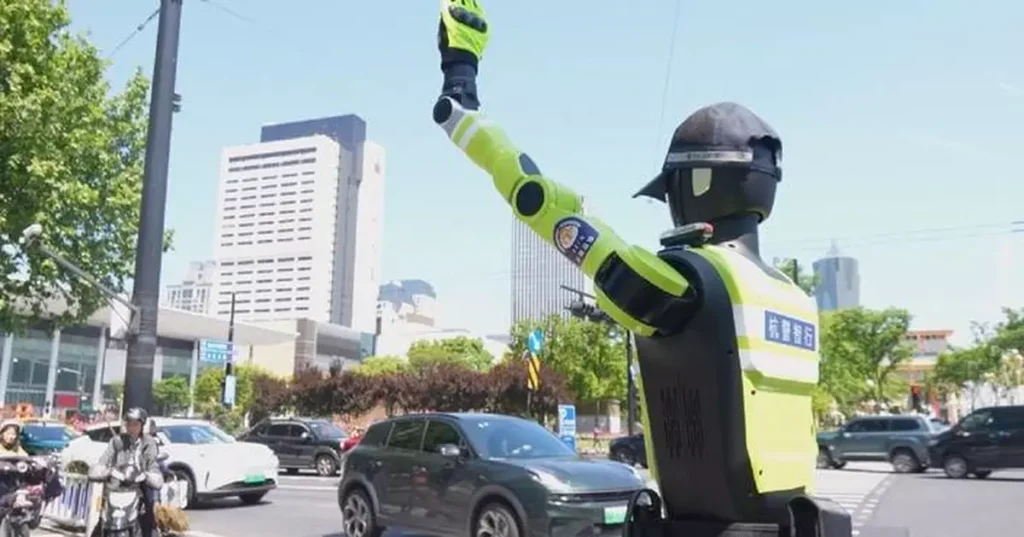
HANGZHOU: Cities across China deployed robot police units during the Labor Day holiday to assist with traffic control and public services, highlighting the country’s expanding use of artificial intelligence in urban management.
In Hangzhou, authorities introduced a squadron of 15 intelligent traffic robots at key intersections to support traffic flow, guide pedestrians and assist human officers. The deployment reflects a broader shift toward AI-powered urban governance aimed at improving efficiency during peak travel periods.
The robots are designed to handle routine tasks such as directing traffic, identifying violations and providing real-time navigation assistance. Officials say the technology helps reduce pressure on human personnel while maintaining consistent monitoring.
AI-assisted traffic management
Equipped with visual recognition systems, the robots can detect violations such as unsafe riding behaviour and issue immediate audio alerts. They can also transmit data to central systems for further action.
In tourist areas such as West Lake, the robots provide directions using interactive screens and voice responses, drawing on real-time traffic and location data to guide visitors.
Expanding use across cities
Similar deployments were reported in other regions. In Kashgar, a robot traffic officer has been directing vehicles at major intersections, while in Ordos, robotic units are being used for patrols, traffic control and safety awareness.
Officials say these systems integrate artificial intelligence and Internet of Things technologies to improve coordination and response times in busy urban environments.
Role in future urban governance
Authorities and researchers note that robot police are part of a wider effort to integrate intelligent systems into public services. The technology is expected to support more efficient traffic management while allowing human officers to focus on complex tasks requiring judgement and decision-making.
The rollout during the holiday period underscores China’s ongoing investment in smart city solutions and the growing role of AI in everyday governance.