

In a major diplomatic breakthrough, the United States and the Islamic Republic of Iran have signed a 14-point Memorandum of Understanding to immediately halt the conflict and establish a pragmatic framework for a final peace accord in 60 days.
Under the agreement, reportedly brokered by Pakistan’s mediation, both sides and their allies will immediately cease military operations. Both countries have committed to refraining from the use or threat of force, while also respecting each other’s sovereignty and territorial integrity.
A key element of the understanding is the initiation of formal talks toward a final agreement within a narrow 60-day window, subject to a 60-day extension, if agreed. In this period, both sides have committed themselves to a low-level equilibrium and to not taking steps that would further inflate tensions.
In the area of security, the agreement contains measures for de-escalation. The U.S. military presence in the area will be scaled back, and restrictions on maritime activities will be relaxed, including the gradual repealing of naval blockades. In response, Iran has pledged to make the passage of commerce through key waterways, including its Strait of Hormuz and Persian Gulf, safe and secure.
The economic part of the deal will see the U.S. pledging to ease sanctions on Iran, which include prohibitions on exporting oil, conducting banking operations and engaging in other financial transactions. It also mentions releasing frozen Iranian assets via mutually agreed channels and into the possibility of more extensive economic reconstruction support, contingent on final negotiations.
Regarding the nuclear issue, Iran restated its pledge not to develop atomic arms in the nuclear domain. The sides have agreed to discuss the concerns raised by nuclear technologies, such as nuclear enrichment and the management of nuclear materials, under the supervision of the International Atomic Energy Agency as part of a final settlement.
The final agreement, which is expected to be approved by the U.N. Security Council, is anticipated to give the council an international legal structure and supervisory body. Although the MoU is an important move in tackling historic tensions, its effectiveness will rely upon political will and the implementation of the MoU during the upcoming negotiation period. The development is seen as a unique opportunity for diplomatic engagement, although further difficulties lie ahead before a sustainable settlement can be made in the region of longstanding instability.
Also Read: A CITIZEN WRITES TO A WORLD BODY



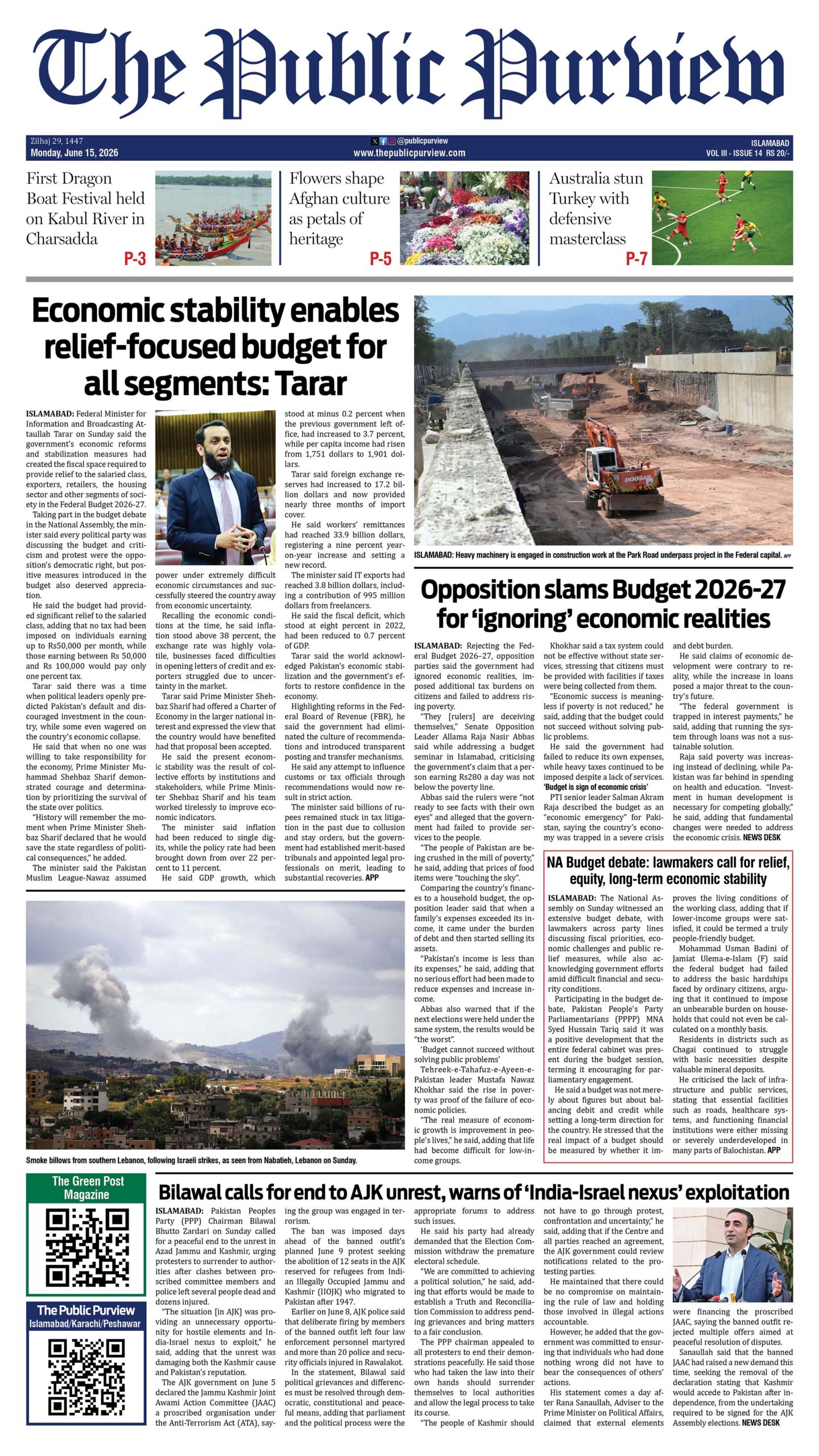 Today's E-Paper