
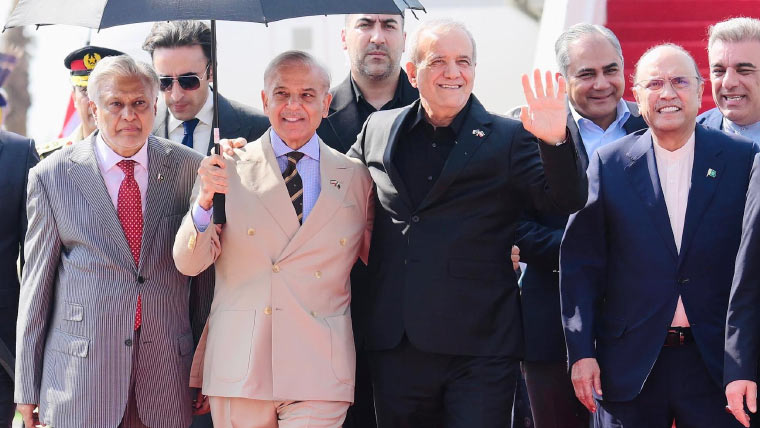
Pakistan’s diplomatic role in easing tensions between Iran and the United States has drawn renewed attention after Iranian President Masoud Pezeshkian visited Islamabad following a period of intense regional instability.
The visit came after weeks of conflict involving Iran, Israel and the United States had raised concerns across the Middle East, disrupted energy markets and increased fears of a wider regional confrontation. The situation also placed pressure on Gulf states and global oil supply routes, particularly around the Strait of Hormuz.
Pakistan’s mediation efforts were aimed at reducing tensions, encouraging dialogue and helping the parties move toward a temporary halt in hostilities. The process gained significance as the conflict threatened to expand beyond the immediate battlefield and affect regional security, trade and energy flows.
According to reports, Pakistan played a role as a mediator and witness in diplomatic efforts that led to an interim understanding between the United States and Iran. The arrangement was intended to support a temporary cessation of hostilities and create space for further negotiations.
The agreement also focused on restoring commercial movement through the Strait of Hormuz, a key global energy route, while allowing both sides time to work toward a longer-term settlement.
For Pakistan, the mediation effort was seen as an opportunity to project itself as a stabilising regional actor. Islamabad maintained contacts with Tehran, Washington and other regional capitals during the crisis, while calling for restraint and dialogue.
Pezeshkian’s visit to Pakistan added further diplomatic weight to the process. During the visit, both sides discussed bilateral relations, regional security, trade, energy cooperation and border coordination.
Pakistan and Iran have long shared important economic and security interests, including border management, energy cooperation and regional connectivity. Officials on both sides have repeatedly stressed the need to strengthen trade ties and reduce tensions through institutional engagement.
The visit also came at a time when regional governments were assessing the impact of the recent conflict on security arrangements, oil markets and diplomatic alignments.
Analysts say sustained progress will depend on whether the temporary understanding can lead to a more durable peace framework and whether regional states remain engaged in efforts to prevent further escalation.
For Pakistan, the next challenge will be to convert diplomatic goodwill into practical gains, including stronger economic cooperation with Iran, deeper regional coordination and a more visible role in peace-building efforts across the Middle East.
Also Read :PSQCA Reinforces Zero-Tolerance Policy Against Corruption and Misconduct