
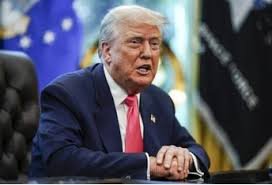
Washington: US President Donald Trump said he has delayed planned military strikes on Iranian power plants after what he described as “good and productive” talks with Tehran, signaling a pause in escalation at a time of heightened regional tensions.
The decision comes as the United States and Iran exchange warnings over potential attacks on critical infrastructure in the Gulf, a region central to global energy flows. The development may temporarily reduce the risk of immediate military confrontation.
Trump said the postponement followed recent diplomatic engagement but did not provide details about the discussions or any conditions attached to the delay.

Iran signals response options in Gulf
Earlier, Iran warned it could respond to any attack on its territory by disrupting key maritime routes in the Persian Gulf. In statements reported by state media and international agencies, Iran’s National Defense Council said access routes and communication channels could be mined if its coastal areas or islands were targeted.
Also Read: Trump, Iran escalate threats over energy targets as war intensifies
Officials indicated that different types of naval mines, including those deployable from shore, could be used in such a scenario.
Separately, the Islamic Revolutionary Guard Corps (IRGC) said any strike on Iran’s electricity infrastructure would be met with retaliatory action targeting power facilities in Israel and those supplying US bases in the region.
Clarification on critical infrastructure claims
Iran later rejected reports suggesting it intended to target desalination plants in Gulf countries, which are vital for drinking water supplies. Officials described such claims as inaccurate in statements carried by state media.
The situation remains closely watched due to the strategic importance of the Strait of Hormuz, a key transit route for global oil shipments, where any disruption could have wider economic implications.




 Today's E-Paper