

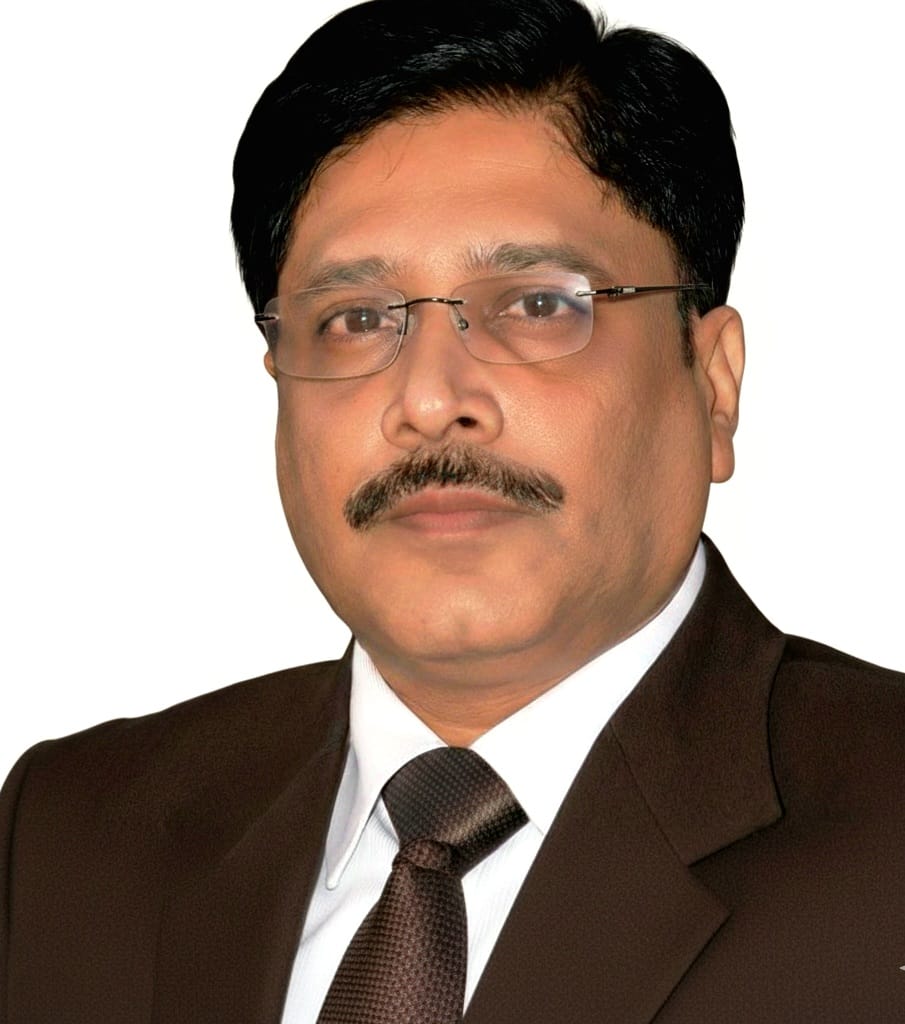
By: Sheikh Abdul Rashid
The world is not merely a composition of regions, borders, or geopolitical demarcations; it is a boundless ocean of human consciousness whose shores can only be tethered by the vastness of language and culture. When languages converse, history pivots; when the lamps of translation are illuminated, the shadows of estrangement dissipate. The intellectual fragrance that recently permeated the atmosphere of Copenhagen, the capital of Denmark, was not merely an event but a civilizational covenant sealed with the stamp of human fraternity and dialogue. The international seminar, hosted under the auspices of “Women in Focus International” and the “European Literary Circle,” was a grand celebration of those bridges that unite minds and bind hearts.
The moving spirit behind this intellectual gathering, the President of the European Literary Circle and a veritable ‘Literary Queen’ in Denmark, is Ms. Sadaf Mirza. Emerging from the fertile soil of Sarai Alamgir, Gujrat, her ascent to becoming a standard-bearer of literature on the European horizon is a feat of extraordinary magnitude. The synthesis of personal grace and literary rigor embodied in her persona is a rare specimen in today’s fragmented era. Her decades of dedicated service to both Danish and Urdu literature have transformed her into a bridge, dismantling borders to articulate the shared heritage of humanity. This seminar was the fruition of her tireless labor and visionary foresight, successfully assembling the luminaries of intellect upon a single, cohesive platform.
The seminar commenced as an intellectual and spiritual voyage, witnessing the gradual erasure of those invisible barriers that often precipitate misunderstanding. The proceedings, divided into two distinct sessions, began with the cultivation of thought and culminated in the mellifluous elegance of poetry. The first session encompassed the literary journey and scholarly contributions of Ms. Nadra Mehar Nawaz, who graced the occasion from Norway. She is not merely a translator or a columnist, but a confluence of research and creation, possessing an innate understanding of the alchemy of languages. Active in the fields of language, literature, and cultural connectivity since the 1990s, her literary odyssey serves as a beacon.
In her address, she articulated her lifelong endeavor to establish intellectual bridges between disparate linguistic landscapes. Her seminal work on the history, culture, and societal evolution of Norway stands as a testament to how an author can embrace an ‘alien’ territory and transform it into their own. According to her, language serves as the custodian of a nation’s identity and civilizational legacy, while translation acts as the quintessential medium for engaging these identities in meaningful discourse. Chaired by the esteemed Ms. Sana Shoaib Sarwar, this session reflected the reality that the presence of women in literature is no longer a matter of mere representation, but a robust intellectual force. Ms. Sana Shoaib Sarwar, in her presidential address, lauded the achievements of Pakistani women abroad, noting that today’s Pakistani woman, through her prowess, is not only elevating the Urdu language but also projecting a luminous image of Pakistan globally.
The second session offered an even more enchanting vista. Presided over by the Ambassador of Pakistan, Mr. Shoaib Sarwar, this poetic and literary symposium was unparalleled. The insight with which the Ambassador elucidated the intrinsic relationship between diplomacy, language, and translation was characteristic of a seasoned statesman. He aptly observed that in the realm of diplomacy, language is not merely a tool for communication but a master key to winning hearts. He posited that for a diplomat, mastering diverse languages is indispensable, and translation remains the cornerstone of international relations—an essential mechanism without which global harmony remains an unattainable abstraction.
In the same session, the renowned Urdu and Punjabi poet Zafar Awan and poetess Sadaf Mirza captivated the audience with their selected recitations. The depth of their verses and the emotional resonance of their delivery transported the attendees to a realm where metaphysical experiences converged with empirical realities. The presence of Mr. Ali Sattar, Counselor at the Embassy of Pakistan, further elevated the stature of the event.
The international character of the seminar was magnificently enhanced by the participation of the Universal Peace Foundation. The message from Khas Nelson formed the central philosophy of the seminar: “Translation is the fundamental pillar of mutual respect and peace.” These words served as a profound reminder that when we translate the essence of one language into another, we are effectively transporting the soul of one human to another. It is this process that lays the foundation for global peace and bridges the divides between cultures.
The most poignant and indelible moment of the event occurred as a manifestation of cultural harmony. When Ambassador Shoaib Sarwar performed the Shal Poshi (the traditional honoring with a shawl) of Mr. Parvez Mehar Nawaz, the Iranian-origin husband of Ms. Nadra Mehar Nawaz, it felt as though an eternal bond of cultural affinity had been forged between Pakistan, Iran, and Scandinavia. This scene confirmed that in the world of literature, prejudice finds no sanctuary; there is only the language of love and reverence.
The proceedings were moderated with such refinement and expertise by Dr. Shazia Rana and Ms. Fakhra Shaheen that the continuity of every session remained seamless. The event concluded with a display of traditional Pakistani hospitality, hosted by Ms. Rubina Farooqi and her husband, where the discourse continued over warm cups of Kashmiri tea. Sultan Mahmood Gondal, whose editorial coordination gave this seminar its organized structure, deserves profound commendation. His efforts, alongside the reporting by Mr. Asif Raza via Sahara International News, have etched this event into the pages of history.
This literary pilgrimage to Copenhagen demonstrated that when civilizations engage in dialogue, the specters of conflict dissipate. Languages are not merely collections of words; they are bridges that draw humanity toward a singular center. The dedication with which Ms. Sadaf Mirza and her team have kept these literary lamps burning serves as a guiding light for future generations. This seminar was a clarion call, declaring that no matter where the world lies, if the respect for literature and translation prevails, the lanterns of hope shall never be extinguished. This endeavor is, without doubt, an immortal tale that the history of Copenhagen shall forever remember in golden letters. It was a radiant manifestation of the truth that languages construct bridges between civilizations, cultures, and hearts, and that translation is the exquisite art of strengthening those very bridges.