
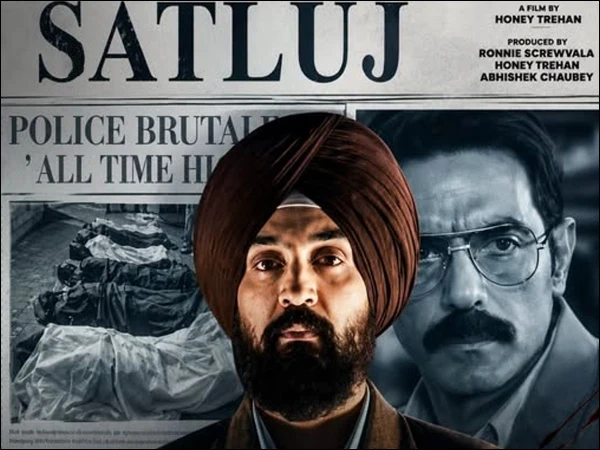
Sutlej is more than a feature film. It is a thought-provoking drama that explores the human impact of enforced disappearances, focusing on the emotional toll borne by families living with uncertainty, loss, and the search for justice. Rather than presenting a political argument, the film centers on the personal experiences of those left behind, making it relevant to broader discussions on human rights and the rule of law.
Through restrained storytelling and emotionally grounded performances, Sutlej raises questions about accountability, justice, and the value of human dignity. The film invites viewers to reflect on whether legal protections are applied equally and how societies respond to unresolved cases involving missing persons.
A Story Rooted in Human Experience
At its core, Sutlej portrays enforced disappearances as a humanitarian issue rather than a purely political one. The narrative highlights the uncertainty faced by families who spend years without knowing whether their loved ones are alive or dead.
By focusing on the experiences of parents, spouses, siblings, and children, the film presents the long-term psychological and emotional consequences of disappearance, making the story relatable beyond any single country or region.
Human Rights at the Center of the Narrative
One of the film’s strongest elements is its emphasis on human rights. Instead of advancing a partisan viewpoint, Sutlej focuses on the suffering of ordinary people and the importance of justice, transparency, and due process.
The themes explored in the film echo wider international debates, as organizations including the United Nations have repeatedly called for impartial investigations and accountability in cases involving enforced disappearances around the world.
Exploring Power, Accountability and the Rule of Law
The film also examines the relationship between state authority, public security, and individual freedoms. It raises broader questions about how governments balance national security with the protection of fundamental rights.
Rather than offering definitive answers, Sutlej encourages viewers to consider the challenges democratic societies face when addressing security concerns while maintaining legal safeguards and public accountability.
Thoughtful Storytelling and Strong Performances
The screenplay unfolds at a measured pace, relying on silence, dialogue, and emotional nuance instead of dramatic twists. While some scenes progress slowly, the deliberate pacing reinforces the uncertainty and prolonged waiting experienced by the characters.
The performances, particularly by Arjan Rampal, Falak Dusanj, and the supporting cast, avoid melodrama and instead convey emotion through subtle expressions and restrained dialogue. Their portrayals add authenticity to the film’s central themes.
Cinematography and Production Design
The film’s visual style complements its subject matter. Carefully selected locations, muted color palettes, and understated cinematography create an atmosphere of tension and uncertainty.
The background score remains subtle, allowing moments of silence to carry much of the emotional weight. Combined with effective editing, the technical aspects support the story without overshadowing it.
A Fictional Story Inspired by Real Issues
Although Sutlej addresses a sensitive subject associated with real-world debates, it is a fictional feature film rather than a historical record. Its purpose is not to document specific events but to encourage discussion about justice, accountability, and the human cost of unresolved disappearances.
By addressing a complex and often difficult topic through cinema, Sutlej contributes to broader conversations about human rights while demonstrating how film can serve as a platform for social reflection.
Also Read : Diljit Dosanjh Waived Regular Fee for ‘Sutlej’, Director Reveals