
ISLAMABAD: Pakistan could improve agricultural output and reduce water losses by adopting selected elements of China’s outcome-based water management system, according to experts who say stronger governance, better data integration and modern irrigation technology are as important as building new infrastructure.
The proposed approach would directly affect farmers, provincial irrigation departments and national water agencies as Pakistan faces declining per capita water availability and low irrigation efficiency. Agriculture accounts for about 23.4% of the country’s gross domestic product, but a large share of irrigation water is lost before reaching farms.
Pakistan’s per capita water availability has fallen from 5,260 cubic metres in 1951 to less than 1,000 cubic metres, while overall irrigation efficiency remains below 40%, according to the Pakistan Economic Survey 2025-26 and the Pakistan Council of Research in Water Resources.
An estimated 61% of water is lost between canal heads and agricultural fields, highlighting the need for reforms in distribution, monitoring and farm-level use.
China Links Water Use to Measurable Results
China has increasingly tied water management to economic output and measurable efficiency targets rather than focusing only on the total volume supplied.
Data from China’s Ministry of Water Resources showed that the country used 4.5% less water in 2025 to generate every 10,000 yuan of gross domestic product compared with the previous year.
Water consumption for every 10,000 yuan of industrial added value declined by 7.2%, while total national water use stood at 594.45 billion cubic metres.
Experts say these gains were supported by coordinated water allocation, agricultural planning, performance monitoring and the use of technology across different sectors.
Awais Javed, a director at the Petroleum Division of the Ministry of Energy, told Wealth Pakistan that China’s progress was not based solely on dams, canals or other physical infrastructure.
“China progressively transformed water management into a system governed by measurable outcomes,” he said.
He said institutions were assessed on indicators such as water productivity and conveyance efficiency instead of the amount of water delivered alone.
According to Javed, Pakistan’s challenge is not limited to scarcity. The country also produces a relatively low economic return from each cubic metre of water used.
Unified Water Data System Proposed
Javed said Pakistan could benefit from a national irrigation information platform combining satellite imagery, telemetry, groundwater monitoring, weather forecasts and crop data.
Such a system could help authorities identify water stress, detect excessive withdrawals and improve agricultural planning before shortages become severe.
Artificial intelligence could also support forecasting and policy decisions, but only if reliable data from different agencies is integrated into a single system.
Pakistan already collects significant hydrological and agricultural information through organisations including the Indus River System Authority and the Water and Power Development Authority.
However, much of that information remains fragmented across departments, limiting its usefulness for national planning.
A unified national water information system could give policymakers a clearer picture of canal flows, groundwater levels, rainfall, crop requirements and provincial demand.
Water Pricing and Modern Irrigation
Dr Shehla Batool, chief executive officer of Islamabad-based Water Stewards, said Pakistan’s system differs from China’s but several elements of the Chinese model could still be adapted locally.
She said China places considerable emphasis on water pricing, while Pakistan has not established a fully regulated pricing framework for agricultural water use.
Batool argued that any pricing system would require effective enforcement, public consultation and protections for small farmers.
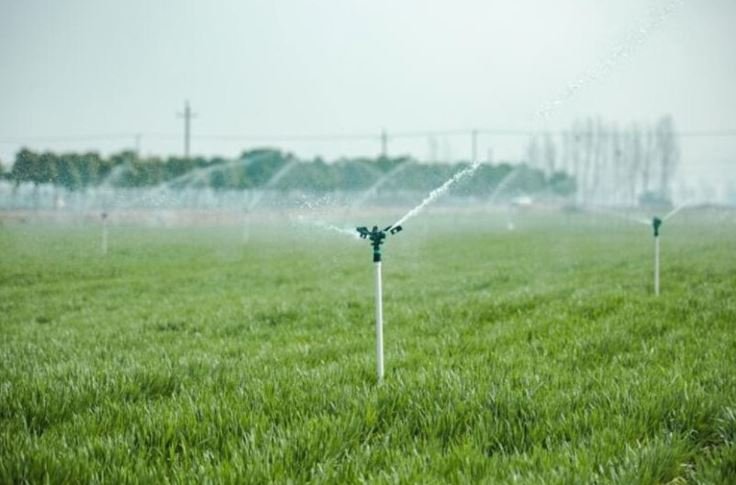
She also called for greater use of drip irrigation, rainwater harvesting, geographic information systems and remote sensing for crop planning.
Many farmers remain reluctant to adopt drip irrigation because they believe it may reduce crop yields, she said, adding that awareness and practical training are needed to address those concerns.
Farmer Training Seen as Essential
Batool said reforms should begin at the grassroots level rather than through regulation alone.
“Farmers need to be made aware and trained first before new rules and interventions are introduced,” she said.
She also noted that disputes over water allocation among provinces cannot be resolved through political debate alone and require accurate monitoring and technological support.
Experts say Pakistan can improve water productivity without depending entirely on new dams and canals by strengthening institutions, introducing measurable performance targets and helping farmers adopt more efficient practices.
Also Read: CBD Punjab CEO Reviews Lahore Mega Projects, Praises Monsoon-Resilient Engineering