
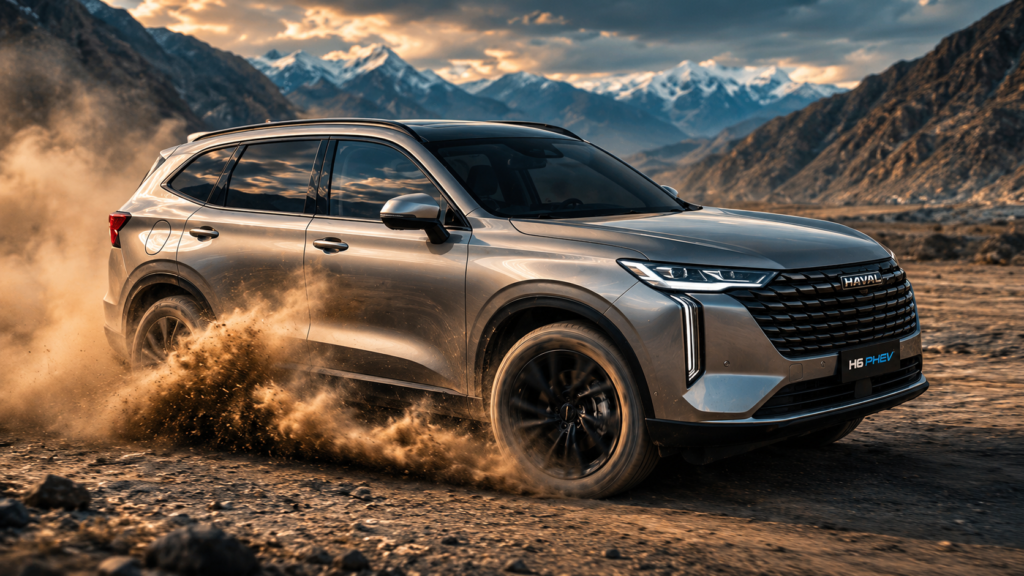
ISLAMABAD: Pakistan’s plug-in hybrid vehicle market has expanded significantly in 2026, giving car buyers a wider selection of SUVs and pickups that combine electric driving with petrol-powered flexibility.
From the Chery Tiggo 7 PHEV and Jaecoo J7 to the Haval H6, BYD Shark 6 and Kia Sorento, buyers can now compare models across different price ranges, seating capacities and performance categories.
According to advertised prices compiled as of October 27, 2026, the Chery Tiggo 7 PHEV is among the most affordable options at Rs9.499 million, while the Tank 500 PHEV sits at the higher end of the market at Rs22.5 million.
Plug-in hybrid electric vehicles (PHEVs) use a petrol engine alongside an electric motor and a rechargeable battery. Unlike conventional hybrids, they can be charged externally and driven for a substantial distance using electricity alone.
For Pakistani motorists, this technology offers an alternative to fully electric vehicles, particularly where public charging facilities remain limited.
Plug-in hybrid car prices in Pakistan 2026
The following comparison covers 13 plug-in hybrid models available, introduced or listed in Pakistan during 2026.
| Plug-in hybrid model | Price in Pakistan | Claimed electric range |
|---|---|---|
| Chery Tiggo 7 PHEV | Rs9,499,000 | 90+ km |
| Jaecoo J7 PHEV | Rs9,999,000 | 90+ km |
| MG HS Super Hybrid PHEV | Rs10,199,000 | 135 km |
| Omoda 7 PHEV | Rs10,649,000 | 90+ km |
| Jetour T1 i-DM | Rs10,799,000 | 100 km |
| Haval H6 PHEV FWD | Rs10,849,000 | 106 km |
| Chery Tiggo 8 PHEV | Rs10,999,000 | 90 km |
| Jetour T2 i-DM | Rs12,795,000 | 90 km |
| Haval H6 PHEV AWD | Rs12,895,000 | 100 km |
| Haval H6 GT PHEV | Rs12,949,000 | 183 km |
| Chery Tiggo 9 PHEV | Rs14,299,000 | 170 km |
| Kia Sorento PHEV | Rs18,999,000 | 66 km |
| BYD Shark 6 | Rs19,950,000 | 100 km |
| Tank 500 PHEV | Rs22,500,000 | 120 km |
Note: Prices are published ex-factory, introductory or listed figures and exclude additional on-road charges. Electric driving ranges are manufacturer claims measured under different testing standards, including NEDC and WLTP, and are not directly comparable.
Chery Tiggo 7 PHEV
The Chery Tiggo 7 PHEV is among the least expensive officially listed plug-in hybrid SUVs in Pakistan, with an ex-factory price of Rs9.499 million.
The five-seat SUV combines a 1.5-litre turbocharged petrol engine with an electric motor, producing a claimed 342 horsepower and 525 Nm of torque.
Its 18.3 kWh battery provides a claimed electric range exceeding 90 kilometres under the NEDC testing cycle.
The front-wheel-drive model targets buyers seeking an electrified family SUV without moving into the higher-priced seven-seat segment.
Jaecoo J7 PHEV
Priced at Rs9.999 million, the Jaecoo J7 PHEV competes directly with the Chery Tiggo 7 and Haval H6.
The five-seat crossover uses a 1.5-litre turbocharged petrol engine, electric motor and dedicated hybrid transmission.
Its combined output is rated at 341 horsepower and 525 Nm of torque, while the manufacturer claims an electric range exceeding 90 kilometres under WLTP testing.
The J7 also offers seven airbags, a head-up display and a premium interior package.
MG HS Super Hybrid PHEV
The second-generation MG HS Super Hybrid PHEV is priced at Rs10.199 million.
It features a 1.5-litre turbocharged petrol engine, an electric motor and a 24.7 kWh battery.
MG claims an electric driving range of up to 135 kilometres under NEDC testing, making it a notable option for motorists who regularly charge their vehicles at home.
The front-wheel-drive crossover produces a claimed 295 horsepower and 350 Nm of torque.
However, buyers should consider its AC charging arrangement when assessing their charging requirements.
Omoda 7 PHEV
The Omoda 7 PHEV is listed at Rs10.649 million, placing it in direct competition with the Jaecoo J7.
The five-seat crossover offers a claimed combined output of 342 horsepower and 525 Nm of torque.
Its electric driving range exceeds 90 kilometres under WLTP testing, while the manufacturer quotes a combined petrol-electric range of up to 1,250 kilometres.
The model emphasises modern styling, digital cabin features and a premium crossover design.
Jetour T1 i-DM
The Jetour T1 i-DM carries an introductory price of Rs10.799 million.
Despite its rugged exterior styling, the Pakistan-spec plug-in hybrid version uses a front-wheel-drive system.
Its 1.5-litre turbocharged petrol engine and electric motor produce a claimed 340 horsepower and 530 Nm of torque.
The vehicle offers a claimed electric range of up to 100 kilometres under NEDC testing.
It targets buyers seeking distinctive SUV styling alongside the convenience of plug-in hybrid technology.
Haval H6 PHEV
The Haval H6 PHEV is available in front-wheel-drive and Hi4 all-wheel-drive versions.
The FWD variant is priced at Rs10.849 million, while the AWD model costs Rs12.895 million.
Both use a 1.5-litre turbocharged petrol engine supported by plug-in hybrid technology.
The FWD version produces a claimed 322 horsepower and 540 Nm of torque, compared with 360 horsepower and 760 Nm for the AWD model.
Their respective claimed electric ranges are 106 kilometres and 100 kilometres under NEDC testing.
The price difference of approximately Rs2.046 million gives buyers a choice between a lower-cost urban SUV and a more powerful all-wheel-drive version.
Chery Tiggo 8 PHEV
The Chery Tiggo 8 PHEV offers seven-seat accommodation at an ex-factory price of Rs10.999 million.
Its plug-in hybrid powertrain produces a claimed 496 horsepower and 735 Nm of torque.
The manufacturer quotes an electric driving range of up to 90 kilometres and a combined range of approximately 1,200 kilometres under NEDC testing.
The Tiggo 8 is positioned as a family-oriented alternative for buyers who need a third row of seats without paying for a larger premium SUV.
Jetour T2 i-DM
The Jetour T2 i-DM is priced at Rs12.795 million.
The mid-size SUV features a front-wheel-drive plug-in hybrid system producing a claimed 360 horsepower and 610 Nm of torque.
Its advertised electric range is approximately 90 kilometres under NEDC testing.
Although its exterior resembles a traditional off-road vehicle, the Pakistan-spec T2 i-DM is front-wheel drive, making it different from the petrol-powered T2 XWD.
Haval H6 GT PHEV
The Haval H6 GT PHEV entered Pakistan’s market in 2026 with an announced price of Rs12.949 million.
The coupe-style SUV combines sportier bodywork with a performance-focused plug-in hybrid powertrain.
It delivers a claimed 430 horsepower and 642 Nm of torque through an all-wheel-drive system.
Its manufacturer-claimed electric range reaches 183 kilometres under NEDC testing, the highest figure among the models covered in this comparison.
The GT is aimed at buyers who prioritise performance and styling alongside electric driving capability.
Chery Tiggo 9 PHEV
The Chery Tiggo 9 PHEV is priced at Rs14.299 million and sits at the top of the brand’s plug-in hybrid SUV lineup.
The seven-seat model combines a 1.5-litre turbocharged petrol engine with three electric motors and an all-wheel-drive system.
Its claimed output reaches 610 horsepower and 920 Nm of torque.
A 34.46 kWh battery provides a manufacturer-claimed electric range of up to 170 kilometres under NEDC testing.
Chery also quotes a combined driving range of up to 1,400 kilometres.
The Tiggo 9 targets buyers seeking a larger family SUV with substantial performance and battery capacity.
Kia Sorento PHEV
The Kia Sorento 1.6T AWD PHEV is priced at Rs18.999 million.
The family SUV combines a 1.6-litre turbocharged petrol engine with an electric motor and all-wheel drive.
Its combined output is rated at 249 horsepower and 367 Nm of torque.
The manufacturer claims an electric range of 66 kilometres under WLTP testing.
The Sorento offers an alternative for buyers interested in a Kia plug-in hybrid SUV, although its price places it above several competing seven-seat models.
BYD Shark 6
The BYD Shark 6 is a double-cab plug-in hybrid pickup priced at Rs19.95 million.
It uses BYD’s Dual Mode Off-Road hybrid system, combining a 1.5-litre turbocharged petrol engine with electric motors driving both axles.
The pickup produces approximately 436 horsepower and 650 Nm of torque.
Its 29.58 kWh Blade battery provides a claimed electric range of 100 kilometres under NEDC testing.
The Shark 6 is aimed at buyers seeking pickup practicality, all-wheel-drive capability and strong acceleration.
Tank 500 PHEV
The Tank 500 PHEV is among the most expensive vehicles in this comparison, with a listed price of Rs22.5 million.
Unlike most plug-in hybrid crossovers, it uses body-on-frame SUV construction.
Its Hi4-T plug-in hybrid system produces a claimed 402 horsepower and 750 Nm of torque.
The manufacturer quotes an electric range of 120 kilometres and a combined range of 950 kilometres under NEDC testing.
The Tank 500 targets buyers seeking a large SUV with off-road-oriented construction and plug-in hybrid capability.
Which plug-in hybrid offers the longest electric range?
Among the vehicles covered in this comparison, the Haval H6 GT PHEV has the highest advertised electric range at 183 kilometres under NEDC testing.
The Chery Tiggo 9 follows with 170 kilometres, while the MG HS Super Hybrid offers 135 kilometres.
However, these figures represent manufacturer claims rather than independently verified real-world performance.
Actual electric range depends on driving speed, traffic conditions, air-conditioning use, battery condition and road conditions.
Different testing standards can also produce different results, making direct comparisons less reliable when vehicles are assessed under separate cycles.
Are plug-in hybrid cars practical in Pakistan?
Plug-in hybrids can offer advantages for Pakistani motorists who have access to reliable home charging but frequently travel between cities.
For shorter journeys, drivers can use electricity instead of petrol, potentially reducing fuel consumption.
On longer routes, the petrol engine provides flexibility when charging stations are unavailable.
This combination can be particularly useful in Pakistan, where public charging infrastructure remains concentrated in selected urban areas and major travel corridors.
However, the financial benefits depend heavily on charging habits.
A plug-in hybrid that is rarely connected to a charger may offer significantly smaller fuel savings than one whose battery is regularly replenished.
Buyers should also consider electricity costs, battery warranties, maintenance requirements and access to authorised service centres.
What should buyers check before purchasing a PHEV?
Before purchasing a plug-in hybrid vehicle, motorists should compare the exact variant, battery capacity, electric range, charging requirements and warranty coverage.
Home charging arrangements are especially important because different models support different charging speeds.
Buyers should confirm whether their chosen vehicle supports AC charging only or also offers DC fast charging.
The availability of trained technicians, replacement parts and high-voltage battery servicing should also influence purchasing decisions.
Published ex-factory prices do not include all ownership expenses. Registration charges, applicable taxes, freight, insurance and other costs can increase the final amount payable.
Motorists should therefore obtain an updated written quotation from an authorised dealership before making a booking.
With more manufacturers introducing plug-in hybrid vehicles, Pakistani buyers now have a broader selection of electrified SUVs and pickups.
The best choice ultimately depends on budget, family requirements, daily driving distance, charging access and whether the additional cost of all-wheel drive or a larger battery is justified.