
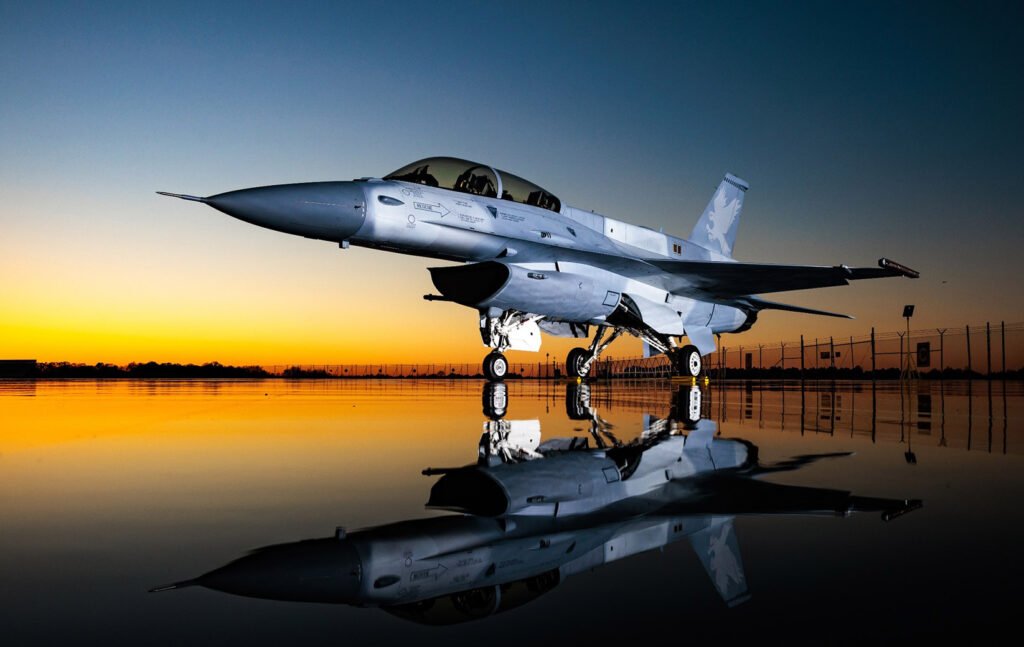
WASHINGTON: Pakistan has been included in a $488 million US F-16 radar support deal awarded to Northrop Grumman Systems Corporation, aimed at providing long-term engineering and technical support for radar systems used in F-16 fighter jets under the Foreign Military Sales (FMS) programme.
The contract, announced by the United States Air Force, covers APG-66 and APG-68 radar systems and will run through March 31, 2036. The agreement is intended to help partner countries, including Pakistan, maintain operational readiness and sustain the performance of their F-16 fleets.
Work will be carried out in Linthicum Heights, Maryland, while the Air Force Life Cycle Management Center at Hill Air Force Base in Utah will oversee the contract. The award was finalised on April 27, 2026.
Multiple countries part of support programme
The FMS package includes a broad group of US partner nations, including Bahrain, Belgium, Chile, Denmark, Egypt, Greece, Indonesia, Iraq, Israel, Jordan, Korea, Morocco, the Netherlands, Norway, Oman, Pakistan, Poland, Portugal, Romania, Thailand and Turkiye.
The programme allows the United States to provide defence equipment and technical services to allied countries, supporting interoperability and long-term system maintenance.
Follow-up to earlier F-16 support package
The development follows a separate US approval in December 2025 of a $686 million support package for Pakistan’s F-16 fleet. According to the Defense Security Cooperation Agency, that package included Link-16 data systems, secure communications, avionics upgrades, training and logistical support.
US officials said the earlier approval was aligned with broader foreign policy and security objectives, including maintaining interoperability with partner forces and supporting counterterrorism operations.
Focus on fleet sustainment and capability
The 2025 notification stated that the upgrades were designed to modernise Pakistan’s Block-52 and Mid-Life Upgrade F-16 aircraft and meet operational safety requirements.
Officials noted that continued technical support and system upgrades are essential for sustaining aircraft capability and addressing evolving operational needs.