
NEW YORK, September 24 — Pakistan showcased more than 500 regulatory reforms and pitched investment opportunities across technology, manufacturing, renewable energy and other export-oriented sectors at the World Economic Forum’s Sustainable Development Impact Meetings 2026 in New York.
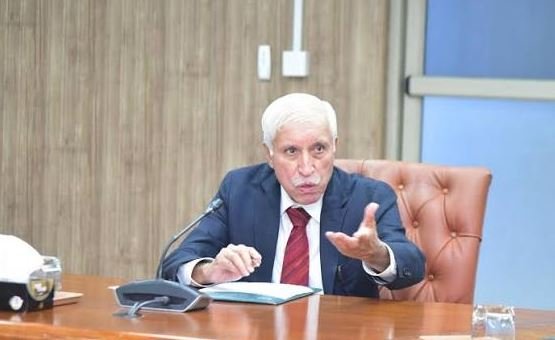
Federal Minister for Board of Investment Qaiser Ahmed Sheikh, speaking at the opening panel of the Global Regulatory Innovation Platform, said Pakistan was working to make its regulatory system simpler, clearer and more predictable for investors while retaining safeguards needed to protect the public interest.
The World Economic Forum launched the Global Regulatory Innovation Platform, or GRIP, with the UAE government in 2025 to promote more agile and future-ready regulatory systems amid rapid technological change.
Sheikh said more than 500 regulatory reforms had been introduced across around 30 sectors in coordination with approximately 90 federal and provincial departments.
He said the Pakistan Regulatory Modernization Initiative had established a framework for reviewing, simplifying and digitising business regulations, while the Asaan Karobar Act 2025 had further institutionalised the reform process through mechanisms including the Pakistan Regulatory Registry and Pakistan Business Portal.
The minister highlighted the Board of Investment’s Business Facilitation Centre in Islamabad as an example of efforts to translate regulatory reforms into practical services for businesses.
According to figures presented by Sheikh, the centre brings 22 federal agencies under one roof, allowing businesses to access registrations, licences, certificates, permits and approvals through a coordinated platform.
During its first eight months, he said, the centre served 5,386 businesses, processed 4,555 approvals and no-objection certificates, facilitated Rs5.08 billion in investment and supported 15,680 jobs. The minister said it recorded an investor satisfaction rating of 9.8 out of 10.
“Pakistan is moving from fragmented procedures towards coordinated, investor-focused service delivery,” Sheikh said, describing the centre as a practical example of regulatory reform being put into operation.
Pakistan Pitches AI, Technology and Renewable Energy Investment
Turning to emerging technologies, Sheikh said Pakistan wanted regulation to encourage innovation while maintaining human accountability, security, transparency and public trust.
He said regulatory sandboxes and controlled experimentation could allow emerging technologies and new business models to be tested before wider implementation, pointing to existing experience at the Securities and Exchange Commission of Pakistan and State Bank of Pakistan.
The minister said Pakistan’s National AI Policy and wider regulatory modernisation programme were intended to create more space for responsible artificial intelligence adoption and investment.
“Moving quickly does not mean regulating less. It means creating regulation that can learn and adapt,” he said.
Sheikh also highlighted Pakistan’s Investment Policy 2023, saying foreign investors could hold up to 100% ownership in most sectors, subject to sector-specific requirements, while profit and capital repatriation was available under applicable foreign-exchange procedures.
He said Pakistan’s 44 notified Special Economic Zones offered opportunities for industrialisation, exports, technology transfer and job creation.
According to the minister, eligible SEZ enterprises can receive income-tax exemptions up to 2035, depending on the applicable exemption period and legal provisions, while qualifying imported plant and machinery can receive a one-time exemption from customs duties and taxes.
Pakistan Eyes More Global B2B Investment Partnerships
Sheikh said Pakistan wanted to build on its international business-to-business investment engagements, citing the Pakistan-China B2B Investment Conference 2025.
According to figures presented by the minister, the event brought together 623 Chinese and nearly 300 Pakistani companies and generated more than 3,500 matchmaking meetings, 25 joint ventures and 142 memoranda of understanding representing about $9.5 billion in announced business value.
He said Pakistan planned similar engagements with other countries, focusing on joint ventures, technology partnerships, exports and long-term investment.
Priority sectors include export-oriented manufacturing, technology and digital services, renewable energy and energy efficiency, agribusiness and food processing, minerals, infrastructure and logistics, industrial clusters and SEZs, venture capital and public-private partnerships.
Sheikh also identified renewable energy, climate-resilient infrastructure, climate-smart agriculture, efficient water systems and sustainable manufacturing as areas offering potential for investment and long-term economic resilience.
He invited international companies, institutional and sovereign investors and development partners to explore investment and technology partnerships in Pakistan.
The Board of Investment, he said, would continue efforts to simplify regulations, reduce unnecessary compliance requirements and improve investor facilitation as Pakistan seeks to attract sustainable, export-oriented and technology-driven investment.