
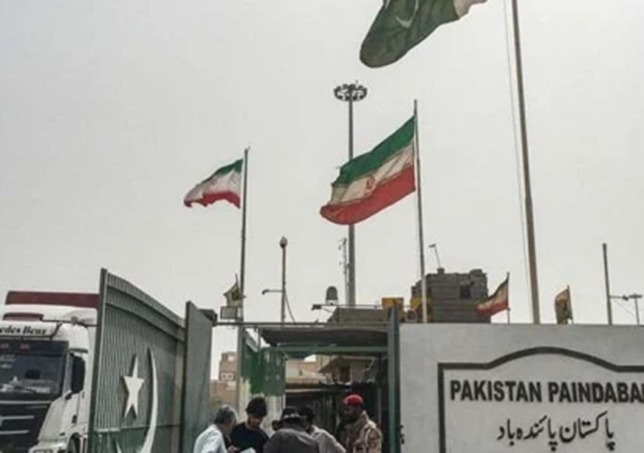
ISLAMABAD: Pakistan’s newly operational Iran transit corridor is providing exporters with a lower-cost and more predictable route to Central Asia, offering an alternative to traditional trade pathways at a time of shifting regional dynamics. Analysts say the corridor could improve market access, reduce logistics costs and strengthen regional connectivity if operational and financial challenges are addressed.
The development follows the activation of the Gabd-Rimdan border terminal under the Transports Internationaux Routiers (TIR) system, with the first export consignment—frozen meat—dispatched from Karachi to Tashkent via Iran. The facility, operational since April 2026, supports containerised and refrigerated cargo, providing a more efficient option compared to routes through Afghanistan.
Policy support and early trade facilitation
To support early trade flows, the government has allowed certain exports to Iran by land without mandatory banking instruments for a limited period, while also permitting rice exports to Central Asia and Azerbaijan through the same route. These measures indicate a broader policy effort to operationalise the corridor and encourage exporters to use the new pathway.
According to the Pakistan Business Council, Pakistan’s total trade with Central Asian countries remains limited, accounting for a small share of overall global trade. This highlights the potential for expansion if logistical and policy barriers are reduced.
Diversification of trade routes
Officials say the corridor comes at a critical time as Pakistan looks to diversify its trade routes. Data from the State Bank of Pakistan shows a decline in exports to Afghanistan in recent months, increasing the need for alternative regional access points.
Speaking to Wealth Pakistan, Federal Minister for Board of Investment Qaiser Ahmed Sheikh said Iran could serve as a gateway for Pakistan’s westward trade expansion, potentially improving access to Central Asian markets and energy resources.
Opportunities and constraints
Experts say the corridor could enhance competitiveness by reducing transit time and costs under the TIR framework, while also supporting broader regional connectivity initiatives. However, they caution that challenges related to sanctions, banking channels and customs procedures must be addressed to ensure sustained trade growth.
Irfan Bukhari, founding president of the Export Import Bank of Pakistan, noted that improved physical connectivity alone may not be sufficient without reliable financial systems and regulatory alignment. He also pointed to opportunities for Pakistani firms to expand into services, including construction and engineering, through partnerships in Central Asia.
Scope for export diversification
Current exports to Central Asia remain concentrated in a limited range of goods, including rice, fruits, sesame seeds and frozen meat. Analysts say a more reliable Iran route could help diversify exports and expand Pakistan’s presence in regional markets.
Overall, the Iran transit corridor is seen as a strategic addition to Pakistan’s trade network. Its long-term impact will depend on consistent policy support, efficient border management and the development of reliable financial mechanisms to facilitate cross-border trade.