
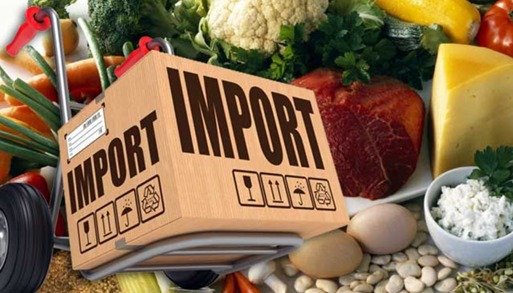
ISLAMABAD: Pakistan’s food import bill climbed to $805.487 million in July 2026, up more than 24% from the previous month, as a sharp increase in palm oil purchases drove overall spending higher at the start of FY2026-27.
The Pakistan food import bill reached Rs224.249 billion during the month, compared with Rs180.331 billion, or $646.926 million, in June 2026, according to the latest import statement available with Wealth Pakistan. The increase matters for Pakistan’s external trade position because food imports remain a significant source of foreign exchange demand.
In rupee terms, Food Group imports increased 24.35% month-on-month, while dollar spending rose 24.51%.
Compared with July 2025, food imports were up 5.91% in rupee terms and 8.12% in dollar terms, from Rs211.731 billion, or $744.974 million.
Palm Oil Accounts for Nearly 45% of Food Imports
Palm oil remained Pakistan’s largest food import item in July, with 298,172 metric tons imported at a cost of Rs99.927 billion, or $358.927 million.
The category accounted for nearly 45% of the country’s total food import bill during the month.
Palm oil imports jumped 46.71% in quantity over June, while their rupee value increased 48.80% and dollar value rose 48.98%.
On a year-on-year basis, palm oil imports increased 3.95% in volume, 16.18% in rupee value and 18.60% in dollar terms.
Tea, Pulses and Other Food Imports Rise
The broad “other food items” category was the second-largest component of Pakistan’s food import bill, reaching Rs72.393 billion, or $260.038 million.
Its value increased 11.97% in rupee terms and 12.12% in dollars compared with June. Against July 2025, spending rose 3.17% in rupees and 5.32% in dollars.
Pakistan also imported 131,291 metric tons of pulses worth Rs22.384 billion, or $80.398 million.
Pulse imports increased 7.44% in quantity from June, while spending rose 2.99% in rupees and 3.11% in dollars. Compared with July last year, imports were up 16.18% in volume and 8.76% in dollar value.
Tea imports recorded stronger growth, reaching 24,128 metric tons valued at Rs16.635 billion, or $59.748 million.
Compared with June, tea imports rose 25.60% in quantity and 22.97% in dollar terms. On a year-on-year basis, volumes increased 30.78%, while dollar spending surged 42.04%.
Imports of milk, cream and infant milk food reached 6,535 metric tons, valued at Rs5.232 billion, or $18.795 million.
The category increased 14.79% in quantity and 12.49% in dollar value from June. Compared with July 2025, dollar spending was 24.93% higher.
Dry Fruits and Spices Record Declines
Not all food import categories moved higher during July.
Dry fruits and nuts imports stood at 6,230 metric tons worth Rs2.121 billion, or $7.618 million. Imports declined 8.86% in quantity and 10.11% in dollar value from June.
Spices imports reached 15,026 metric tons worth Rs5.523 billion, or $19.838 million.
The category declined 4.14% in volume and 10.47% in dollar terms on a monthly basis. Compared with July 2025, dollar spending on spices was down 16.77%.
Sugar imports remained limited at 112 metric tons, costing Rs34 million, or $0.121 million.
Soybean oil imports were negligible at around three metric tons worth approximately Rs1 million, or $0.004 million.
Pakistan recorded no wheat imports in July 2026.
The figures show that Pakistan entered FY2026-27 with a higher food import bill, driven mainly by the sharp increase in palm oil purchases alongside higher spending on tea, pulses, milk-related products and other food items.
Also Read: Pakistan Eyes Gas Pricing Reform as SSGC Told to Cut Losses