
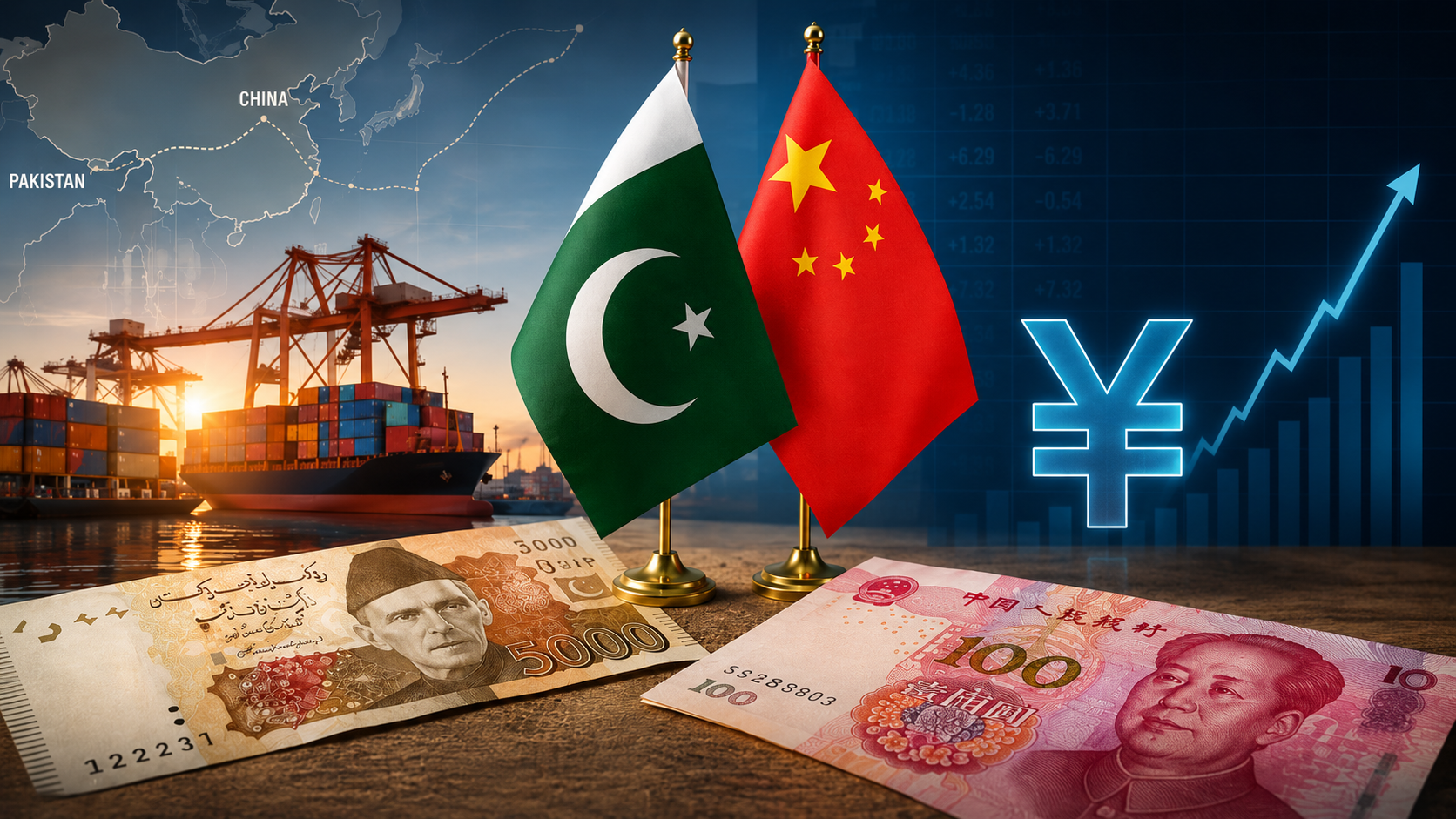
ISLAMABAD: Pakistan is gradually increasing the use of the Chinese renminbi (RMB) in bilateral trade with China as businesses and financial institutions look to reduce reliance on the US dollar and ease pressure on foreign exchange reserves.
According to data cited from the State Bank of Pakistan, the share of Pakistan-China trade settled in RMB increased from 2 percent in 2018 to more than 14 percent in 2023. The shift reflects growing trade volumes between the two countries and policy support for direct currency settlement.
Under the traditional trade system, Pakistani importers typically converted rupees into US dollars before converting them into Chinese currency for payments, increasing transaction costs and exposure to exchange rate fluctuations. Direct RMB settlement removes one layer of currency conversion and reduces associated financial risks.
The State Bank has supported the transition through RMB clearing arrangements involving banks including the Industrial and Commercial Bank of China (ICBC), Bank of China and Standard Chartered Bank. These systems allow businesses to settle payments directly in Chinese currency.
The report noted that wider use of RMB could help Pakistan manage foreign exchange reserves more effectively by lowering demand for US dollars during periods of high import activity. It also said reduced dependence on the dollar may help limit the impact of exchange rate volatility on domestic markets.
Financial institutions are also expanding RMB-based products such as letters of credit, guarantees and trade financing facilities to support businesses involved in Pakistan-China trade. Industry experts said the shift could particularly benefit small and medium enterprises by reducing transaction costs and improving financial planning.
The transition also aligns with broader regional initiatives including the China-Pakistan Economic Corridor (CPEC), where many transactions involve Chinese imports, financing and long-term payments. Settling part of these transactions in RMB can reduce currency mismatch risks and improve coordination between financial systems in both countries.
Banking and foreign exchange professionals quoted in the report said greater use of RMB could contribute to a more diversified and resilient currency market in Pakistan, while reducing exposure to dollar shortages and exchange rate shocks.
Also read: Pakistan Plans to Double Agricultural Exports to China and Gulf Under Climate Strategy