
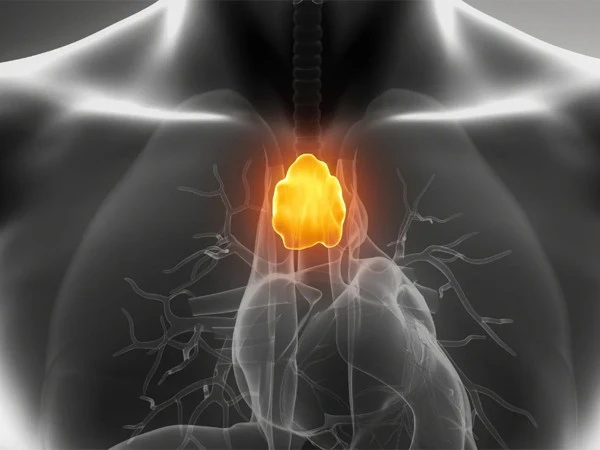
A small organ located behind the breastbone may play a more important role in adult health than previously believed, according to research that links removal of the thymus gland with higher risks of death and cancer.
The thymus, a fatty-looking organ in the upper chest, helps train the body’s immune system during childhood. Doctors long believed it became far less important in adulthood, but a 2023 study published in The New England Journal of Medicine has raised new questions about that assumption.
Researchers in the United States found that adults who had their thymus surgically removed were more likely to die from any cause or develop cancer during the years after surgery compared with similar patients whose thymus was not removed.
The study examined more than 1,100 adults who underwent thymectomy, a surgical procedure to remove the thymus. Their health outcomes were compared with those of matched patients who had similar chest surgeries but kept the organ.
According to the researchers, the five-year risk of death was higher among patients who had undergone thymectomy. The risk of cancer was also higher in the thymectomy group.
David Scadden, a cancer specialist at Harvard University and one of the researchers involved in the study, said at the time that the findings suggested the thymus may remain important for human health beyond childhood.
However, scientists cautioned that the research was observational. That means it can show an association between thymus removal and poorer health outcomes, but it does not prove that removing the thymus directly causes cancer or death.
The findings are still considered significant because the thymus is sometimes removed during heart or chest surgery when surgeons need better access to the heart and major blood vessels.
The thymus is especially important early in life because it helps produce and mature T cells, a type of white blood cell that helps the body fight infections, viruses and abnormal cells. Previous research has shown that children without a functioning thymus can have long-term immune problems.
Some studies have also found that children who lack a thymus may produce weaker immune responses to vaccines, which can affect protection against disease.
The researchers said more studies are needed to understand how the thymus affects adult immunity and cancer risk. Until clearer evidence is available, they suggested that doctors should avoid removing the organ unless there is a strong medical reason to do so.
Also Read more : Scientists Detect Microplastics in Living Tissue for First Time