
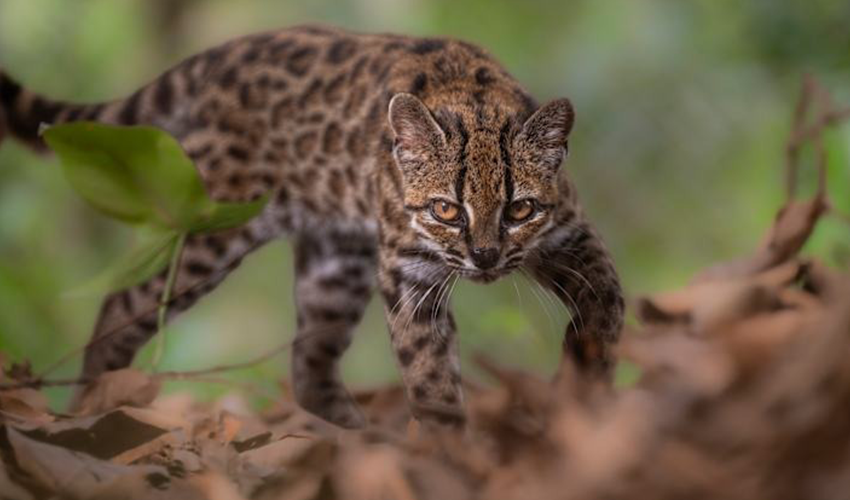
Known locally as the “tilcayo,” the small cat was identified in Bolivia’s Yungas forests, a mountainous region where dense vegetation is frequently covered by clouds. Researchers used genetic analysis to establish that the animal represents a distinct species.
Small Cat With Distinct Genetic Lineage
The newly identified cat is about 46 centimetres long and weighs approximately 1.4 kilograms. It has light-brown fur marked with irregular spots, making it smaller than a typical domestic cat.
Researchers analysed genetic material from 38 wild cat specimens collected across South America, including eight preserved museum specimens. The analysis indicated that tiger cats comprise five genetically distinct species.
According to the research, the lineage of the newly identified species separated from other tiger cats around 1.4 million years ago. Researchers considered this genetic divergence significant in establishing it as a separate species.
Limited Information About the Species
Researchers currently have limited information about the animal’s behaviour and ecology. Camera-trap evidence suggests that it is primarily active at night.
Analysis of faecal samples also found remains of small rodents, suggesting that they may form part of the cat’s diet.
The findings were detailed in research published in the journal Current Biology. National Geographic Explorer and study co-author Paula Nogales Ascarrunz was among the researchers involved in documenting the species.
Yungas Forests Face Environmental Threats
The discovery also draws attention to the environmental pressures facing Bolivia’s Yungas forests. Researchers said the mountainous forests are threatened by deforestation, agricultural expansion, human-caused fires and mining.
Scientists noted that the identification of the new species demonstrates how much remains to be documented about biodiversity, particularly in remote ecosystems. It also raises concerns that some species could face conservation threats before scientists have fully identified or studied them.