
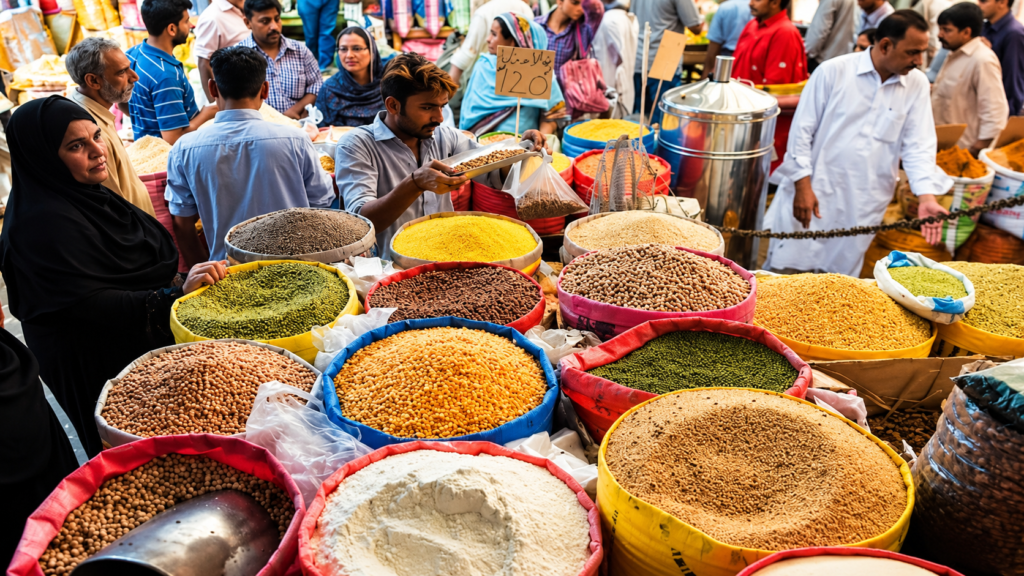
KARACHI, October 23, 2026: Consumers in Karachi are paying significantly more than officially notified prices for essential commodities, with LPG, chicken, flour and eggs selling at higher rates across the city’s markets.
The sharp difference between government-fixed prices and actual retail rates has added to the financial burden on households already struggling with rising living costs.
LPG has emerged as one of the most expensive commodities, with retailers charging between Rs500 and Rs550 per kilogram despite the Oil and Gas Regulatory Authority (OGRA) setting its price at Rs279.34 per kilogram.
At the upper end of the reported market range, consumers are paying approximately Rs271 more per kilogram than the official rate, a difference of nearly 97 percent.
Chicken, flour and eggs also exceed official prices
Chicken meat is being sold for as much as Rs750 per kilogram in Karachi, compared with the officially notified price of Rs690 per kilogram.
The difference means buyers are paying Rs60 extra on every kilogram of chicken purchased at the higher market rate.
Flour prices are also considerably above the government-approved level.
Chakki flour, officially priced at Rs145 per kilogram, is being sold at an average of Rs190 per kilogram in the city.
This represents an additional cost of Rs45 per kilogram, or approximately 31 percent above the notified price.
Similarly, farm eggs are available for Rs280 per dozen against the official rate of Rs240, leaving consumers paying Rs40 more per dozen.
Official prices versus market rates
| Commodity | Official rate | Market rate |
|---|---|---|
| LPG (per kg) | Rs279.34 | Rs500–550 |
| Chicken meat (per kg) | Rs690 | Up to Rs750 |
| Chakki flour (per kg) | Rs145 | Rs190 |
| Farm eggs (per dozen) | Rs240 | Rs280 |
Rising costs put pressure on household budgets
The price differences highlight the gap between officially notified rates and the amounts consumers are being charged in Karachi’s retail markets.
LPG, commonly used for cooking, is particularly affected, with its reported market price approaching twice the regulated rate in some cases.
Higher prices for flour, chicken and eggs are also increasing the cost of everyday meals.
For households purchasing these commodities regularly, even relatively small differences between official and market rates can accumulate into substantial additional monthly expenses.
The reported figures underline the challenges consumers face when essential goods are sold above prescribed prices.
The available report did not include a response from the relevant price-control authorities or details of enforcement action against retailers charging above official rates.