
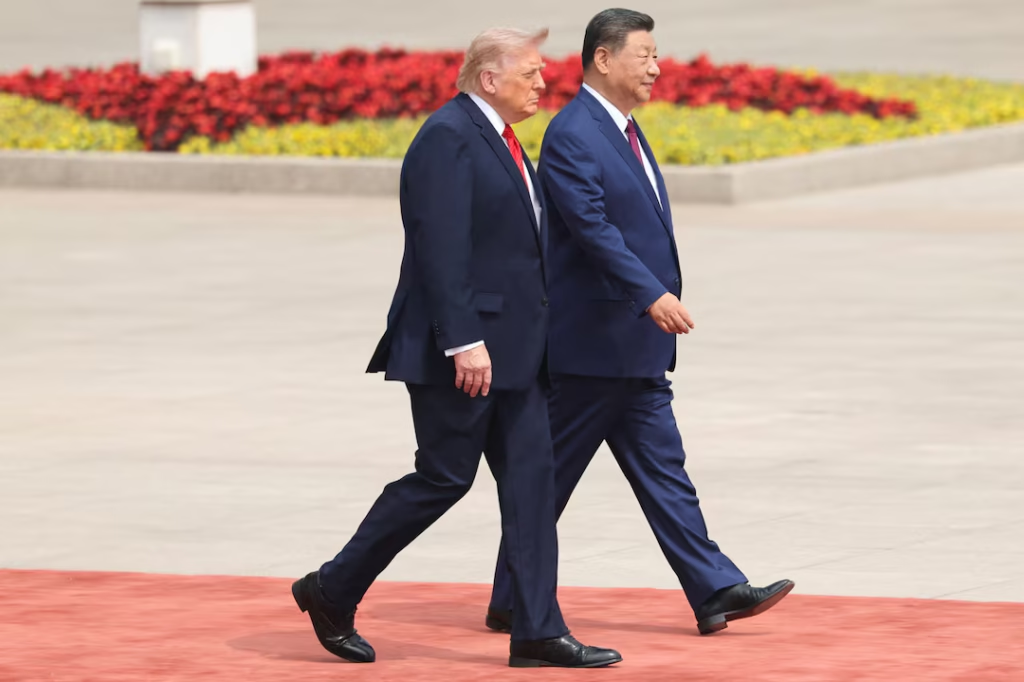
BEIJING/WASHINGTON — U.S. President Donald Trump arrived in China on Thursday for high-level talks with Chinese President Xi Jinping, with the Iran war emerging as the biggest issue hanging over the visit.
The conflict, which has already pushed up global oil prices and disrupted shipping through the Strait of Hormuz, is becoming a growing political and economic concern for Washington. The United States is now seeking China’s help in pressuring Iran to step back from escalating tensions in the Gulf region.
Trump’s Beijing visit comes more than a month after a fragile ceasefire failed to produce broader peace progress. Diplomatic efforts remain stalled, while the war continues reshaping alliances across the Middle East and affecting global energy markets.
U.S. officials say Washington wants Iran to end threats to shipping routes and abandon any path toward developing nuclear weapons. Iran has demanded compensation for war damage, an end to U.S. restrictions on its ports and a halt to regional fighting involving its allies.
U.S. pressures China over Iran ties
China remains one of Iran’s largest oil buyers and maintains close economic ties with Tehran, making Beijing a key player in any diplomatic effort to reduce tensions.
U.S. Secretary of State Marco Rubio said Washington expects the Iran issue to feature prominently in Trump’s discussions with Xi.
Rubio said the United States had warned China that support for Iran could negatively affect relations between Washington and Beijing, including trade discussions.
The Strait of Hormuz remains central to global concerns. Before the conflict began in February, nearly 20% of the world’s oil and liquefied natural gas shipments passed through the waterway.
Despite security risks, ship-tracking data showed Chinese and Japan-linked oil tankers continued moving through the strait this week, highlighting the global dependence on Gulf energy supplies.
Middle East alliances shift during conflict
The war is also driving new regional tensions and partnerships.
Israel said Prime Minister Benjamin Netanyahu secretly met UAE President Sheikh Mohammed bin Zayed earlier this year for talks linked to regional security. The UAE later denied the meeting took place.
Iranian Foreign Minister Abbas Araqchi warned Gulf countries against supporting Israel against Tehran.
Reuters also reported that Saudi fighter jets struck Iran-backed militias in Iraq, while retaliatory attacks were launched from Kuwait into Iraqi territory, according to sources.
White House says talks to end war continue
U.S. Vice President JD Vance said negotiations aimed at ending the conflict were still underway.
Vance said the Trump administration’s main objective was ensuring Iran never obtains a nuclear weapon. Iran continues to deny seeking nuclear arms.
Also read: Trump-Xi meetings: A timeline of key encounters between US and Chinese leaders