
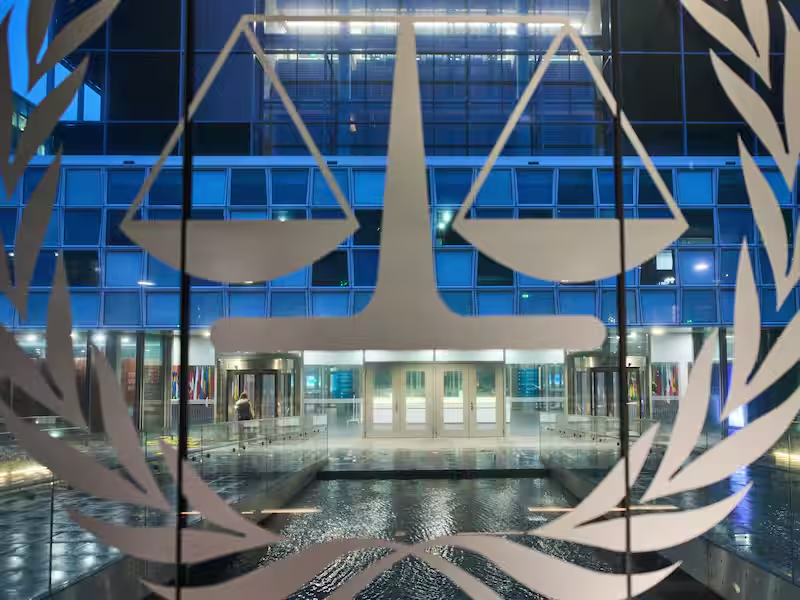
THE HAGUE: The International Criminal Court has unsealed arrest warrants for four Taliban leaders, making public detailed allegations that they were responsible for the crime against humanity of persecution targeting women, girls and others in Afghanistan.
The ICC’s Pre-Trial Chamber II announced the decision on October 5, unsealing warrants issued against Haibatullah Akhundzada, Abdul Hakim Haqqani, Habibullah Agha and Neda Mohammad Nadim.
The warrants against Akhundzada and Haqqani were issued on July 8, 2025, while those against Agha and Nadim were issued on September 9, 2025.
Although the existence of the first two warrants had already been announced publicly in July 2025, the warrant documents remained sealed. The latest decision has now made redacted versions of all four warrants public, revealing further details about the allegations and the court’s legal findings.
According to the ICC, judges found reasonable grounds to believe that the four suspects were criminally responsible for ordering, inducing or soliciting the crime against humanity of persecution under Article 7(1)(h) of the Rome Statute.
The alleged persecution was carried out on gender grounds against girls, women and other people considered non-conforming with Taliban policies on gender, gender identity or expression.
The court also alleged that people perceived as “allies of girls and women” were targeted on political grounds.
The ICC said the alleged crimes were committed in Afghanistan after the Taliban seized power on August 15, 2021 and continued until at least January 20, 2025.
According to the court, the alleged persecution was linked to conduct including murder, imprisonment, torture, rape and enforced disappearance.
The chamber said women and girls were subjected to severe restrictions on fundamental rights and freedoms, including access to education, privacy and family life, freedom of movement, expression, thought, conscience and religion.
The judges also found that people seen as opposing Taliban gender policies, including those who opposed them indirectly or were perceived as supporting women and girls, were allegedly targeted as political opponents.
The ICC said the warrants were unsealed after reviewing the circumstances surrounding the proceedings and deciding that public redacted versions could now be released.
All four suspects remain at