
HAIKOU, November 22, 2026: Conservation efforts in China’s Hainan Province have helped restore tropical rainforest habitats and increase the population of the critically endangered Hainan gibbon, demonstrating progress in protecting one of the world’s rarest primates.
The island’s gibbon population reached 44 individuals in seven groups by the end of 2025, compared with fewer than 10 animals in two groups during the early 1980s. The recovery follows decades of habitat protection, forest restoration and wildlife monitoring.
The conservation progress was highlighted in a report on Hainan’s tropical rainforest, which detailed the establishment of a unified national park system and growing international cooperation on biodiversity protection.
The Hainan gibbon, native to the province’s tropical forests, was once pushed close to extinction by commercial logging, deforestation and poaching. While most of the world’s 20 gibbon species continue to face declining populations, the Hainan gibbon has recorded sustained growth.
Wildlife monitoring teams regularly enter the mountainous Bawangling forest before sunrise to observe the animals and track their movements.
Zhou Zhaoli, a member of the monitoring team, begins his daily patrol at approximately 4:30 a.m., navigating dense vegetation and difficult terrain to locate the gibbons through their distinctive calls.
A major development in the conservation programme came in 2019, when Hainan began integrating more than 20 previously separate nature reserves and protected forest areas under a unified management system.
The Hainan Tropical Rainforest National Park was formally established in 2021 as one of China’s first five national parks.
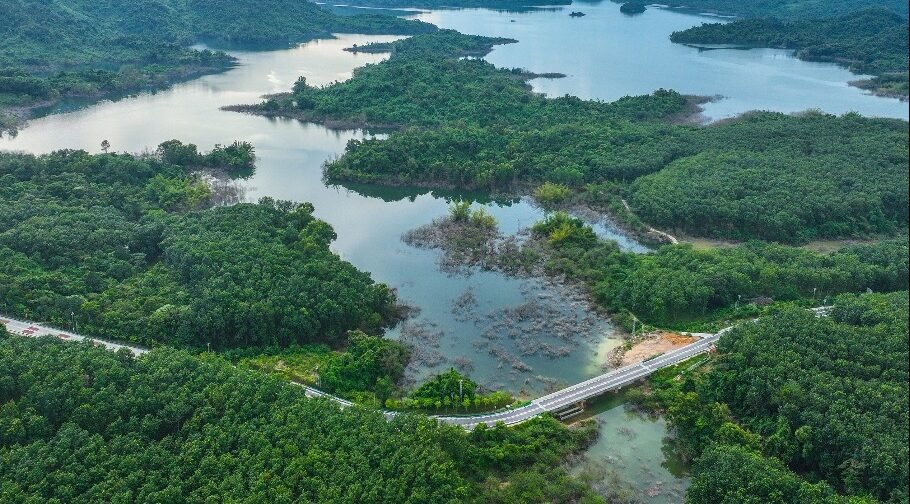
The protected area encompasses China’s largest and best-preserved contiguous island tropical rainforest, providing important habitat for rare wildlife and supporting biodiversity conservation.
Chinese President Xi Jinping has repeatedly emphasised the importance of protecting the rainforest. During a visit to Hainan in April 2022, he inspected the national park and discussed conservation efforts with local residents and park officials.
At that time, the Hainan gibbon population stood at 36 animals in five groups.
Park official Zheng Yan, who accompanied Xi during the inspection, said the national park had made substantial improvements in infrastructure and management since its establishment.
Beyond wildlife protection, the conservation programme also seeks to balance environmental preservation with economic opportunities for surrounding communities.
During his visit, Xi stressed that rainforest protection should be accompanied by green development and improvements in local livelihoods.
Hainan’s tropical rainforest lies within one of the world’s 34 recognised biodiversity hotspots and plays an important role in water conservation, carbon storage and ecological stability.
The province’s conservation experience has also attracted international attention.
Environmental specialists from more than 20 countries participated in the 2026 Tropical Rainforest Ecosystem Partners Conference in Hainan, which concluded on Sunday.
Among the participants was Greice Quele Aparecida Barboza de Oliveira, an environmental analyst with Brazil’s Chico Mendes Institute for Biodiversity Conservation.
She visited the national park to study China’s approach to protecting endangered wildlife and managing tropical forest ecosystems.
The Brazilian specialist said international exchanges could help countries share effective conservation methods as climate change places increasing pressure on forests and biodiversity.
China and Brazil have also expanded cooperation on climate change and sustainable development, including efforts to protect tropical forests while supporting local agricultural communities.
The Hainan conservation programme continues to focus on habitat protection, wildlife monitoring and ecological management as authorities work to sustain the recovery of the island’s rare gibbon population.