
NANNING, November 22, 2026: China’s Guangxi Zhuang Autonomous Region is expanding its pulp and paper manufacturing industry by combining abundant forestry resources, improved transport infrastructure and growing demand from Southeast Asian markets, with annual paper production targeted to reach 27 million tonnes by 2030.
The region produced nearly 12 million tonnes of paper and paperboard in 2025, representing a 37.2 percent increase from the previous year. Major manufacturers are investing in integrated production facilities as Guangxi strengthens its position in regional packaging supply chains.
The industry’s development was highlighted during the 2026 Forestry Industry Conference, held in Nanning from November 20 to 22, according to Xinhua, which detailed the expansion of production facilities, timber supply networks and export opportunities.
At Tieshan Port in Beihai, Nine Dragons Paper operates a manufacturing facility connected directly to the port through a conveyor system extending several kilometres. Imported wood chips from ASEAN countries are transported to the mill, processed into paperboard and shipped to international customers.
The arrangement allows manufacturers to integrate raw material imports, industrial production and export logistics while reducing dependence on conventional transport networks.
Demand from Southeast Asia has become an important driver of expansion, particularly as e-commerce, logistics and environmentally friendly packaging gain momentum.
Vietnam’s paper consumption increased by an estimated 10.8 percent in 2025 to 7.77 million tonnes, according to Vietnam Pulp and Paper Association Chairman Hoang Trung Son.
Packaging and wrapping paper accounted for approximately 80 percent of consumption, reflecting growing demand from manufacturing, retail and distribution businesses.
Guangxi’s industrial expansion is also supported by its substantial timber resources. Although the region accounts for approximately five percent of China’s forestland, it supplies around 40 percent of the country’s timber, according to the Guangxi Forestry Bureau.
Liao Jiahuai, head of the bureau’s industry division, said the region was shifting from basic timber processing towards integrated forestry, pulping and papermaking to generate greater industrial value.
Large pulp and paper manufacturers have established facilities across nine of Guangxi’s 14 prefecture-level cities.
Transport improvements are strengthening connections between inland manufacturing centres and coastal ports.
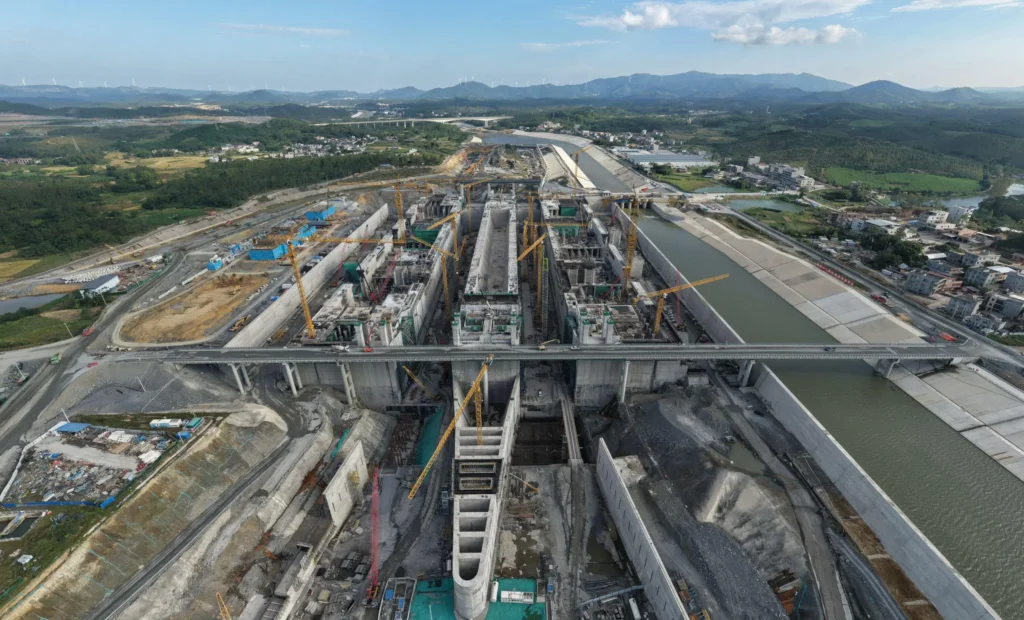
The 134.2-kilometre Pinglu Canal, which opened in September, provides inland producers with a shorter maritime route than the traditional passage through Guangdong’s Pearl River Delta.
Several major companies are expanding their production capacities. Sun Paper commissioned a packaging-paper production line capable of producing one million tonnes annually at its Nanning facility during the fourth quarter of 2025.
Meanwhile, Lee & Man Paper in Guigang and Xianhe in Laibin are developing pulp production facilities and expanding speciality paper manufacturing.
Guangxi Qifeng New Materials is also increasing overseas sales of high-grade decorative base paper, benefiting from improved shipping connections and proximity to ASEAN markets.
Export figures reflect the industry’s expansion. During the first nine months of 2026, Guangxi’s wood-product export volumes increased by 32.3 percent year on year, while pulp and paper-product exports rose by 20.8 percent.
However, growing manufacturing capacity has raised concerns about the availability of raw materials.
Li Gang, deputy general manager of Guangxi Sun Paper, said the company’s Beihai facility sourced 70 percent of its timber locally this year, compared with its usual equal reliance on domestic and imported supplies.
He cautioned that additional timber resources would be required if all planned industrial projects became operational over the next five years.
To address future demand, Guangxi plans to develop another one million hectares of national reserve forests and fast-growing timber plantations by 2030.
The region aims to increase annual timber supply to 48 million cubic metres and raise standing forest stock above 1.1 billion cubic metres.
Research into higher-yielding tree varieties is also underway. Trials involving Jinggui No. 1, a eucalyptus variety developed for pulp production, showed an estimated 30 percent higher wood yield per hectare over five years compared with two commonly planted varieties.
International forestry companies are participating in the sector’s development.
European forestry group Stora Enso manages approximately 53,300 hectares across six Guangxi cities, producing around 700,000 cubic metres of timber annually for its integrated operations.
Regional officials said future expansion would also focus on strengthening international trade links through the Regional Comprehensive Economic Partnership (RCEP).
Liao said Guangxi intended to use preferential tariffs and streamlined customs procedures to expand exports to ASEAN economies and other emerging markets.