
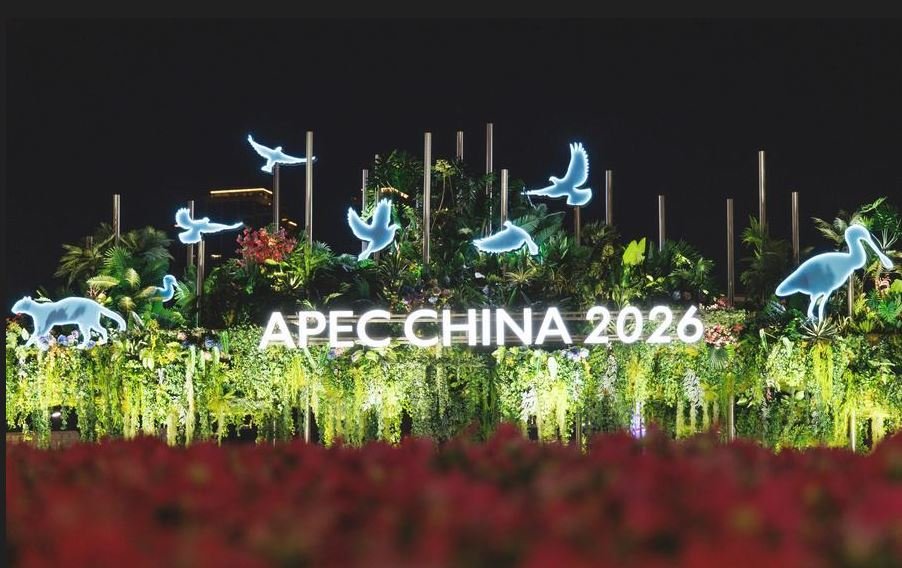
BEIJING, November 22, 2026: China’s expanding technological capabilities are creating new opportunities across the Asia-Pacific region, with advances in artificial intelligence, agricultural technology, electric vehicles and renewable energy emerging as major areas of cooperation at the 33rd Asia-Pacific Economic Cooperation (APEC) Economic Leaders’ Meeting in Shenzhen.
The summit placed openness, innovation and cooperation at the centre of discussions on regional economic development, as participating economies explored ways to strengthen technological collaboration and address emerging challenges.
From agricultural drones in Thailand to solar energy projects in Australia, Chinese technologies are increasingly being adopted across different sectors, according to Xinhua, which highlighted their applications during the APEC meetings.
In Thailand, Chiang Mai University agricultural lecturer Supakorn Wongsuk is using Chinese drone technology to improve durian cultivation. The drones help farmers spray pesticides more efficiently while reducing their direct exposure to chemicals.
Wongsuk said the technology could also create employment opportunities for young people trained in drone operations.
At the APEC CEO Summit 2026, business representatives emphasised the importance of technological innovation in sustaining regional growth.
Indonesian Chamber of Commerce and Industry Chairman Anindya N. Bakrie said innovation required strong educational foundations and accumulated experience, identifying China as an important contributor to regional technological development.
Julien Leclair-Dionne of the University of Ottawa’s Professional Development Institute stressed that technological progress should translate into practical opportunities for businesses, communities and individuals.
A major outcome of the business summit was the Shenzhen Initiative, released on Wednesday, which recognised the potential of artificial intelligence while highlighting associated regulatory challenges and risks.
The initiative called for closer regional cooperation to ensure emerging technologies deliver broader economic benefits.
China’s development of open-source and lower-cost AI models attracted particular attention. In South Korea, nearly half of the AI models released by local developers on Hugging Face between January and August 2026 were based on Chinese foundation models.
Jacob Cooke, CEO of WPIC Marketing + Technologies, said China’s approach to developing accessible AI models was helping businesses worldwide adopt emerging technologies.
Auckland Business Chamber CEO Simon Bridges also underscored the importance of cooperation among APEC economies, particularly during a period of global economic uncertainty.
Shenzhen’s industrial innovation was another focus of the summit. Lee Ju-kwan of South Korea’s Korea Institute for International Economic Policy highlighted the use of robotics at electric vehicle manufacturer BYD’s production facilities during a visit to the company’s headquarters.
Green technology featured prominently in discussions, with experts pointing to China’s role in reducing the cost of renewable energy systems.
Columbia University professor Jeffrey Sachs described his 15,000-kilometre journey from Rome to Hong Kong in a BYD electric vehicle as evidence of advances in electric mobility.
He said affordable green technologies could support the development of modern, resilient energy systems without imposing unnecessary financial burdens.
In Australia, a community solar project in Goulburn, New South Wales, has begun supplying electricity to the grid using an integrated solar and storage system provided by a Chinese company.
The facility, operational since March, plans to direct part of its annual profits towards supporting residents experiencing energy poverty.
University of New South Wales renewable energy expert Martin Green credited cooperation with China’s photovoltaic industry for helping reduce solar technology costs.
Green, who has worked with Chinese industry partners for more than four decades, said continued collaboration could accelerate improvements in next-generation solar technology.
The discussions in Shenzhen reflected the growing role of technological cooperation in regional economic development, with APEC participants highlighting opportunities to expand innovation, improve industrial capabilities and strengthen sustainable growth.