
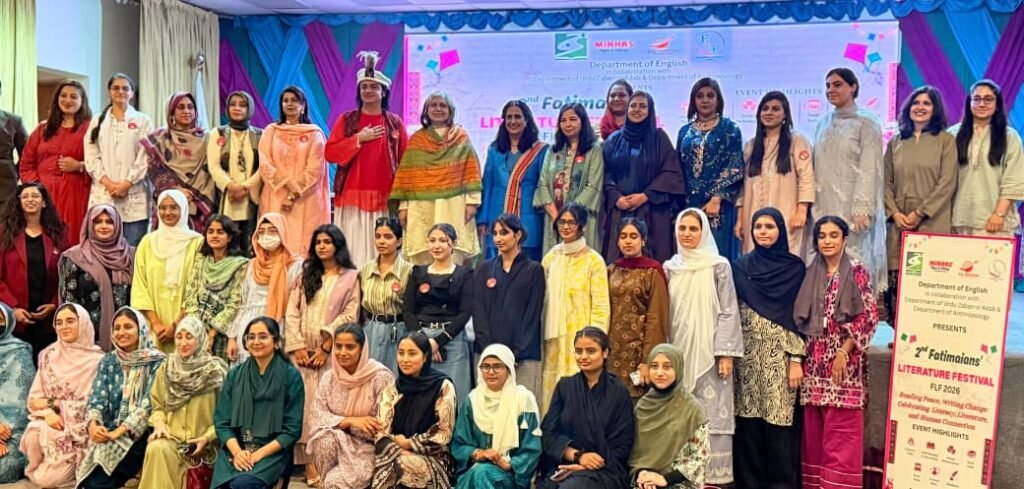
Fatima Jinnah Women University (FJWU) hosted the second Fatimians’ Literature Festival (FLF 2026) from October 20 to 22, bringing together prominent writers, poets, academics, artists and students for a three-day celebration of literature, cultural diversity and intellectual exchange.
Organised by the university’s Department of English in collaboration with the Department of Urdu Zaban-o-Adab and the Department of Anthropology, the festival centred on the theme “Reading Peace, Writing Change: Celebrating Literacy, Literature, and Human Connection.”
Building on the inaugural edition held in 2023, the festival highlighted literature’s role in promoting empathy, challenging prejudice and encouraging peaceful coexistence. It also showcased the leadership and creative contributions of women in organising large-scale cultural and academic events.
Distinguished Writers Open the Festival
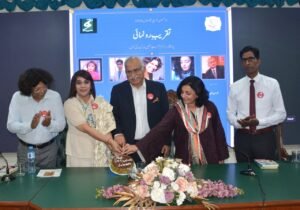
The inaugural ceremony on October 20 was attended by prominent literary figures and academic leaders. Professor Dr. Najiba Arif, former chairperson of the Pakistan Academy of Letters, attended as chief guest, while author and legal and policy reform expert Dr. Osama Siddique was the guest of honour.
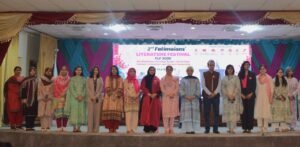
Other participants included FJWU Vice Chancellor Professor Dr. Bushra Mirza, Dean of the Faculty of Arts and Social Sciences Professor Dr. Sarwet Rasul, Chairperson of the Department of English Dr. Uzma Imtiaz and Festival Coordinator Dr. Zain-ul-Maqsood.
A reading session moderated by Dr. Akifa Imtiaz featured excerpts from Dr. Najiba Arif’s memoir Raagni Ki Khoj Main and three literary works by Dr. Osama Siddique: Snuffing Out the Moon, Ghuroob-e-Shehr Ka Waqt and Who Knows the Bounds of Desire.
The opening day concluded with a Mushaira at the university’s New Auditorium, presided over by renowned poet Rahat Sarhadi. Poets including Mazhar Shehzad Khan, Shahbaz Chauhan, Mehnaz Benjamin, Shazia Akbar, Kashif Irfan, Khizar Saleem and Rifat Anjum presented poetry exploring human emotions and social realities.
The Literary Bazaar and educational stalls also attracted book enthusiasts throughout the festival.
Emerging Writers and Urdu Literature Take Centre Stage
The second day began with a book launch ceremony celebrating the literary and research contributions of Professor Dr. Farhat Jabeen Virk, chairperson of the Department of Urdu Zaban-o-Adab.
The ceremony was presided over by literary figure Muhammad Hamid Shahid, with Professor Dr. Humaira Ishfaq, Dr. Salahuddin Darwaish and Dr. Shafiq Anjam attending as guests of honour.
A panel discussion titled “Emerging Writers in Pakistan: Writing, Publishing and Finding an Audience” brought together Nauman Afzal, Mahnoor Rehan, Madeeha Arsalan Haneef, Rukhsia Waqas and Niddal Bin Tahir. Moderated by Dr. Sara Ali, the discussion explored publishing challenges, creative processes and the representation of Pakistani identity in international literature.
A storytelling session at the Early Childhood Care Centre introduced young children to books and reading.
The day also featured a cultural show organised by the Department of Anthropology, showcasing Pakistan’s regional heritage through traditional music, clothing and dance. The performances highlighted the importance of cultural diversity, national unity and mutual respect.
Authors, Artists and Cultural Leaders Inspire Students
The final day featured a Meet the Author session with emerging writer Raabia Qadir, moderated by Nimra Nawaz. Qadir read excerpts from her short story Day 120 and poems The Wind Trapped in the Cage and Do I Belong, followed by an interactive discussion on writing and self-discovery.
Another major session, titled “Stories that Connect, Voices that Change: Literature, Culture and Creativity in a Changing Society,” examined the importance of storytelling amid rapid technological and social change.
Moderated by Professor Dr. Shaheena Ayub Bhatti, the panel included Professor Dr. Aroosa Kanwal, former Pakistani High Commissioner to Australia Naela Chohan, Dr. Fauzia Saeed, Professor Dr. Sarwet Rasul and journalist Hasan Ali.
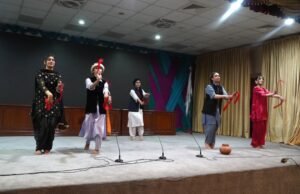
The festival’s artistic programme featured a classical dance performance by Asfandyar Anees Khattak, celebrating the traditional artistic heritage of the subcontinent. Niddal Bin Tahir subsequently led a Drum Circle, bringing participants together through rhythm and collective musical expression.
Vice Chancellor Reaffirms Commitment to Women’s Leadership
The closing ceremony was attended by Naela Chohan as chief guest, who praised the organisers for creating a platform that encourages compassion, creativity and critical thinking among young people.
In her presidential address, Vice Chancellor Professor Dr. Bushra Mirza commended the faculty and organising teams for fostering an environment in which students could express their intellectual and creative abilities.
She emphasised that literature and the arts play an essential role in developing human potential, strengthening critical thinking and nurturing empathy. She also reaffirmed the university’s commitment to preparing confident and socially conscious women leaders.
The ceremony was attended by Pro-Vice Chancellor Professor Dr. Azra Yasmin, Dr. Fauzia Saeed, Festival Advisor Professor Dr. Sarwet Rasul, Festival Director Dr. Uzma Imtiaz, Festival Mentor Dr. Akifa Imtiaz, Festival Coordinator Dr. Zain-ul-Maqsood and Chairperson of Urdu Zaban-o-Adab Professor Dr. Farhat Jabeen Virk, alongside faculty members and students.
Participants from affiliated institutions, including Sir Syed College of Education and Professional Training in Wah Cantt and Akhuwat College for Women in Chakwal, also attended.
The second Fatimians’ Literature Festival concluded with a renewed emphasis on literary engagement, cultural pluralism and peaceful coexistence, reinforcing Fatima Jinnah Women University’s commitment to academic excellence and the empowerment of young women through education and the arts.