
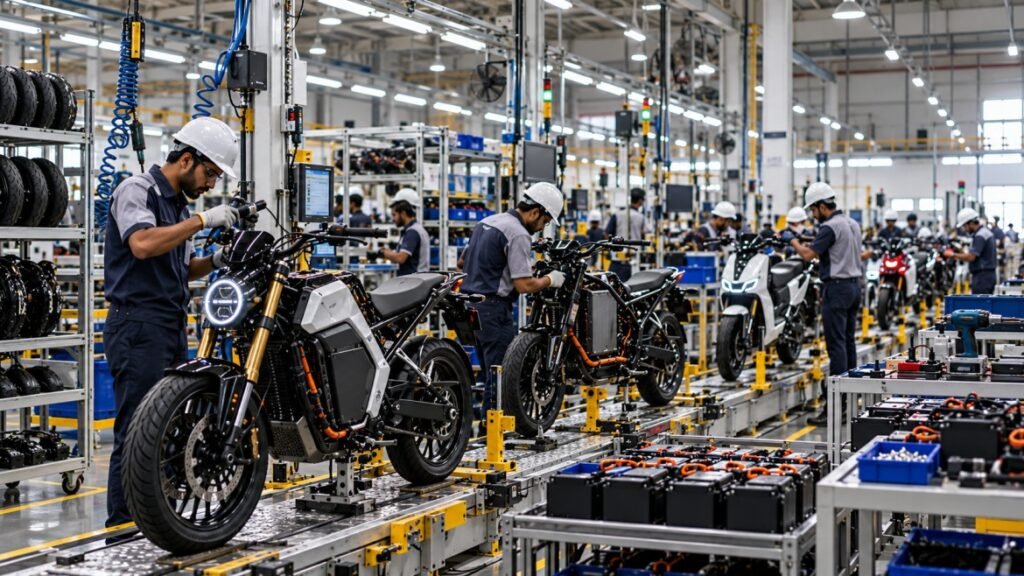
LAHORE: Punjab’s electric two-wheeler industry is set for further expansion after China’s G-Force Group and a Pakistani electric vehicle company signed a joint venture agreement to manufacture electric bikes, batteries and charging equipment in the province.
Under the agreement, the partners will establish an electric bike manufacturing plant at Quaid-e-Azam Business Park in Sheikhupura, while G-Force Group also plans to set up a separate facility for EV batteries and charging stations.
The agreement was signed in Lahore by G-Force Group China Director Zhang Rui and Dr Muhammad Amjad, chairman of the Pakistani EV company, in the presence of Punjab Industries and Commerce Minister Chaudhry Shafay Hussain.
Project Goes Beyond Electric Bike Assembly
The joint venture extends beyond electric bike manufacturing, with the partnership also covering local production of batteries and charging equipment.
Pakistan’s expanding electric two-wheeler market remains heavily dependent on imported batteries, motors and electronic components.
If the project reaches meaningful production scale, local manufacturing of some of these components could help strengthen the country’s broader EV supply chain.
However, details regarding the size of the investment, annual production capacity, localisation level and the expected start of commercial production have not yet been disclosed.
Punjab Seeks More EV Manufacturing Investment
Speaking at the signing ceremony, Shafay Hussain said several electric two-wheeler factories are already operating in Punjab, while additional domestic and foreign EV companies are establishing manufacturing facilities in the province.
He also highlighted Punjab’s Special Economic Zones as potential destinations for further investment in the electric vehicle sector, particularly in areas such as charging-station manufacturing.
For Pakistan’s growing electric bike market, the more significant long-term question will be whether projects such as this can move beyond basic vehicle assembly and develop local battery and component manufacturing.
Greater localisation could have a wider impact on vehicle costs, spare-parts availability and the development of Pakistan’s domestic EV manufacturing ecosystem.