
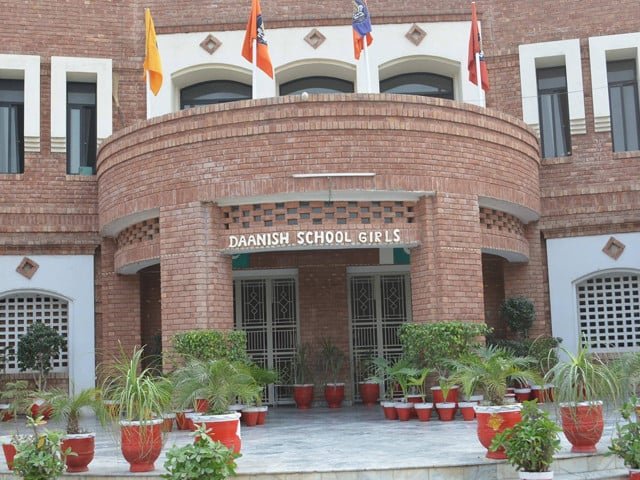
Residents welcome the proposed Rs4 billion Danish School but demand formal approval, funding, construction and a clear timeline to ensure the project does not remain another unfulfilled promise.
SHANGLA: Federal Minister for Kashmir Affairs, Gilgit-Baltistan and SAFRON Engineer Amir Muqam’s announcement regarding the establishment of a Danish School in Shangla has sparked a debate on social media, with residents welcoming the proposed educational project while questioning whether it will translate into a completed institution.
Muqam made the announcement while distributing financial assistance cheques to families of coal mine workers in Shangla. Following the announcement, several social media posts began discussing the proposal, including comments from supporters and leaders associated with the Pakistan Muslim League-Nawaz (PML-N).
The debate has largely centred on whether the latest announcement will be implemented or follow the fate of previous development commitments made for the district.
Residents Recall Earlier Development Announcements
Several social media users recalled Prime Minister Shehbaz Sharif’s earlier announcement regarding the establishment of a medical college in Shangla during a public gathering in Bisham.
Critics claim that the proposed medical college has yet to materialise. Other circulating posts have also revived an earlier statement attributed to the prime minister regarding subsidised flour for the people of Shangla.
Against this backdrop, citizens are asking whether the proposed Danish School will become a practical project if earlier commitments remain incomplete.
Residents, however, have generally welcomed the latest announcement and expressed hope that the school will not meet the same fate as previous proposals concerning the Shangla Expressway, medical college and cadet college.
They say the district now needs more than announcements and want to see formal approvals, land arrangements, budget allocations, construction work and eventual completion of development projects.
Proposed School Gets Broad Support
Educationists have welcomed the proposed Danish School, particularly the reported plan to provide free education to children of coal mine workers.
They said children from mining families often face financial and social barriers to accessing quality education. A properly equipped residential school providing free education to deserving students could therefore create significant opportunities for families that otherwise struggle to afford quality schooling.
Several political leaders from different parties, including representatives associated with the PTI, Pakistan Peoples Party and other political groups, have also welcomed the announcement and appreciated Muqam’s initiative.
Some political and public representatives said that if established at the reported cost of more than Rs4 billion, the institution could become a landmark educational project for Shangla and benefit a large population.
They urged political parties to move beyond partisan differences and collectively support the project.
Focus Shifts From Announcement to Implementation
Despite the widespread welcome, residents say the success of the proposal will ultimately be judged by its implementation.
Key questions include whether the required funds will be released, where the school will be established, whether administrative approvals will be completed, when construction will begin and when the institution will become operational.
Citizens have therefore called for a clear roadmap, official notification, financial allocation and transparent implementation schedule.
Coal Miners’ Assistance Also Under Discussion
The Danish School announcement came alongside the distribution of financial assistance to coal mine workers and their families, another issue that has generated political discussion in Shangla.
The PML-N government invited coal mine workers and their families to a jirga hall and distributed cheques under federal and provincial assistance schemes.
Critics have questioned the amounts distributed, alleging that some beneficiaries received cheques for less than the amounts previously announced. The district administration has also faced criticism over dates appearing on some cheques issued to families of deceased coal miners, with critics alleging that certain cheques carried dates from the previous year.
These claims have not been independently verified.
The broader debate has also focused on the longstanding challenges faced by coal mine workers, including workplace safety, labour rights, financial protection and the treatment of families following mining accidents.
Residents have questioned whether successive governments and political parties have done enough to improve safety standards and ensure that workers receive dignified treatment and timely assistance when accidents occur.
Shangla Awaits Concrete Action
For the people of Shangla, the proposed Danish School represents a potentially significant opportunity, particularly for children of coal mine workers.
However, residents say they want to see the project move beyond political announcements.
The public is now seeking concrete evidence of progress through official approvals, funding, land acquisition or allocation, construction and a defined completion timeline.
If implemented as announced, the Danish School could become an important educational investment in Shangla. For now, however, residents remain cautiously optimistic and are waiting to see whether the promise will become a functioning institution.
Also Read : KP Youth Gain Digital Skills