
GUANGZHOU: China’s expanding role as a global “super seller” is bringing affordable products, advanced technologies and industrial equipment to international markets, helping consumers reduce costs while supporting manufacturing and economic development in trading partner countries.
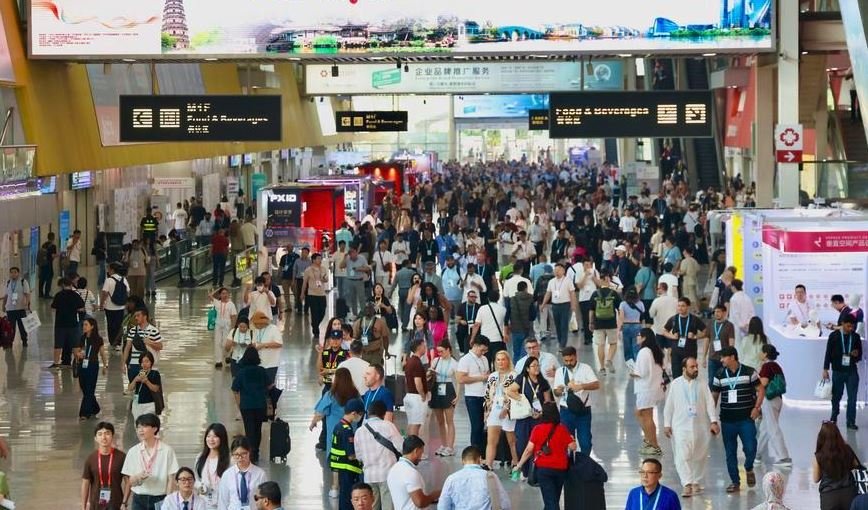
The transformation is on display at the 140th China Import and Export Fair, widely known as the Canton Fair, where Chinese manufacturers are showcasing innovations ranging from energy-saving household appliances and artificial intelligence (AI) systems to electric vehicles and industrial machinery.
Chinese Premier Li Qiang highlighted the country’s growing influence as a major global supplier during the fair’s opening ceremony, saying China’s competitive exports were creating economic benefits for consumers and businesses worldwide.
“As a ‘super seller,’ China brings benefits to its trading partners,” Li said.
He noted that affordable, high-quality Chinese products had increased consumers’ purchasing power, improved living standards and helped other countries strengthen their industrial capabilities.
China’s goods exports reached 23.2 trillion yuan (approximately $3.46 trillion) during the first nine months of 2026, an increase of 16.4 percent compared with the corresponding period last year, according to the General Administration of Customs.
The figures reflect China’s expanding export portfolio, which now includes products ranging from large oil tankers and industrial robots to consumer electronics, renewable energy equipment and specialised manufacturing technologies.
One example of China’s growing presence in international consumer markets comes from Gree Electric Appliances, which is showcasing energy-efficient heating solutions designed for European households.
The Zhuhai-based manufacturer has developed a heat pump system that it says can reduce annual electricity consumption by approximately 50 percent.
At an average European Union electricity price of 0.3 euros per kilowatt-hour, the system could save a household occupying a 150-square-metre home around 800 euros annually. In countries such as Germany, potential savings could exceed 1,000 euros, according to the company.
Gree’s participation in the Canton Fair also reflects the evolution of Chinese manufacturing.
When the company first attended the exhibition 31 years ago, its exports were largely limited to household air conditioners. Today, its international portfolio includes industrial equipment, energy storage systems, cold-chain technologies and low-carbon energy solutions.
The company’s products now reach more than 200 countries and regions, serving approximately 600 million consumers.
Gree Vice President and Chief Marketing Officer Zhu Lei said the company’s international strategy remained focused on meeting consumer needs through improved products and services.
China’s role as a “super seller” extends beyond finished consumer goods, with industrial equipment exports helping developing economies build their own manufacturing capacity.
According to Chinese industry figures, China exported approximately $39 billion worth of textile machinery to developing countries between 2012 and 2025.
These exports have supported the expansion of textile manufacturing in Southeast and South Asia, where several economies have developed into major textile producers and exporters.
China’s extensive manufacturing supply chains also allow international businesses to source customised products, machinery and components for different markets.
The Canton Fair, celebrating its 70th anniversary this year, provides a broader picture of how the country’s export structure has changed.
At the inaugural exhibition in 1957, agricultural products and traditional handicrafts, including silk, tea and porcelain, accounted for 63.9 percent of export transactions by value.
By 1999, machinery and electronic products had become the largest category. Today, advanced electronics, AI-powered devices, electric vehicles and energy storage technologies feature prominently.
More than 32,000 Chinese and overseas companies are participating in the current exhibition, which is being held in three phases from October 15 to November 4.
The first phase attracted a record 189,000 overseas buyers from 214 countries and regions, reflecting continued international interest in Chinese products and manufacturing capabilities.
According to exhibition figures, approximately 64 percent of participating companies have adopted technologies such as AI and the industrial internet.
New products account for 23.2 percent of exhibits, while environmentally friendly products represent 26 percent, both record shares.
Chinese automakers are also using the fair to strengthen their presence in overseas markets.
GAC Group showcased several new energy vehicles, including the AION i60, designed for consumers seeking affordable transportation and improved driving range.
GAC International President Wei Haigang said the company was expanding internationally while developing charging infrastructure and energy storage networks to support customers in local markets.
Meanwhile, Chinese technology companies are introducing AI-powered education solutions to overseas classrooms.
Guangzhou-based CVTE displayed intelligent teaching systems capable of turning complex lessons into visual presentations, alongside AI tools that assist teachers with lesson planning, slides and classroom activities.
CVTE Overseas Business Group President Xiao Hang recalled a project in Vietnam in 2024, when the company sent a seven-member team to work directly with local users.
Rather than simply delivering equipment, the team spent three days supporting its introduction in classrooms.
Xiao said the experience reinforced the company’s belief that international business carried responsibilities beyond commercial transactions, particularly when technology was being used to support education.
Former World Trade Organization Director-General Pascal Lamy described the Canton Fair as an important meeting point connecting Chinese manufacturers with businesses and consumers around the world.
He said the exhibition had become a platform linking supply and demand, producers and consumers, and new ideas with international markets.
Lamy also acknowledged China’s contribution to the global economy through manufacturing, innovation, investment and trade, noting that the country had been among the major beneficiaries of global economic openness.
As the Canton Fair continues to attract international buyers, China’s expanding “super seller” role reflects a shift towards supplying not only affordable consumer products but also advanced technologies and industrial solutions that support economic activity across global markets.