
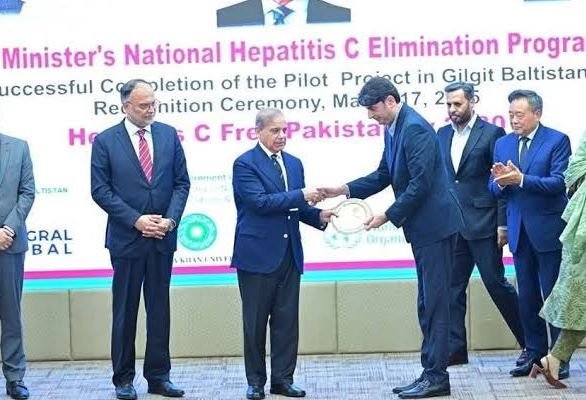
ISLAMABAD, November 1, 2026: The Prime Minister’s National Hepatitis C Elimination Programme has emerged as a major healthcare initiative, offering free screening, diagnostic tests and antiviral medicines to eligible patients as an estimated 11 million people across Pakistan continue to live with the potentially life-threatening infection.
The programme aims to remove financial barriers to healthcare, particularly for low-income families who cannot afford expensive medical tests and treatment. Initially introduced in Islamabad, Gilgit-Baltistan and Azad Jammu and Kashmir (AJK), the initiative is planned for phased expansion across the country to improve early diagnosis, prevent serious liver complications and reduce the spread of hepatitis C.
Under the programme, patients are being provided free screening and confirmatory polymerase chain reaction (PCR) tests, which ordinarily cost approximately Rs8,000. Antiviral treatment, estimated to cost between Rs34,000 and Rs68,000, is also being provided without charge.
For financially vulnerable patients, the initiative offers substantial relief by removing medical expenses that often force families to delay diagnosis or abandon treatment altogether.
Hepatitis C affects an estimated 11 million Pakistanis
Hepatitis C remains a major public health challenge, with approximately 11 million people estimated to be living with the infection in Pakistan, compared with around 60 million worldwide.
The disease is primarily transmitted through contact with infected blood, including contaminated syringes, unsafe medical procedures, unsterilised surgical instruments and shared razors or blades.
Often described as a silent killer, hepatitis C can remain undetected for years because infected individuals may experience no noticeable symptoms during the early stages.
Without timely treatment, chronic infection can cause severe liver damage, cirrhosis and liver cancer.
Medical experts say hepatitis C is curable in most cases through modern antiviral medicines, making early screening and access to treatment essential for preventing serious complications.
Health authorities believe that widespread testing, timely diagnosis and effective treatment can significantly reduce the burden of the disease.
PM’s programme removes financial barriers to treatment
According to Ministry of National Health Services officials, the programme has been designed to ensure that financial difficulties do not prevent citizens from receiving essential medical care.
A ministry official said the government’s priority was to provide screening and treatment facilities regardless of patients’ financial circumstances.
The official maintained that no individual should be deprived of treatment for a curable disease simply because they cannot afford diagnostic tests or medicines.
The programme combines large-scale screening, confirmatory testing, antiviral treatment, public awareness campaigns and patient monitoring.
Health authorities are also working to improve coordination between medical institutions to ensure that patients diagnosed with hepatitis C receive appropriate treatment and complete their prescribed courses.
Officials said the initiative was particularly important for daily-wage workers and low-income families, many of whom delay medical examinations because of financial constraints.
Islamabad establishes 17 hepatitis C screening centres
The District Health Office (DHO) Islamabad is playing a central role in implementing the Prime Minister’s National Hepatitis C Elimination Programme through screening facilities, public awareness activities and coordination with government institutions.
Under the initiative, 17 hepatitis C screening centres have been established in Islamabad, while testing is also being conducted at designated healthcare facilities and special screening camps.
DHO officials said these facilities were intended to reach individuals who might not ordinarily visit hospitals or undergo routine medical examinations.
On the instructions of Federal Health Minister Syed Mustafa Kamal, hepatitis C screening facilities have also been arranged for parliamentarians and staff of the National Assembly Secretariat.
Health authorities said free screening, diagnostic services, treatment and medicines were being made available under the programme, alongside awareness activities encouraging citizens to undergo testing.
A DHO official stressed that early detection was essential to preventing severe complications.
“Our objective is to reach infected individuals before the disease progresses and connect patients who test positive with appropriate treatment facilities,” the official said.
The Health Ministry is also developing a coordinated strategy to expand screening among priority populations and strengthen follow-up arrangements for patients receiving treatment.
Free healthcare reaches Gilgit-Baltistan and AJK
The programme’s implementation in Gilgit-Baltistan and Azad Jammu and Kashmir is expected to improve access to hepatitis C diagnosis and treatment in remote mountainous communities.
Residents of these regions often face geographical and financial difficulties in reaching specialised healthcare facilities.
By extending free screening and treatment services to underserved areas, the government aims to reduce disparities between urban and remote communities.
Health officials said the initiative would be expanded nationwide in phases, with particular attention to populations facing difficulties accessing diagnostic and treatment services.
The programme also includes plans for an integrated patient-monitoring system to ensure that individuals diagnosed with hepatitis C remain connected to healthcare providers until their treatment is completed.
Early diagnosis can prevent serious liver damage, experts say
Senior liver disease specialist Dr Maqsood Malik said hepatitis C could be successfully treated in most cases if patients were diagnosed early and completed the prescribed course of antiviral medicines.
He warned that many people remained unaware of their infection until the disease had progressed to an advanced stage.
According to Dr Malik, modern antiviral medicines have made hepatitis C treatment highly effective, with most patients requiring a relatively short course of medication.
He emphasised that identifying infected individuals early and ensuring access to appropriate healthcare were essential for reducing complications and preventable deaths.
Dr Tauqeer Ahad, associated with public-sector healthcare services, highlighted the importance of free screening for economically disadvantaged patients.
He said many people avoided diagnostic tests because they could not afford laboratory expenses, allowing the infection to remain untreated.
Free testing and treatment, he added, could remove a major obstacle to healthcare access and help protect thousands of families from the financial and psychological consequences of the disease.
Safe injections and public awareness essential for prevention
Medical expert Dr Naila Shamim said treatment alone would not be sufficient to eliminate hepatitis C without stronger preventive measures and sustained public awareness.
She explained that the virus primarily spreads through infected blood, particularly through contaminated syringes, unsafe medical procedures and improperly sterilised equipment.
Dr Shamim urged citizens to avoid sharing needles, syringes and razors, ensure medical instruments were properly sterilised and undergo screening if they suspected exposure to the virus.
She also stressed the importance of safe blood transfusions, infection prevention standards in healthcare facilities and responsible medical practices.
Community-level awareness campaigns, she said, were essential to reducing new infections and encouraging people to seek testing before symptoms appeared.
Health minister calls for nationwide screening
Federal Health Minister Syed Mustafa Kamal has emphasised the need for coordinated nationwide screening and sustained efforts to eliminate hepatitis C.
With millions of people affected by the infection, health authorities consider large-scale testing and timely treatment essential to controlling the disease.
The Ministry of National Health Services is working to strengthen coordination among healthcare institutions, improve access to diagnostic facilities and ensure continuity of treatment.
Officials said patient follow-up would remain a key component of the programme because successful screening must be followed by appropriate treatment and monitoring.
The government is also focusing on public awareness to encourage early testing and reduce the stigma or hesitation that may prevent individuals from seeking medical assistance.
Sustained implementation key to hepatitis C elimination
Social activist Dr Saeed Karim said the programme’s long-term success would depend on consistent implementation, reliable diagnostic facilities, trained medical staff, uninterrupted medicine supplies and effective monitoring.
He said free screening and treatment could make a significant difference for daily-wage workers, elderly citizens and families struggling to meet basic healthcare expenses.
For people who have postponed medical tests because of financial difficulties, access to free diagnosis and medicines could mean the difference between prolonged illness and recovery, he added.
Dr Karim stressed that institutional commitment and continuity would be essential to achieving the programme’s objectives.
He said that if implemented effectively and sustained over the long term, the Prime Minister’s National Hepatitis C Elimination Programme could become one of Pakistan’s most significant public health initiatives.
By expanding early diagnosis, ensuring treatment access and strengthening prevention efforts, the programme aims to reduce hepatitis C-related complications, ease the financial burden on vulnerable families and advance the country’s goal of eliminating the disease.