
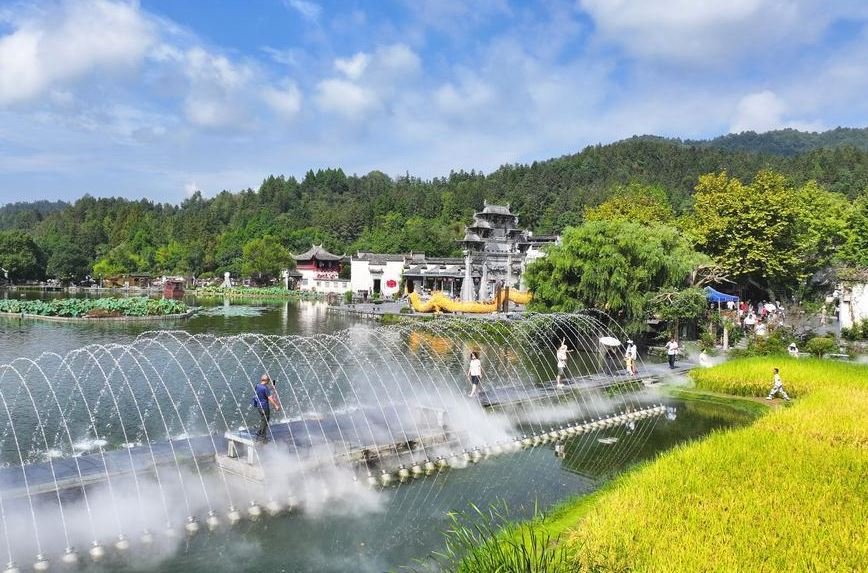
HEFEI: China’s countryside is seeing a new wave of economic activity as villages turn local culture, tourism and creative industries into fresh sources of income, creating jobs and drawing millions of visitors beyond the country’s major cities.
The shift is part of China’s broader rural revitalization strategy, which has encouraged villages to develop tourism, cultural industries, study tours, local crafts and other businesses alongside traditional agriculture.
In the first quarter of 2026, rural tourism destinations across China received an estimated 793 million visits, up 12.2 percent year on year, generating 457 billion yuan, or about $67.3 billion, in revenue, according to the Ministry of Culture and Tourism.
Small Villages Find New Economic Roles
The transformation is visible in Xinzhou Township in east China’s Anhui Province, where a small island in the Yangtze River has changed dramatically over the past six years.
Once quiet and rarely visited by young people, the island now has improved roads, colourful murals, cafes, boutique homestays and rural restaurants.
Despite having just over 1,000 permanent residents, it attracted more than 8,000 visitors during this year’s May Day holiday.
Among its newer businesses is a coffee shop created from a two-storey village house by Zhao Lei, who grew up in the city and was drawn to the island after visiting in May last year.
She later rented the property, designed the renovation and opened the cafe.
“What I saw was a place full of possibilities yet to be defined,” Zhao said.
Rural Revitalization Expands Beyond Agriculture
China launched its rural revitalization strategy in 2017, with policies designed to support distinctive local industries and integrate agriculture with tourism, culture and other sectors.
The approach has helped villages develop new attractions ranging from sports events and fashion shows to short-video content and traditional craft experiences.
So far, 8,155 villages have been included on China’s national list of protected traditional villages, while more than 12,900 intangible cultural heritage workshops have been established, directly creating jobs for more than 1 million people.
Cultural Heritage Drives Tourism Growth
In Xidi Village, a UNESCO World Heritage Site in Huangshan, Anhui Province, study tours have become a major attraction this summer.
The village is known for its well-preserved Ming and Qing dynasty residential architecture and traditional Huizhou culture.
Visitors can explore historic courtyards, traditional architecture and heritage crafts, while children taking part in study tours receive hands-on exposure to local history and culture.
A television drama focused on Huizhou ink-making has also helped attract tourists to filming locations in the area.
Visitors are now buying themed souvenirs, wearing costumes inspired by the programme and trying dishes featured in the drama.
Local tourism operators have also introduced traditional activities such as woodcarving, seal engraving and the bench dragon dance.
Tourism Creates Jobs Closer to Home
The expansion of rural tourism is also creating employment opportunities for local residents.
In Wanshan Town in Hefei, a film-themed park opened in 2025 and combines cinema screenings with tea, live music, local food and homestays.
The park screens more than 100 films a week, with weekend sessions often fully booked, according to general manager Qiu Xue.
All 15 employees are local villagers, while the project is expected to generate about 500,000 yuan in annual income for the village.
For some workers, the new rural economy is creating a reason to return home.
Zhang Xiaoli, 50, previously worked in a factory in Shanghai but later returned to her hometown and took a job as a cleaner at the movie park.
She said her current income is lower than what she earned in Shanghai, but lower living costs and proximity to family have made the move worthwhile.
China Plans More Rural Economic Diversification
China’s 15th Five-Year Plan for 2026-2030 includes measures to develop the “multiple functions of agriculture,” aiming to combine food production with tourism, cultural industries, ecological conservation and leisure.
The policy is expected to encourage local governments to make greater use of rural resources while creating additional income opportunities for farmers and village communities.
Experts say villages in more developed areas are already moving beyond a purely agricultural model toward tourism, study programmes and other services.
The trend is strengthening links between rural and urban economies while giving local communities more ways to generate income without leaving their hometowns.
Also Read: Rare Aquatic Plant Returns to Erhai Lake as China’s Restoration Efforts Pay Off