
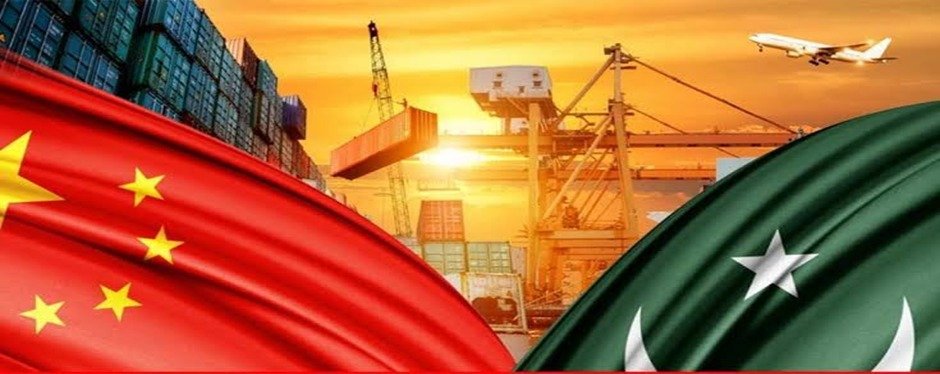
ISLAMABAD: China’s expanding advanced-manufacturing and technology sectors could help Pakistan move from infrastructure-led cooperation towards export-oriented industrial growth, but experts say the transition will require stronger skills, reliable energy, affordable financing and consistent economic policies.
The emerging framework, described as China Opportunity 2.0, could give Pakistani manufacturers greater access to Chinese technology, investment, industrial expertise and supply chains. Its impact, however, will depend on whether Pakistan can convert cooperation into local production, higher exports and reduced dependence on imported components.
Chinese Premier Li Qiang introduced the phrase at the World Economic Forum’s Annual Meeting of the New Champions in Dalian, arguing that concerns about a new “China shock” should instead be viewed as an opportunity created by the country’s innovation and industrial development. The meeting, widely known as Summer Davos, brought together more than 1,700 participants from over 90 countries.
Li said China’s next phase of growth could make advanced technologies more accessible internationally and create broader opportunities for companies and investors.
China’s industrial growth creates openings
Official Chinese data shows that the country’s industrial output continued to expand in May 2026. Value added by major industrial enterprises increased by 4.5% from a year earlier, while equipment manufacturing grew by 9.5% and high-tech manufacturing expanded by 15.1%.
For Pakistan, the growth of Chinese equipment, electronics, battery and technology industries presents an opportunity to attract manufacturing investment and develop local suppliers. It could also support Pakistan’s efforts to diversify exports beyond traditional sectors such as textiles.
The opportunity comes as Pakistan continues to face a wide trade imbalance. Pakistan Bureau of Statistics data cited in the original report showed that exports improved between April and May 2026, while imports declined in May. However, the cumulative trade deficit remained substantial during the first 11 months of the 2025-26 fiscal year. PBS publishes monthly external trade figures covering exports, imports and the balance of trade.
Pakistan has increasingly sought to use its economic relationship with China to address these structural weaknesses by shifting attention towards industrialisation, technology transfer and export competitiveness.
Skills and technology transfer
One area of cooperation is technical and vocational training. A symposium hosted by Pakistan’s Embassy in Beijing in April focused on home appliances, electrical equipment, battery manufacturing and power-storage technologies.
The discussions reflected Pakistan’s interest in developing industries where domestic demand is high but local production remains limited. Expanding manufacturing capacity in these areas could reduce imports while creating opportunities for Pakistani firms to enter regional supply chains.
Asad Siddique, a manager at Tesla Industries, said the value of Chinese investment would depend on whether it helped local manufacturers acquire technology and production expertise rather than merely assemble imported components.
He said Pakistan had labour, consumer demand and a strategic location, but manufacturers still required better tooling, technician training, testing facilities and dependable supplier networks.
According to Siddique, Chinese companies could make a longer-term contribution by supporting vendor development and transferring skills alongside capital investment.
CPEC shifts towards industrial cooperation
The second phase of the China-Pakistan Economic Corridor is also expected to place greater emphasis on industrialisation, exports and direct partnerships between companies.
Officials participating in the Pakistan-China Industrialisation Dialogue said future cooperation would focus more heavily on business-to-business investment and the development of Special Economic Zones.
The shift represents a change from the first phase of CPEC, which was dominated by energy and transport infrastructure. The next stage is intended to help businesses establish factories, increase local production and improve Pakistan’s export capacity.
However, attracting long-term industrial investment will require reliable electricity, efficient customs procedures, a skilled workforce and predictable taxation and regulatory policies.
Panda Bonds and RMB trade settlement
Financial cooperation between Pakistan and China is also deepening.
Pakistan has entered China’s domestic capital market through its inaugural Panda Bond. The government raised RMB1.75 billion, equivalent to approximately $250 million, as part of efforts to broaden access to non-dollar financing.
Greater use of the Chinese renminbi in bilateral trade could also reduce businesses’ exposure to dollar shortages and exchange-rate volatility.
Zeeshan Malik, head of China coverage at Global Network, said Panda Bond financing and RMB settlement could diversify Pakistan’s sources of external funding and improve financial connectivity with China.
He said settling more bilateral trade in RMB could lower transaction costs and currency risks for companies dealing with Chinese suppliers and investors.
Malik added that Panda Bonds should be viewed not only as a borrowing tool but as a financial link that could support trade, industrial cooperation and future CPEC projects.
Reforms will determine the outcome
Experts say China Opportunity 2.0 could support Pakistan’s efforts to strengthen manufacturing, expand exports and reduce import dependence. But Chinese technology and financing alone will not deliver those outcomes.
Pakistan will need to improve technical education, ensure affordable and reliable energy, simplify business regulations and maintain policies that encourage companies to invest for the long term.
Without those reforms, cooperation may remain concentrated in imported machinery, assembly operations and infrastructure. With effective implementation, however, the relationship could help Pakistan build competitive industries and secure a greater role in regional production networks.
Also Read: Gold Price in Pakistan Rises to Rs424,536 Per Tola on Monday, July 20, 2026