
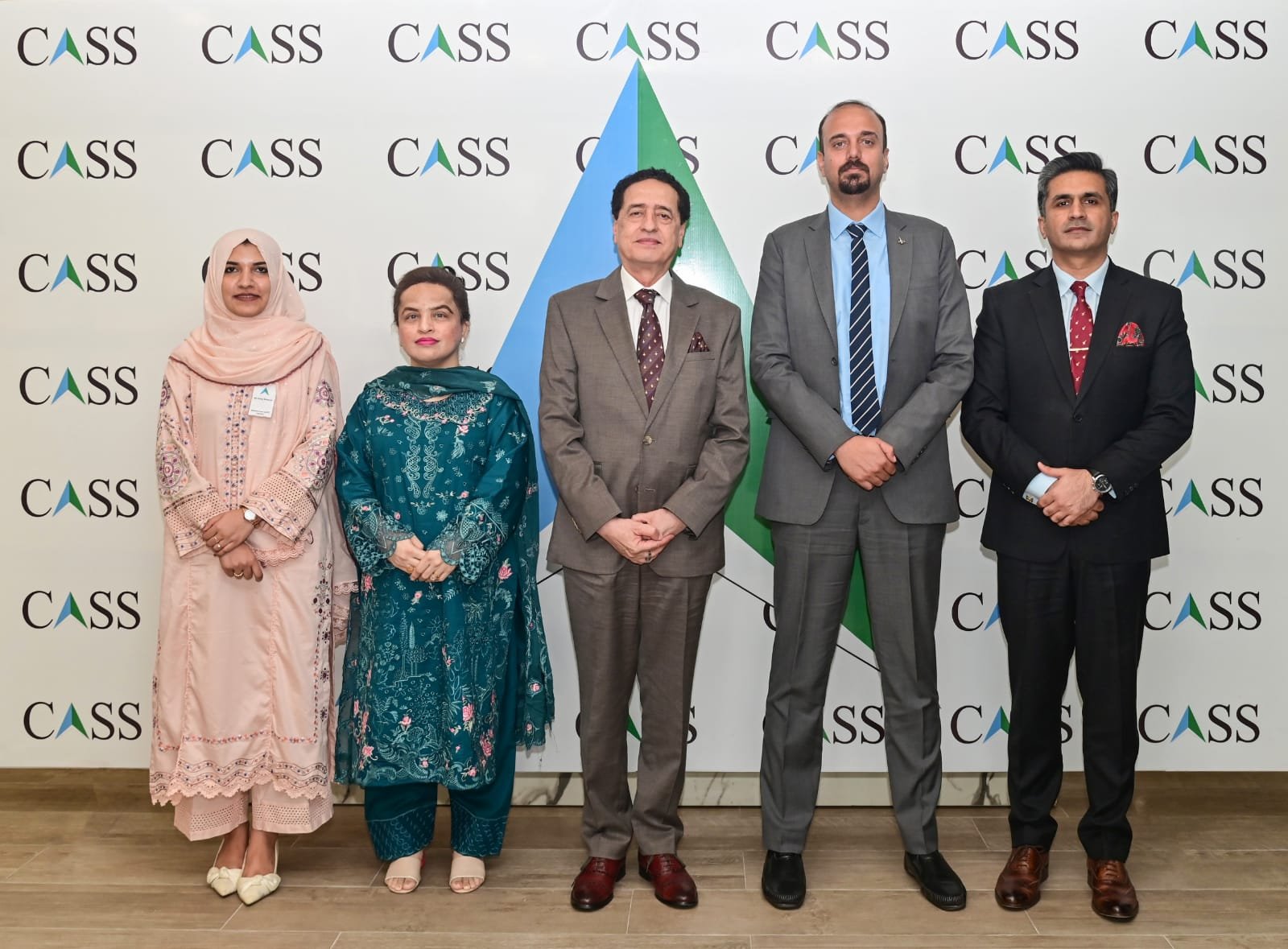
Experts at security think tank event examine Hindutva influence, military strategy and changing regional dynamics
Lahore: The Centre for Aerospace and Security Studies (CASS) Lahore hosted an academic discussion on the evolving nature of India’s strategic culture, examining the influence of ideology, military reforms and regional security developments.
The event, titled “Saffronisation of India’s Strategic Culture: Contemporary Transition and Future Outlook,” was held on July 8, 2026, and brought together academics, intellectuals and security experts to discuss contemporary strategic trends in South Asia.
Ms Ezba Walayat Khan, Research Assistant at CASS Lahore, delivered the opening address, highlighting the think tank’s role in facilitating research-based discussions on national security and related issues.
Experts Discuss Ideology and Strategic Thinking
Dr Asma Khawaja, Executive Director of CISS AJK, discussed the historical and ideological foundations shaping India’s strategic thought, focusing on the impact of Hindutva narratives.
She argued that ideological influences have contributed to the evolution of India’s strategic outlook, identifying revisionism, Hindu nationalist thinking, strategic deception and ambitions for greater influence as key features.
Dr Khawaja said India’s strategic approach seeks greater dominance rather than maintaining a traditional balance of power, while also discussing the challenges of managing ambitions in a complex regional environment.
India’s Strategic Transformation Under Modi Government
Dr Bilal Ghazanfar, Assistant Professor and Head of the Department of International Relations at the University of Rawalpindi, examined changes in India’s strategic culture under Prime Minister Narendra Modi’s government.
He highlighted five factors shaping this transformation, including ideological changes, institutional restructuring, military assertiveness, information strategy and expanded global partnerships.
According to Dr Ghazanfar, India’s evolving strategic approach has faced challenges in translating political ambitions into effective military outcomes, with recent regional developments exposing weaknesses in planning and strategic assessment.
He warned that ideological rigidity could limit strategic flexibility and increase the possibility of miscalculations during future crises.
CASS President Calls for Vigilance and Deterrence
In his concluding remarks, Air Marshal Asim Suleiman (Retd), President CASS Lahore, discussed the relationship between ideology and military institutions in India.
He referred to initiatives and reforms introduced in recent years, arguing that political ideology has increasingly influenced India’s defence and strategic outlook.
Air Marshal Suleiman stressed the importance of preparedness, vigilance and maintaining effective deterrence capabilities amid an increasingly unpredictable regional security environment.
He also highlighted the importance of strategic restraint and responsible decision-making in preventing escalation during periods of heightened tensions.
Interactive Session Highlights Regional Security Concerns
The event concluded with an interactive discussion where participants exchanged views on strategic communication, information warfare, leadership approaches and regional security challenges.
Participants appreciated CASS Lahore’s initiative in organizing a platform for academic dialogue on evolving security dynamics in South Asia.
Also Read: CASS Discusses Future of Indus Waters Treaty Amid Rising Regional Water Challenges