
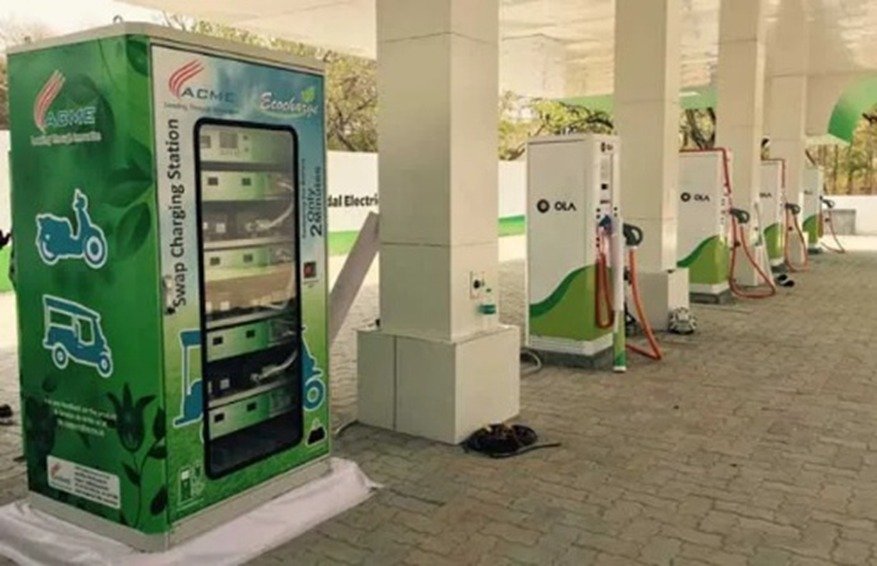
ISLAMABAD, September 18 (INP-Wealth Pakistan): Battery swapping could offer Pakistan a lower-cost route to electric vehicle adoption by reducing upfront vehicle prices and charging delays, with motorcycles, rickshaws and commercial fleets considered particularly suitable for the model, experts say.
The approach could become increasingly relevant as Pakistan targets a 30% share of electric vehicles in new vehicle sales by 2030. The country’s large two- and three-wheeler market provides a potentially significant entry point for battery swapping in Pakistan, particularly where vehicles are used frequently and lengthy charging times can affect daily operations.
Battery swapping allows drivers to replace a depleted EV battery with a fully charged one at a designated station rather than waiting for the vehicle to recharge.
Under a Battery-as-a-Service model, consumers can purchase an electric vehicle without owning its battery and instead pay a subscription or usage fee for access to charged battery packs.
How Battery Swapping Could Lower EV Prices
Separating battery ownership from vehicle ownership can substantially reduce the initial cost of an electric vehicle because the battery is one of its most expensive components.
Industry estimates suggest batteries generally account for 30% to 40% of an EV’s total cost. Removing the battery from the purchase price can lower the vehicle’s initial cost by around 20% to 30%, depending on the model.
The model can also shift the financial risk associated with battery degradation and eventual replacement away from individual vehicle owners.
For commercial operators, rapid battery replacement offers an additional advantage by reducing charging downtime and allowing vehicles to remain operational for longer periods.
Scaling the model in Pakistan, however, would require common battery standards, strategically located swapping stations, reliable electricity supplies, affordable tariffs, financing arrangements and effective systems for tracking and managing batteries.
China’s Battery-Swapping Model
Speaking to Wealth Pakistan, economist and financial consultant Yusuf Nazar said battery swapping could make electric mobility more convenient, affordable and better suited to high-utilisation transport.
“Imagine pulling into a station on the Lahore-Islamabad motorway, parking your electric car over a platform, and watching a robotic system swap your depleted battery for a fully charged one in under three minutes,” Nazar said.
“No cables, no waiting and no range anxiety. You drive off as if you have just filled a tank of petrol, but cheaper, cleaner and without ever owning the battery that powers your vehicle.”
Nazar pointed to China, where battery swapping already operates at scale and electric vehicle manufacturer NIO has developed more than 3,000 swap stations.
He said Pakistan’s more immediate economic benefits were likely to come from commercial transport rather than private passenger vehicles.
Battery-swapping electric trucks are already being used at Chinese ports, mines and short-haul logistics corridors, where vehicles operate for long hours and follow repetitive routes. Rapid battery replacement enables operators to maintain higher vehicle utilisation.
Nazar estimated that lower energy and maintenance expenses could reduce operating costs per kilometre by 20% to 30% in such applications.
Motorcycles and Rickshaws Could Lead Adoption
Energy expert and entrepreneur Moazzam Husain said Pakistan should initially prioritise battery swapping for motorcycles and rickshaws, which he said account for about 40% of the country’s petrol consumption.
He argued that electrifying these vehicles could provide a quicker route to reducing fuel imports and urban pollution.
“Pakistan should begin with electric two- and three-wheelers in major cities before expanding battery-swapping networks to commercial fleets and freight transport,” Husain told Wealth Pakistan.
Separating batteries from electric motorcycles and rickshaws could also substantially reduce their upfront purchase prices, he said.
Husain estimated that a motorcycle costing around Rs250,000 with a battery could cost approximately Rs150,000 without one. An Rs80,000 subsidy could then bring the buyer’s initial payment down to nearly Rs70,000.
The battery could be provided separately through a monthly subscription and exchanged at designated swapping stations.
Common Battery Standards Key to Wider Rollout
Husain said large-scale adoption would require standardised batteries compatible across different motorcycle brands, alongside a unified regulatory framework, designated swapping locations and reliable electricity connections.
Common standards would be particularly important because incompatible batteries from different manufacturers could restrict access to swapping networks and make it more difficult for operators to achieve the scale needed to keep costs competitive.
With Pakistan seeking to increase EV adoption by 2030, experts see battery swapping as one option for addressing two significant barriers to electric mobility: high upfront costs and lengthy charging times.
Its commercial viability, however, would depend on common technical standards, reliable electricity supplies, affordable consumer financing and the development of a sufficiently accessible network of battery-swapping stations.