
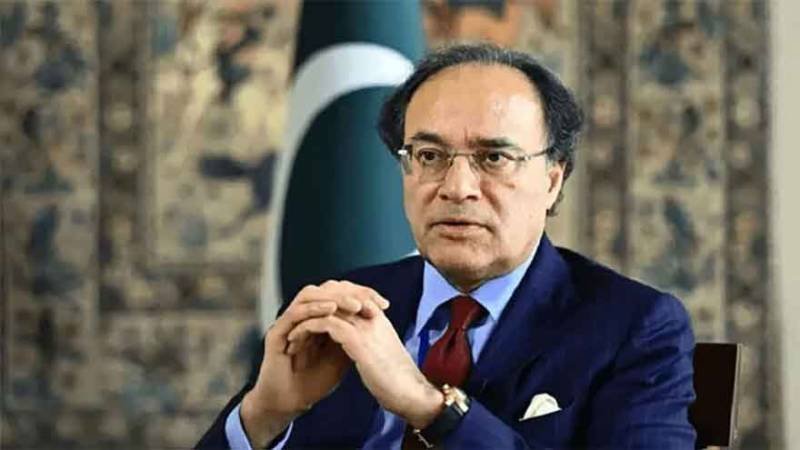
ISLAMABAD, Oct 7: Finance Minister Senator Muhammad Aurangzeb on Wednesday reviewed progress in SME, agriculture and housing finance, directing regulators, banks and financial institutions to focus on implementation, measurable outcomes and faster delivery across government-backed financing programmes.
Chairing the fifth meeting of the Access to Finance Steering Committee, Aurangzeb said agreed actions and recommendations should be tracked systematically, with greater emphasis on converting approved financing into actual disbursements and wider access for underserved borrowers.
The committee was informed that outstanding SME financing rose by Rs23 billion, from Rs1.114 trillion in June 2026 to more than Rs1.137 trillion by the end of September.
The number of SME borrowers increased by more than 25,000 to around 350,862.
Aurangzeb said further acceleration was needed to meet the government’s medium-term target of expanding SME financing to Rs2 trillion and increasing the number of borrowers to 775,000 by June 2028.
He said commercial banks, microfinance institutions and other financial service providers would all need to play a larger role in expanding access to business credit.
The minister also directed that SME capacity-building efforts by SMEDA, the State Bank of Pakistan and financial institutions be aligned through a clear action tracker covering responsibilities, timelines and follow-up.
Agriculture finance rises above Rs1.35 trillion
The committee was told that outstanding agriculture finance increased by Rs94.7 billion, from Rs1.26 trillion in June to more than Rs1.35 trillion by the end of September.
The number of agriculture borrowers rose by 196,303 to around 3.46 million.
Under the Prime Minister’s Zarkhez-e-Asaan Zarai Qarza scheme, 5,563 collateral-free loans worth Rs2.1 billion had been disbursed to small farmers.
The meeting also discussed the need to expand financing for livestock, fisheries and other underserved parts of the agricultural value chain.
Aurangzeb said the livestock sector had significant potential and called for stronger private-sector participation and risk-mitigation mechanisms to improve access to finance.
Housing finance reaches Rs426 billion
Outstanding housing finance increased by Rs103 billion, from Rs323 billion in June to Rs426 billion by the end of September, while the number of borrowers rose to 231,550.
Under the Wazir-e-Azam Apna Ghar Program, Rs76 billion had been disbursed to 13,214 borrowers.
The committee was also informed that approved housing loans worth Rs350 billion were awaiting disbursement.
Aurangzeb called for a stronger builder-financing framework so that financing supports not only homebuyers but also developers and builders involved in increasing the supply of affordable housing.
PAVE scheme sees 2,725 EVs delivered
The committee also reviewed progress under the Pakistan Accelerated Vehicle Electrification Scheme.
Officials said 17,262 financing applications worth Rs2.54 billion had been approved, while 4,839 loans worth Rs975 million had been disbursed by the end of September.
A total of 2,725 electric vehicles had been delivered to customers.
Aurangzeb directed authorities to focus on converting approved financing into actual vehicle deliveries and resolving implementation bottlenecks.
He also stressed that government-supported financing schemes should remain commercially viable and targeted at genuine market gaps rather than creating long-term dependence on subsidies.
The minister said the broader objective was to build a stronger financing ecosystem capable of reaching SMEs, farmers, households and other underserved segments through sustainable private-sector participation.