
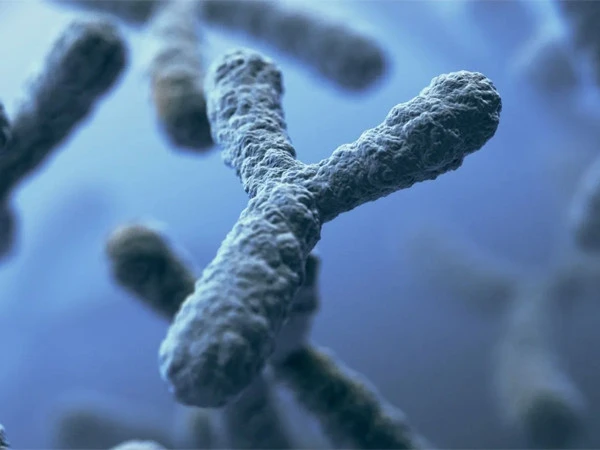
TUCSON: New research led by scientists at the University of Arizona suggests that loss of the Y chromosome in men’s body tissues may be an early biological warning sign associated with the development of cancer.
The study, published in JCI Insight, examined 1,000 tissue samples from 405 men across 11 organs. Researchers found that mosaic loss of the Y chromosome increased progressively from normal tissue in cancer-free men to tissue appearing normal but located next to cancer, and then to cancerous tissue.
Y Chromosome Loss Increases Toward Cancerous Tissue
The researchers used a fluorescence-based imaging technique to measure the presence of X and Y chromosomes in individual cells. They found that the degree of Y chromosome loss varied according to cancer type, with the highest levels observed in colorectal carcinoma.
In bladder tissue, detailed spatial analysis showed a gradient of Y chromosome loss extending from apparently normal tissue through early abnormal changes to invasive cancer.
According to the researchers, the findings suggest that Y chromosome loss may create a pre-neoplastic field effect — a hidden area of genetic vulnerability in tissue that could provide conditions for cancer to develop.
Dr Dan Theodorescu, director of the University of Arizona Cancer Center and senior author of the study, said the presence of Y chromosome loss in normal-appearing tissue near a tumour could represent one of the earliest indications of cancer formation.
Not Yet a Standalone Cancer Test
Y chromosome loss is already known to become more common in men with age and has previously been associated with several diseases and poorer cancer outcomes.
Earlier research from the University of Arizona found that loss of the Y chromosome in cancer cells can help tumours evade the immune system. A separate 2025 study also found that Y chromosome loss in T cells can weaken their ability to attack cancer cells.
The latest findings add evidence that Y chromosome loss may occur in apparently normal tissue before or alongside cancer development. However, the research does not establish that Y chromosome loss alone can diagnose cancer.
Researchers say the findings could eventually help improve early detection by identifying genetic changes in tissue that appear normal under conventional examination but may be biologically closer to cancer.