

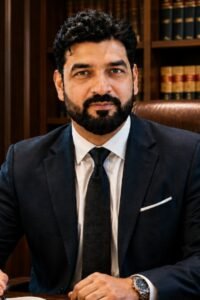
“Democracy is not merely about conducting elections.Its true test lies in safeguarding the sanctity of the vote. The ballot has meaning only when supported by impartial institutions, meaningful accountability, and the confidence of citizens that their freely expressed choice will be honoured and respected.”
The election process remains the most visible test of democracy—ideally, a process in which victory or defeat is determined by the genuine will of the majority, expressed through votes cast freely and without fear, prejudice, or favour. Yet, when the electoral system is subdued, compromised, or manipulated, elections risk becoming little more than a hollow exercise. Their outcomes may be anticipated long before the first ballot is cast.
A democracy is only as strong as the political maturity of its citizens. Without adequate civic education, electoral choices can too often be shaped by short-term interests, promises of immediate relief, or populist rhetoric. Such choices may foster dependency rather than responsible citizenship, ultimately weakening public accountability and the democratic process itself.
In societies where civic education and public awareness empower voters to recognize and resist manipulation, democracy is strengthened. Where such safeguards are absent, voters can easily become susceptible to political spectacle, emotional appeals, and calculated propaganda.
Social media offers a powerful platform for civic education and public awareness. However, when misused, it can become equally dangerous to democracy, serving as a tool for disinformation, manipulation, polarization, and even the erosion of democratic values themselves.
Democracies must continually adapt by promoting transparency, strengthening digital literacy, and ensuring accountability in the digital sphere. Without these safeguards, technology can become a weapon that undermines democracy rather than a tool that strengthens and protects it.
What we have witnessed in recent elections in Kashmir is particularly concerning, as social media has increasingly been used as a political tool.
In the recent elections in Kashmir, people were allegedly influenced and manipulated through the spread of fake news and misinformation on social media. They were subjected to pressure and emotional blackmail in the name of Kashmir’s unity, while campaigns were used to discourage or persuade people to reject the electoral process. Much of this manipulation was carried out through social media platforms, demonstrating how easily digital spaces can be exploited to influence public opinion and undermine democratic processes.
I fear that, without effective safeguards in the future, social media could be exploited by anyone as a means of manipulation, misinformation, or influence, ultimately posing a serious threat to the integrity of the democratic process.