
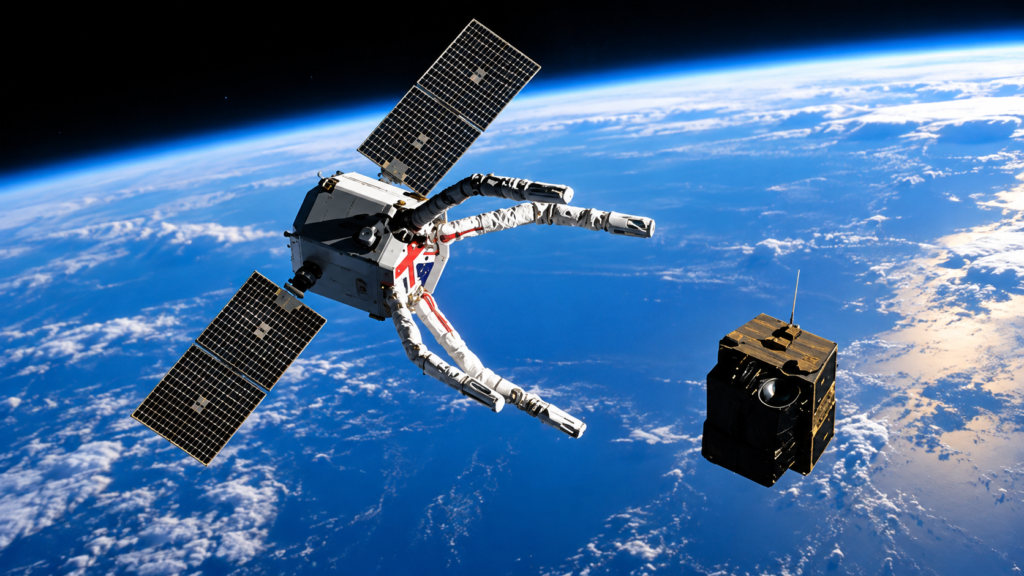
UK: Britain is investing $81 million in a robotic spacecraft designed to capture defunct satellites and reduce the growing threat of space debris.
October 26, 2026: The United Kingdom has begun work on an innovative space mission that will use a robotic spacecraft equipped with giant claws to capture inactive satellites and guide them towards Earth’s atmosphere for destruction.
The project aims to reduce the amount of debris orbiting Earth and minimise the risk of collisions that could damage operational satellites and spacecraft.
Robotic claws to capture defunct satellites
The planned spacecraft will use large robotic claws to grab satellites that have reached the end of their operational lives. Once captured, the defunct satellites will be guided towards Earth’s atmosphere, where intense heat during re-entry is expected to destroy them.
The approach is intended to provide a practical way to remove abandoned equipment from orbit rather than allowing it to remain in space indefinitely.
Growing space debris threatens satellites
Space debris has become an increasing concern as inactive satellites and fragments of spacecraft accumulate in Earth’s orbit.
Even relatively small pieces of debris can cause significant damage if they collide with operational satellites or spacecraft travelling at high speeds. Such incidents could disrupt communications and other services that depend on space-based infrastructure.
Removing defunct satellites could help reduce the number of potential collision hazards and improve the long-term sustainability of space activities.
£81 million investment targets orbital safety
Britain is investing approximately $81 million in the project, which is intended to develop new capabilities for capturing and removing inactive satellites.
If successful, the mission could open new possibilities for tackling orbital congestion and managing the growing volume of human-made objects in space.
The project also reflects broader efforts to make Earth’s orbital environment safer as countries and commercial operators continue to expand their space activities.