
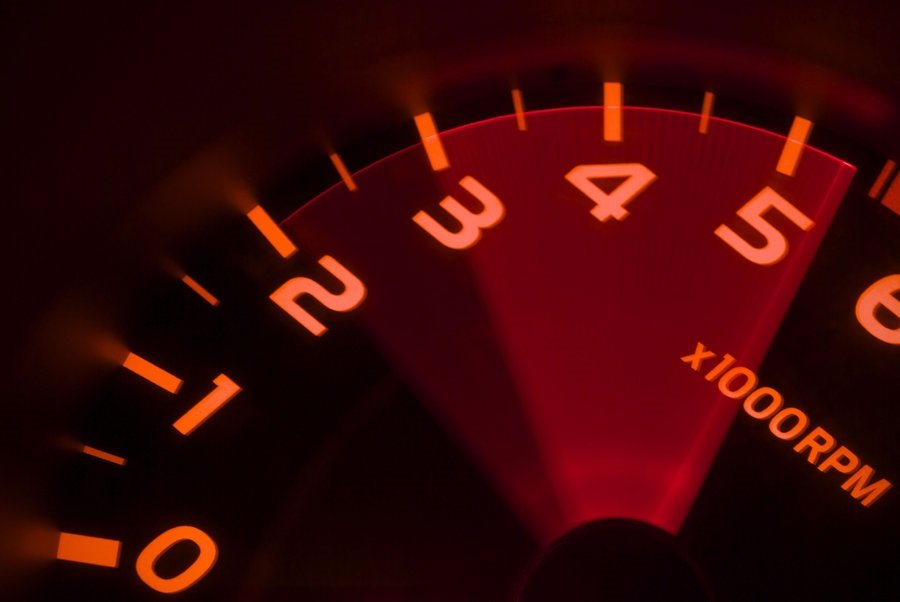
ISLAMABAD, November 18, 2026: Driving at high engine speeds does not always damage a vehicle, but exceeding the manufacturer’s recommended RPM limit, particularly through an incorrect gear change, can lead to costly mechanical failures.
According to an automotive explainer published by PakWheels, the redline on a vehicle’s RPM meter indicates the upper engine-speed range established by its manufacturer.
RPM, or revolutions per minute, measures how quickly an engine’s crankshaft rotates. Although modern vehicles generally have electronic rev limiters to prevent excessive engine speeds, these systems cannot protect against every form of over-revving.
The report explains that mechanical forces acting on engine components increase rapidly as RPM rises. In some reciprocating components, doubling engine speed can increase certain inertial forces approximately fourfold.
Excessive RPM can also cause valve float, a condition in which valve springs fail to control valve movement properly, potentially damaging pistons, valves and cylinder heads.
One particularly dangerous situation occurs when a driver accidentally selects a much lower gear while travelling at high speed.
In a manual vehicle, such a mistake can force the engine to rotate beyond its safe operating range because the moving wheels drive the engine through the transmission. Electronic rev limiters may be unable to prevent this mechanical over-revving.
However, the report stresses that higher RPM is not necessarily harmful during normal driving.
Small vehicles such as the Suzuki Alto may require higher engine speeds when climbing steep roads, while diesel-powered vehicles generally produce greater torque at lower RPM.
Hybrid vehicles also behave differently. In models such as the Toyota Aqua, the power indicator entering the PWR zone does not necessarily mean the engine is operating beyond its safe limit.
Electric vehicles have rotational speed limits as well, although their motors and electronic control systems operate differently from conventional combustion engines.
Motorists are advised to avoid forcing vehicles to operate in unsuitable gears, particularly on steep roads or during overtaking.
Drivers should also watch for unusual engine noises, vibrations, warning lights or a sudden loss of power following an accidental over-rev.
If serious mechanical damage is suspected, the vehicle should be stopped safely and inspected by a qualified mechanic.
The report concludes that drivers should understand their vehicle’s engine characteristics rather than assuming that all cars must operate within the same RPM range.